Skip to content
Free US shipping over $100

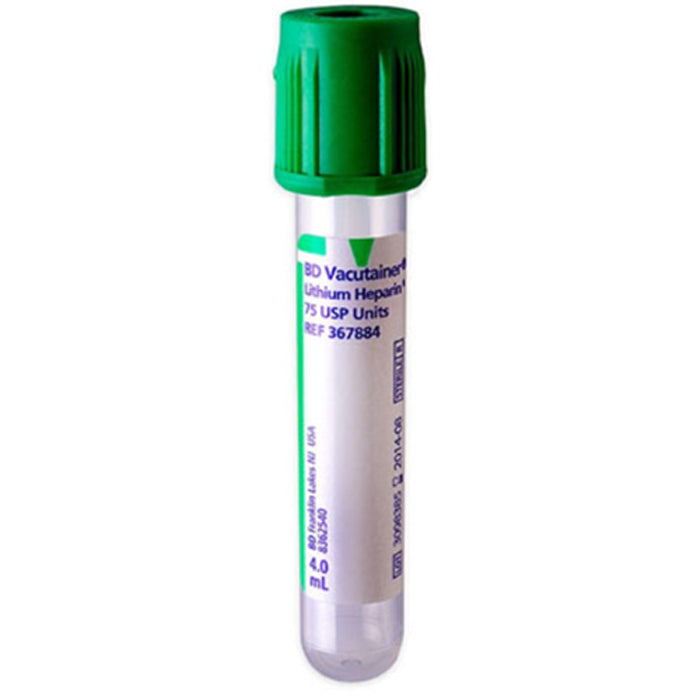
BD 367884 Vacutainer Lithium Heparin 4 mL Blood Collection Tubes 13mm x 75mm, 100/box

by BD
Sale 27%
Original price $ 95.00
Current price $ 69.00
SKU 367884

BD 367884 Vacutainer® Plastic Heparin Tubes are used for plasma determinations in chemistry. The Tubes have lithium or sodium heparin spray-coated at inner surface. Tube inversions allow mixing blood with the anticoagulant and prevent clotting.

  • Evacuated blood collection tubes with heparin are used for plasma determination in chemistry
  • Tubes are sterile
  • Blood is drawn directly from the vein into the evacuated sterile collection tubes
  • Only one venipuncture is needed to draw multiple samples
  • Tubes can be changed while needle and plastic holder remain in place on patient's arm
  • Safety shield designed for safer tube handling
  • Rubber stopper is recessed inside the plastic shield, so any drops left by a blood collection needle remain isolated from potential contact
  • Shield is designed to protect lab personnel from direct contact with blood on the stopper or around the outer rim of the tube, as well as from blood splattering upon opening the tube
  • BD 367884 - 13 x 75 mm, 4.0 mL, Lithium Heparin 60 Usp Units, Hemogard Closure, 100/Box
FAQs About Vacutainer Tubes
  • What Are Vacutainer Tubes?

    Vacutainer tubes are specialized, sterile blood collection tubes designed for safe, reliable, and contamination-free blood draws and specimen handling. These color-coded, single-use tubes ensure accurate diagnostic testing in hospitals, medical labs, clinics, and phlebotomy centers.

  • How are Vacutainer Tubes Used?

    Blood is drawn from the patient using a needle attached to a special holder. Tube is inserted into the holder; the vacuum draws the correct amount of blood into the tube. Tube is gently inverted (if required) to mix the blood with the additive. Tubes are labeled and sent to the laboratory for analysis.

  • Advantages of Vacutainer Tubes

    Safety: Minimizes exposure to blood. Efficiency: Allows multiple tubes to be drawn in a single venipuncture (“multiple draw” system). Accuracy: Delivers the correct volume for standardized testing.

  • Do Vacutainers Need to Be Sterile?

    Yes! Vacutainer tubes are sterile and individually sealed to prevent contamination and ensure accurate blood test results.

  • What is the Correct Order of Draw for a Vacutainer?

    Order of draw (to prevent cross-contamination): Blood culture bottles (yellow or SPS) Light blue (citrate) Red (serum, glass) Gold/Tiger top (SST, serum separator) Green (heparin) Lavender/Purple (EDTA) Gray (fluoride/oxalate)

  • What Do the Colors on Vacutainer Tubes Mean?

    Each color represents a different additive and test type: Yellow: Blood cultures, sterile Light Blue: Sodium citrate, coagulation studies (PT, aPTT) Red: No additive/Clot activator, chemistry/serology Gold/Tiger (SST): Serum separator (chemistry panels) Green: Heparin, plasma chemistry Lavender/Purple: EDTA, hematology (CBC) Gray: Sodium fluoride/potassium oxalate, glucose testing

  • Can Vacutainers Be Reused?

    No. Vacutainer tubes are single-use only to prevent infection, cross-contamination, and ensure accurate lab results.

  • How to Sterilize a Vacutainer?

    Do not attempt to sterilize or reuse. Always utilize new, sterile vacutainer tubes for each blood draw.

  • Where to Discard Vacutainer Tube?

    Dispose of used and expired vacutainers in a biohazard sharps container, as per OSHA and CDC safety protocols.

  • How Many Times Should an EDTA Tube Be Inverted?

    Gently invert the EDTA (lavender top) tube 8–10 times to mix the blood with the anticoagulant for accurate results.

  • What Are Common Phlebotomy Errors?

    Incorrect order of draw Insufficient mixing of tubes Underfilling or overfilling tubes Using expired tubes Hemolysis from poor technique Mislabeling specimens

  • What Color Lab Tube Do You Draw First?

    The blood culture (yellow/SPS) bottle is always drawn first to avoid contamination, followed by the light blue citrate tube.

  • What is a Grey Top Vacutainer Used For?

    Grey top tubes contain sodium fluoride and potassium oxalate and are used for glucose and lactate testing, as they prevent sugar breakdown in the sample.

  • What Color Should Blood Be When Drawn?

    Blood should appear dark red (venous) or bright red (arterial), based on the draw. Abnormal colors may indicate clinical problems.

  • Does a Vacutainer Expire?

    Yes, each vacutainer has an expiration date for sterility and additive effectiveness—never use expired tubes for specimen collection.

  • What Can Happen if Vacutainers Are Mixed Vigorously?

    Vigorous mixing causes hemolysis (rupture of red blood cells) and sample rejection. Always invert gently as instructed.

  • Are Vacutainers Single Use Only?

    Absolutely. Never reuse; always discard after a single blood draw to maintain patient safety and sample integrity.

  • What Temperature Should a Vacutainer Be Stored At?

    Store vacutainer tubes at room temperature (15°C–25°C / 59°F–77°F) in a dry, cool place away from direct sunlight and moisture.

  • How to Dispose of Expired Vacutainers?

    Expired vacutainers are disposed of in a biohazard sharps or chemical waste container per your lab’s safety policy.

  • How to Memorize Order of Draw Phlebotomy?

    Use the mnemonic: "Boys Love Ravishing Girls Like Dieters Love Greek Yogurt" (Blood culture, Light blue, Red, Gold, Light green, Dark green, Lavender, Gray, Yellow).

  • What Happens if You Underfill an EDTA Tube?

    Underfilling alters the blood-to-anticoagulant ratio, skewing hematology test results (like CBC). Always fill tubes to designated mark.

  • What is SST in Phlebotomy?

    SST (Serum Separator Tube) contains a gel that separates blood serum from cells after centrifugation. Used for chemistry panels, serology, and immunology tests.

  • What Labs Go in What Color Tubes?

    Blood culture (yellow): Microbiology Light blue: Coagulation (PT, aPTT) Red/Gold/Tiger: Chemistry, serology, immunology Green: Plasma chemistry (troponin, ammonia) Lavender/Purple: Hematology (CBC, HbA1c) Gray: Glucose testing

  • Why Choose Our Vacutainer Tubes?

    Sterile, single-use vacuum tubes for perfect blood collection Accurate color-coded labeling for error-free phlebotomy Leak-proof, shatter-resistant and tamper-evident design Trusted by hospitals, labs, clinics, and research facilities Compatible with all leading blood collection systems Available in all standard sizes and additives

Search Any Type of Product, Medication, or Alignment