 Skip to content



Bacteriostatic Sodium Chloride vs. Regular Saline: What’s the Difference?
In the realm of medical solutions, Bacteriostatic Sodium Chloride and Regular Saline are two prominently used substances. Both are essential in medical and healthcare settings, yet they serve distinct purposes and possess specific characteristics that differentiate them. Understanding these differences is crucial for healthcare professionals and anyone interested in the medical field. In this comprehensive blog post, we will delve deep into the nuances between Bacteriostatic Sodium Chloride and Regular Saline, exploring their formulations, uses, benefits, and more.
Understanding Bacteriostatic Sodium Chloride
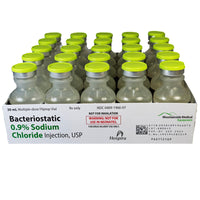
Bacteriostatic Sodium Chloride is a form of sodium chloride (NaCl) that includes a bacteriostatic agent, typically benzyl alcohol, which inhibits the growth and reproduction of bacteria. This solution is used mainly for injections and is intended to prolong the shelf life of the preparation. It is particularly useful in multi-dose vials, where the solution will be accessed numerous times without leading to contamination.
Key Characteristics
- Composition: Bacteriostatic Sodium Chloride typically contains 0.9% sodium chloride and 0.9% benzyl alcohol per ml as a preservative.
- Purpose: It is designed to prevent microbial growth in the solution, making it ideal for multi-dose vials.
- Storage: Requires careful storage to maintain its efficacy and prevent contamination.
- Uses: Widely used in pharmaceuticals for dilution or dissolution of drugs and as a vehicle for drug delivery.
Regular Saline Solution (0.9% Sodium Chloride)
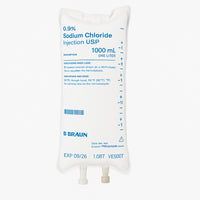
Regular Saline, or 0.9% Sodium Chloride Injection, is a sterile saline solution that is isotonic with body fluids. It is one of the most commonly used intravenous solutions in healthcare settings due to its compatibility with the human body.
Key Characteristics
- Composition: Consists of 0.9% sodium chloride, with no added bacteriostatic agents.
- Purpose: Mainly used as a sterile fluid and electrolyte replenisher.
- Applications: Often used for IV drips, cleaning wounds, as a diluent for medications, and other medical purposes.
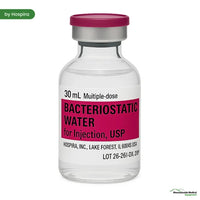
Bacteriostatic Water vs. Saline
A common question is the difference between Bacteriostatic Water and Saline. While both solutions serve similar functions, they are distinct in their compositions and applications.
Bacteriostatic Water
- Composition: Contains sterile water for injection with 0.9% benzyl alcohol.
- Use: Primarily used for the dilution of medications for injection.
Bacteriostatic Saline Solution
- Composition: Includes 0.9% sodium chloride with a bacteriostatic agent.
- Use: Preferred for applications where saline is required and multi-dose access is needed.
Comparison Between Bacteriostatic Sodium Chloride and Regular Saline
- Preservatives: Bacteriostatic Sodium Chloride contains benzyl alcohol as a preservative, which is absent in Regular Saline.
- Dosage: Bacteriostatic solutions are often used in multi-dose formats, whereas Regular Saline is generally single-dose.
- Application: Both are used in medical settings for injections and dilutions, but Bacteriostatic Sodium Chloride's bacteriostatic property makes it suitable for repeated use from the same vial.
Products Overview

Here’s a list of Bacteriostatic Sodium Chloride products that match our discussion:
- Bacteriostatic Sodium Chloride 0.9% for Injection, 10 mL, 25/Pack (Rx)
- Bacteriostatic Sodium Chloride 0.9% Injection Normal Saline Multiple Dose 20 mL, 25/pk (Rx)
- Bacteriostatic Sodium Chloride 0.9% For Injection 30 mL Multiple Dose Vials, 25/tray (Rx)
- Bacteriostatic Sodium Chloride 0.9% Injection Sterile Saline Multiple Dose 30 ml x 25/Pack by Hospira Pfizer (Rx)
Further Reading and Resources
For an in-depth exploration, you can check out our collection of Bacteriostatic Sodium Chloride Injections and our article on Understanding Bacteriostatic Sodium Chloride: Uses and Benefits.
Conclusion
In conclusion, Bacteriostatic Sodium Chloride and Regular Saline each have unique features that cater to different medical needs. Bacteriostatic Sodium Chloride is ideal for repeated usage due to its antimicrobial properties, whereas Regular Saline is perfect for general use when sterilization is the top priority. By understanding these differences, medical professionals can make more informed decisions about which solution best fits a specific medical application. To explore more about these incredible solutions, visit Mountainside Medical Equipment.