

Filters
- 2% lidocaine (5)
- doctor-only (10)
- Epinephrine (4)
- Lidocaine (7)
- Lidocaine 2% with Epinephrine (1)
- lidocaine hydochloride (3)
- Lidocaine with Epi (3)
- Lidocaine with Epinephrine (5)
- xylocaine (2)
- Xylocaine 2% (4)
- 20ml lidocaine (1)
- Aesthetic Supplies MedSpa Supplies & Cosmetic Surgery Supplies (3)
- Local Anesthetic (4)
- Multiple Dose Vial (2)
- Nerve blocker (3)
- 1% lidocaine (3)
- Epinephrine Injection (4)
- Lidocaine 1% (2)
- Lidocaine HCl (1)
- Lidocaine Injection (2)
- Epinephrine Vials (2)
- Dental Procedures (3)
- Medical procedures (2)
- Minor Surgeries (3)
- Numb (1)
- Numbing (1)
- Preservative-free (2)
- Surgical (1)
- nerve block (2)
- Pain Relief (2)
- Surgical procedures (1)
- Treat Nerve Pain (1)
- local anesthetic (2)
- nerve pain (1)
- Nerve Pain Medication (1)
- ou-exclude (2)
- Xylocaine 2% for Injection (2)
- Lidocaine Hydrochloride (1)
- Preservative Free (1)
- Xylocaine 1% (1)
- Xylocaine MPF (1)
Filters
- 2% lidocaine (5)
- doctor-only (10)
- Epinephrine (4)
- Lidocaine (7)
- Lidocaine 2% with Epinephrine (1)
- lidocaine hydochloride (3)
- Lidocaine with Epi (3)
- Lidocaine with Epinephrine (5)
- xylocaine (2)
- Xylocaine 2% (4)
- 20ml lidocaine (1)
- Aesthetic Supplies MedSpa Supplies & Cosmetic Surgery Supplies (3)
- Local Anesthetic (4)
- Multiple Dose Vial (2)
- Nerve blocker (3)
- 1% lidocaine (3)
- Epinephrine Injection (4)
- Lidocaine 1% (2)
- Lidocaine HCl (1)
- Lidocaine Injection (2)
- Epinephrine Vials (2)
- Dental Procedures (3)
- Medical procedures (2)
- Minor Surgeries (3)
- Numb (1)
- Numbing (1)
- Preservative-free (2)
- Surgical (1)
- nerve block (2)
- Pain Relief (2)
- Surgical procedures (1)
- Treat Nerve Pain (1)
- local anesthetic (2)
- nerve pain (1)
- Nerve Pain Medication (1)
- ou-exclude (2)
- Xylocaine 2% for Injection (2)
- Lidocaine Hydrochloride (1)
- Preservative Free (1)
- Xylocaine 1% (1)
- Xylocaine MPF (1)
Xylocaine Injections
-

 Sale 16%
Xylocaine 2% with Epinephrine 1:100,000 Injection Multiple Dose Vial 20 mL, 25/Pack (Rx)
Original price $ 259.95Current price $ 219.003 reviews🔒 Medical License Required -
 Sale 41%
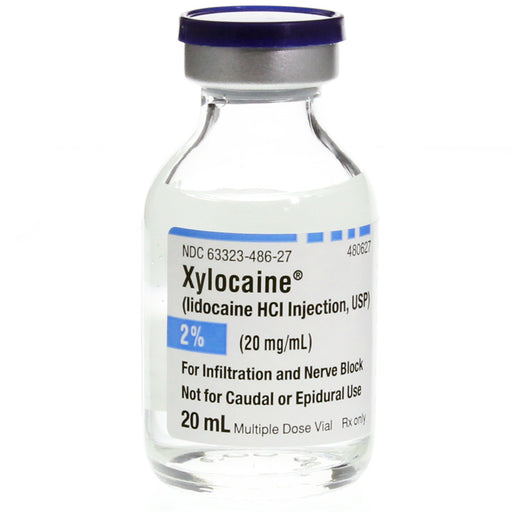
Xylocaine Lidocaine 2% Injection, 20 mg/mL, Multiple Dose Vials 20 mL, 25/Tray (Rx)
Original price $ 239.00Current price $ 142.001 review🔒 Medical License Required -

 Sale 12%
Xylocaine (lidocaine HCl) 1% and Epinephrine 1% Injection 1:00,000 Multiple-Dose Vial 20 mL x 25/Tray (RX)
Original price $ 279.99Current price $ 245.004 reviews🔒 Medical License Required -

 Sale 8%
Xylocaine Lidocaine 1% With Epinephrine 1:100000 Injection Multiple Dose Vial 50 mL x 25/Tray (RX)
Original price $ 529.95Current price $ 486.003 reviews🔒 Medical License Required -

 Sale 7%
Xylocaine 2% Lidocaine with Epinephrine Injection 1:00,000 Multiple-Dose Vial 50 mL x 25/tray (Rx)
Original price $ 425.00Current price $ 395.00🔒 Medical License Required -

 Sale 46%
Xylocaine 1% Injection MPF 5 mL Single-Dose Vials, 25/Tray (Rx)
Original price $ 259.95Current price $ 139.951 review🔒 Medical License Required -

 Sale 27%
Xylocaine 0.5% with Epinephrine 1:200,000 Injection 50 mL Vials 25/Tray (Rx)
Original price $ 475.00Current price $ 345.002 reviews🔒 Medical License Required -
 Sale 34%
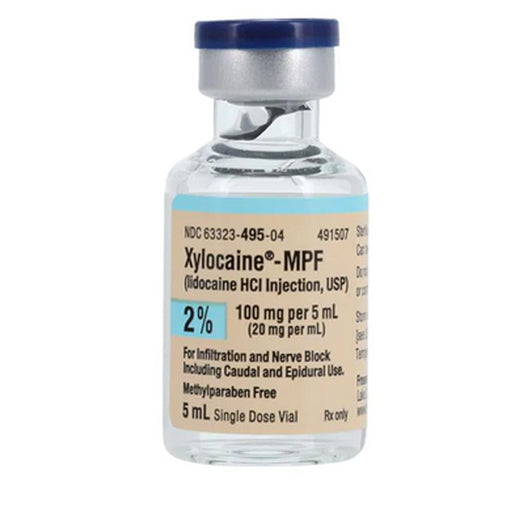
Xylocaine MPF Lidocaine 2% Injection 5 mL Vials Preservative Free, 25/Tray
Original price $ 195.95Current price $ 129.001 review🔒 Medical License Required -

 Sale 30%
Xylocaine Lidocaine 2% for Injection 2 mL Vials, Preservative Free, 25/Tray (Rx)
Original price $ 149.95Current price $ 105.00🔒 Medical License Required -

 Sale 28%
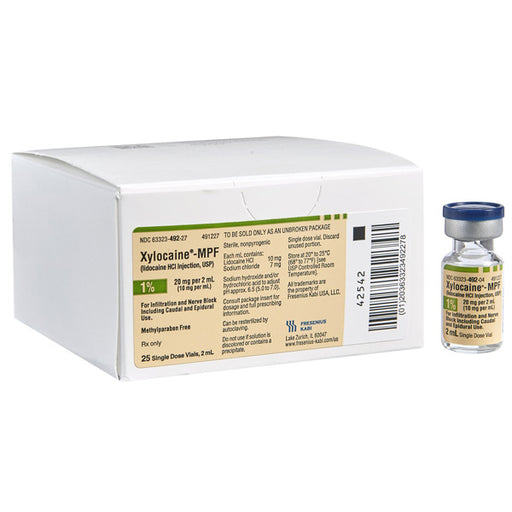
Xylocaine MPF Lidocaine HCI injection 1% Single Dose Vials 10 mg / mL Preservative Free 2mL x 25/Pack (Rx)
Original price $ 129.95Current price $ 93.85🔒 Medical License Required


People Also Searched For
Xylocaine Injections
Xylocaine is a brand name for lidocaine injectable solution, a fast-acting local anesthetic. Xylocaine injections are sterile lidocaine hydrochloride solutions given by needle to numb a specific area of the body before medical or dental procedures. In practice a clinician injects the solution just under the skin or near nerves so that the targeted tissue loses sensation. Lidocaine works by blocking nerve signals – it stabilizes neuronal membranes and inhibits sodium channels, preventing pain impulses from traveling to the brain. Because it only affects the local area, the patient remains awake (unlike with general anesthesia). These injections are given only by trained healthcare providers (usually just before the procedure)
Fast-Acting, FDA-Approved Xylocaine Injections for Local Anesthesia, Nerve Block, and Superior Pain Relief
Xylocaine Injections (lidocaine hydrochloride injection) are the gold standard in modern medicine for local anesthesia, targeted pain relief, and regional nerve block in surgeries, dental procedures, emergency care, and chronic pain management. Trusted by hospitals, clinics, dentists, and anesthesiologists worldwide, Xylocaine provides rapid, reliable, and long-lasting numbness with a proven safety profile.
Xylocaine Uses:
Xylocaine injectable solutions are essential in:
- Local Anesthesia: Delivering immediate & controlled numbness for minor and major surgical procedures, dental work, sutures, skin biopsies, and cosmetic treatments.
- Nerve Block: Effective for regional anesthesia during orthopedic surgeries, labor and delivery, and interventional pain management.
- Emergency Medicine & Trauma: Rapid pain control for wound care, laceration repair, and injury treatment in urgent care and the ER.
- Pain Management: Relief for chronic and acute pain conditions, trigger point injections, and musculoskeletal procedures.
- Arrhythmia Management: Intravenous Xylocaine is also used by cardiologists to treat ventricular arrhythmias in critical cardiac care.
Common Clinical Uses for Xylocaine Injections
- Dental anesthesia (fillings, root canals, extractions)
- Local anesthesia for skin biopsies, mole removal, sutures, minor surgery
- Nerve block for orthopedic surgery, labor pain, sports injuries
- Emergency pain relief for wounds, burns, and lacerations
- Intravenous use for ventricular arrhythmias in cardiac emergencies
Xylocaine injections are a standard way to administer lidocaine for local anesthesia. They allow doctors to perform painful procedures without the patient feeling pain in that area, while keeping the patient awake. Proper technique and dosing (under medical supervision) make Xylocaine injections very safe and effective.
Administration (Injection Technique)
-
Professional administration only: Xylocaine injections must be given by or under the supervision of a qualified healthcare professional, typically a physician or nurse experienced in anesthesia. Facilities for monitoring and emergency resuscitation (oxygen, airway support, cardiac equipment) should be immediately available when administering local anesthetics.
-
Patient preparation: Before injection, verify the patient’s identity, weight (to calculate dose), and allergy history. Ensure the patient does not have a known sensitivity to lidocaine or other amide anesthetics. Explain the procedure to the patient and obtain informed consent.
-
Drug preparation: Choose the correct Xylocaine product and strength (e.g. 1% lidocaine = 10 mg/mL, or 2% = 20 mg/mL, with or without epinephrine). Check the concentration and expiration date. Draw up the calculated dose into a sterile syringe with an appropriate needle. (Using epinephrine-containing solutions can prolong the anesthetic effect and reduce bleeding, but they should be avoided in areas with end-arteries or in patients with certain heart conditions.)
-
Aseptic technique: Cleanse the skin or mucosal injection site with antiseptic. Use gloves and maintain sterility.
-
Injection technique: The exact technique depends on the intended block:
- Infiltration: Insert the needle into the tissue near the area requiring anesthesia (e.g. along the edges of a wound, or the skin overlying a lesion). Inject small amounts of Xylocaine slowly as you withdraw the needle (many providers deposit the anesthetic in a small wheel or bleb under the skin, or in a line along the wound margin). This creates widespread numbness in the superficial tissues.
- Peripheral nerve block: Position the needle adjacent to the target nerve or nerve bundle (using anatomical landmarks or imaging guidance). Carefully inject the anesthetic around the nerve sheath. (This requires specialized training.)
- Intravenous regional (“Bier block”): A tourniquet is applied to a limb, and Xylocaine is injected into a vein in the limb to anesthetize the entire extremity. Only specific Xylocaine formulations and volumes are used for this technique under strict protocols.
In all cases, inject Xylocaine slowly and in small increments. Frequently aspirate (pull back on the syringe plunger) before injecting each aliquot to ensure the needle is not inside a blood vessel. A quick flash of blood on aspiration means intravascular placement – in that case, reposition the needle before injecting more. Slow injection reduces the risk of systemic absorption and toxicity.
-
Onset and monitoring: Lidocaine typically begins to take effect within 1–5 minutes when injected for local infiltration, and a few more minutes for deeper blocks. After injecting, pause and wait a few minutes for full numbness before proceeding with the procedure. Continuously monitor the patient’s vital signs (heart rate, blood pressure, breathing) and level of consciousness. Watch for early signs of lidocaine toxicity (such as ringing in the ears, metallic taste, numbness around lips, lightheadedness, or visual disturbances) in the patient, and be prepared to intervene if they occur.
Xylocaine Dosage Guidelines
-
Calculate dose by weight and procedure: The dosage depends on the patient’s weight, the area and size of the field to anesthetize, and whether epinephrine is used. Lidocaine injections in 1% or 2% concentrations are common. Always calculate total milligrams: for example, 5 mL of 1% lidocaine = 50 mg of lidocaine.
-
Use the lowest effective dose: Per product labeling, “the lowest concentration and smallest dose that will produce the desired result should be given”. In healthy adults, the maximum safe dose of plain (no-epinephrine) lidocaine is generally about 4.5 mg/kg of body weight (not to exceed roughly 300 mg total). With epinephrine, the safe limit is higher (about 7 mg/kg). For example, a 70-kg adult should get no more than ~315 mg of lidocaine without epinephrine (≈30 mL of 1% solution). In practice, most local injections use far less – often on the order of 100–200 mg total.
-
Typical volumes: For minor procedures, doctors often use 1–10 mL of 1% lidocaine (10–100 mg). Larger nerve blocks or epidurals use larger volumes and sometimes higher concentrations (e.g. 10–20 mL of 1.5–2%). Intravenous regional anesthesia uses a fixed 50 mL of 0.5% solution. (Refer to detailed dosing tables in prescribing references for specific procedures.)
-
Epinephrine-containing solutions: Lidocaine with epinephrine (1:100000 or 1:200000) produces a longer duration (by vasoconstriction) and permits slightly larger doses (up to ~7 mg/kg). Do NOT use epinephrine in areas supplied by end-arteries (e.g. fingers, toes, penis, nose, ear) or if the patient has severe cardiovascular disease.
Xylocaine Side Effects
Adverse effects of lidocaine are generally dose-related and similar to those of other amide local anesthetics. Common, mild reactions include local anesthesia of tissues and minor injection-site irritation. However, systemic toxicity can be serious. Key side effects include:
- Local injection site: Mild burning, pain or numbness at the injection site are common. Swelling, bruising or redness (“hematoma”) may occur where the medicine is injected. (By design, treated tissues become numb.)
- Central Nervous System: Early CNS signs of lidocaine toxicity are often excitatory (e.g. nervousness, dizziness, tinnitus, blurred vision, tremor) followed by depressant effects. Severe overdose can cause convulsions, drowsiness leading to unconsciousness, and respiratory depression or arrest. (For instance, tinnitus or a buzzing sound is a classic early warning symptom.) Even without overt seizures, patients may become confused or lose consciousness if blood levels rise.
- Cardiovascular: Lidocaine usually depresses cardiac conduction and blood pressure. In large doses or intravascular injection, it can cause bradycardia, hypotension, and cardiovascular collapse (severe hypotension or shock, possibly progressing to cardiac arrest). Heart block and arrhythmias (e.g. ventricular arrhythmias) are also possible at toxic levels.
- Allergic/hypersensitivity: True allergic reactions to lidocaine are very rare. When they do occur it manifests as rash, itching, urticaria, angioedema or even anaphylaxis. Some patients react to preservatives (e.g. methylparaben) rather than lidocaine itself. Cross-sensitivity between lidocaine and other amide anesthetics is uncommon.
- Others: Systemic side effects may also include nausea, vomiting, or metallic taste. In obstetric or epidural use, headaches or transient neurologic symptoms (e.g. backache) can result from the technique or dural puncture, not necessarily the drug. Methemoglobinemia (a blood disorder causing cyanosis) has been reported with local anesthetic use, though lidocaine is only a rare cause. Patients with certain conditions (e.g. G6PD deficiency, infants) are more susceptible to methemoglobinemia.
In summary, the most important precautions are to use the lowest effective dose, inject slowly with aspiration, and continuously monitor the patient. With proper dosing and technique, most side effects are mild and temporary, but high plasma levels (from excessive dose or rapid absorption) can lead to the severe CNS and cardiovascular symptoms noted above.
Choose Xylocaine Injections for clinically superior, safe, and fast-acting anesthesia and pain relief—trusted by medical professionals everywhere. Order now to ensure the best in patient comfort, surgical success, and emergency care.
How Xylocaine Injections Work
Lidocaine (Xylocaine) produces anesthesia by preventing nerve signal transmission. Chemically, it stabilizes the neuronal membrane by inhibiting the ionic fluxes required for impulse conduction. In short, lidocaine blocks sodium channels in nerve cells, so nerves in the injected area cannot fire and transmit pain. The effect begins within minutes and lasts briefly (often 30–60 minutes). Xylocaine solutions may be given with epinephrine (adrenaline), which constricts blood vessels and prolongs the anesthetic effect. (Without epinephrine, lidocaine’s effect wears off sooner, but it still blocks pain while present.) Notably, lidocaine’s sodium-channel blockade also affects the heart – when given intravenously, lidocaine is used as a Class Ib antiarrhythmic to treat serious ventricular arrhythmias.
Indications – When Xylocaine Injections Are Used
Xylocaine injections are used whenever localized numbness (anesthesia) is needed. Common situations include:
- Minor surgery and sutures: To block pain for procedures like laceration repairs, biopsies, skin lesion removals, or setting small fractures. A few milliliters of Xylocaine are injected around the incision site or nail bed.
- Dental procedures: To numb gums or teeth before fillings, extractions, or other dental work. Dentists routinely use lidocaine injections for oral anesthesia.
- Nerve blocks and epidurals: Xylocaine can be injected near specific nerves (e.g. a brachial plexus or femoral nerve block) or into the epidural space to numb a limb or large body region (such as during childbirth or limb surgery. The drug’s ability to block multiple adjacent nerves allows regional anesthesia.
- Intravenous use (cardiac): In emergency cardiac care, lidocaine IV is indicated for life-threatening ventricular tachycardia or fibrillation. (In this setting, Xylocaine injection is given into a vein under hospital monitoring to stabilize heart rhythm.)
In all these cases, Xylocaine’s role is to prevent or treat pain in a specific area by numbing local tissues. It is not used for general sedation.
Administration and Dosage
Xylocaine is supplied as a sterile injectable solution. Typical concentrations are 1% (10 mg/mL) or 2% (20 mg/mL) lidocaine HCl, sometimes with added epinephrine (e.g. 1:100,000). A healthcare provider selects the concentration and volume based on the procedure. For example, very small volumes (1–5 mL) may be enough for superficial injections, whereas larger volumes are used for nerve blocks or epidurals. Dosing is generally weight-based; a common guideline is not to exceed about 4.5 mg of lidocaine per kg of body weight in an adult (roughly 300 mg total). to avoid toxicity. (With epinephrine, a slightly higher total dose may be tolerated because absorption is slower.)
Crucially, Xylocaine injections must be administered by trained professionals only. The medication is given by syringe into the skin or tissue near the target area. The patient is monitored (heart rate, breathing, consciousness) especially for larger blocks. The provider should aspirate before injecting to ensure the needle isn’t in a blood vessel (to prevent rapid IV overdose). After use, any leftover vial is discarded; syringes are never reused between patients.
Side Effects and Precautions
When used properly, Xylocaine injections are generally well tolerated. Patients often expect temporary numbness or tingling in and around the area, which is the intended effect. Common minor side effects include mild burning or stinging on injection, bruising, redness or irritation at the needle site. Some people feel transient dizziness or lightheadedness if a small amount is absorbed systemically.
However, lidocaine is a potent drug, so overdose or accidental intravascular injection can cause serious effects. Early warning signs of toxicity include tinnitus (ringing in the ears), confusion, blurry vision, or tremors. In more severe cases, lidocaine toxicity can lead to seizures, profound drowsiness, slowed breathing, or dangerous heart rhythm problems. For this reason, providers carefully limit the dose and monitor the patient’s vital signs.
Allergic reactions to lidocaine are rare, but they can occur. Signs include rash, itching, hives, swelling of the lips/tongue, or difficulty breathing. Contraindication: Anyone with a known allergy or hypersensitivity to lidocaine or related amide anesthetics should not receive Xylocaine. Patients with severe heart block or shock are also usually excluded. In practice, if any severe reaction (e.g. breathing difficulty or unconsciousness) occurs, the injection is stopped and emergency measures are taken.
Key Points
- What it is: Xylocaine injection is an injectable form of lidocaine – a fast-acting local anesthetic. It numbs a specific area by preventing nerves from sending pain signals. (Unlike general anesthesia, the patient stays awake.)
- How it works: Lidocaine blocks sodium ion channels in nerve membranes, “stabilizing” nerves so they cannot fire pain impulses. (If given IV, it also suppresses abnormal heart beats as a Class Ib antiarrhythmic.
- How given: As a sterile injection (usually 1% or 2%) into or around the target tissue. Administered only by healthcare professionals (doctor/nurse) under supervision. Dosing is weight-based; guidelines cap it (~4.5 mg/kg) to avoid toxicity.
- Uses: Employed for local/regional anesthesia in procedures (e.g. stitches, dental work, minor surgery, epidural or nerve blocks). Also used IV in emergency care for severe ventricular arrhythmias.
- Side effects: Mainly numbness and minor irritation at the injection site. If lidocaine spreads systemically, watch for dizziness, ringing in ears or drowsiness. Serious toxicity (e.g. seizures, cardiac arrest) can occur with overdose. Allergic reactions (hives, swelling, breathing trouble) are possible but rare.
- Precautions: Do not use if allergic to lidocaine/amides. Monitor patient during administration (IV access may be kept during large blocks). Use the smallest effective dose, and have resuscitation equipment ready in case of severe reaction.
How Xylocaine Injections Work
Lidocaine (Xylocaine) produces anesthesia by preventing nerve signal transmission. Chemically, it stabilizes the neuronal membrane by inhibiting the ionic fluxes required for impulse conduction. In short, lidocaine blocks sodium channels in nerve cells, so nerves in the injected area cannot fire and transmit pain. The effect begins within minutes and lasts briefly (often 30–60 minutes). Xylocaine solutions may be given with epinephrine (adrenaline), which constricts blood vessels and prolongs the anesthetic effect. (Without epinephrine, lidocaine’s effect wears off sooner, but it still blocks pain while present.) Notably, lidocaine’s sodium-channel blockade also affects the heart – when given intravenously, lidocaine is used as a Class Ib antiarrhythmic to treat serious ventricular arrhythmias.
Indications – When Xylocaine Injections Are Used
Xylocaine injections are used whenever localized numbness (anesthesia) is needed. Common situations include:
- Minor surgery and sutures: To block pain for procedures like laceration repairs, biopsies, skin lesion removals, or setting small fractures. A few milliliters of Xylocaine are injected around the incision site or nail bed.
- Dental procedures: To numb gums or teeth before fillings, extractions, or other dental work. Dentists routinely use lidocaine injections for oral anesthesia.
- Nerve blocks and epidurals: Xylocaine can be injected near specific nerves (e.g. a brachial plexus or femoral nerve block) or into the epidural space to numb a limb or large body region (such as during childbirth or limb surgery. The drug’s ability to block multiple adjacent nerves allows regional anesthesia.
- Intravenous use (cardiac): In emergency cardiac care, lidocaine IV is indicated for life-threatening ventricular tachycardia or fibrillation. (In this setting, Xylocaine injection is given into a vein under hospital monitoring to stabilize heart rhythm.)
In all these cases, Xylocaine’s role is to prevent or treat pain in a specific area by numbing local tissues. It is not used for general sedation.
Administration and Dosage
Xylocaine is supplied as a sterile injectable solution. Typical concentrations are 1% (10 mg/mL) or 2% (20 mg/mL) lidocaine HCl, sometimes with added epinephrine (e.g. 1:100,000). A healthcare provider selects the concentration and volume based on the procedure. For example, very small volumes (1–5 mL) may be enough for superficial injections, whereas larger volumes are used for nerve blocks or epidurals. Dosing is generally weight-based; a common guideline is not to exceed about 4.5 mg of lidocaine per kg of body weight in an adult (roughly 300 mg total). to avoid toxicity. (With epinephrine, a slightly higher total dose may be tolerated because absorption is slower.)
Crucially, Xylocaine injections must be administered by trained professionals only. The medication is given by syringe into the skin or tissue near the target area. The patient is monitored (heart rate, breathing, consciousness) especially for larger blocks. The provider should aspirate before injecting to ensure the needle isn’t in a blood vessel (to prevent rapid IV overdose). After use, any leftover vial is discarded; syringes are never reused between patients.
Side Effects and Precautions
When used properly, Xylocaine injections are generally well tolerated. Patients often expect temporary numbness or tingling in and around the area, which is the intended effect. Common minor side effects include mild burning or stinging on injection, bruising, redness or irritation at the needle site. Some people feel transient dizziness or lightheadedness if a small amount is absorbed systemically.
However, lidocaine is a potent drug, so overdose or accidental intravascular injection can cause serious effects. Early warning signs of toxicity include tinnitus (ringing in the ears), confusion, blurry vision, or tremors. In more severe cases, lidocaine toxicity can lead to seizures, profound drowsiness, slowed breathing, or dangerous heart rhythm problems. For this reason, providers carefully limit the dose and monitor the patient’s vital signs.
Allergic reactions to lidocaine are rare, but they can occur. Signs include rash, itching, hives, swelling of the lips/tongue, or difficulty breathing. Contraindication: Anyone with a known allergy or hypersensitivity to lidocaine or related amide anesthetics should not receive Xylocaine. Patients with severe heart block or shock are also usually excluded. In practice, if any severe reaction (e.g. breathing difficulty or unconsciousness) occurs, the injection is stopped and emergency measures are taken.
Key Points
- What it is: Xylocaine injection is an injectable form of lidocaine – a fast-acting local anesthetic. It numbs a specific area by preventing nerves from sending pain signals. (Unlike general anesthesia, the patient stays awake.)
- How it works: Lidocaine blocks sodium ion channels in nerve membranes, “stabilizing” nerves so they cannot fire pain impulses. (If given IV, it also suppresses abnormal heart beats as a Class Ib antiarrhythmic.
- How given: As a sterile injection (usually 1% or 2%) into or around the target tissue. Administered only by healthcare professionals (doctor/nurse) under supervision. Dosing is weight-based; guidelines cap it (~4.5 mg/kg) to avoid toxicity.
- Uses: Employed for local/regional anesthesia in procedures (e.g. stitches, dental work, minor surgery, epidural or nerve blocks). Also used IV in emergency care for severe ventricular arrhythmias.
- Side effects: Mainly numbness and minor irritation at the injection site. If lidocaine spreads systemically, watch for dizziness, ringing in ears or drowsiness. Serious toxicity (e.g. seizures, cardiac arrest) can occur with overdose. Allergic reactions (hives, swelling, breathing trouble) are possible but rare.
- Precautions: Do not use if allergic to lidocaine/amides. Monitor patient during administration (IV access may be kept during large blocks). Use the smallest effective dose, and have resuscitation equipment ready in case of severe reaction.