Skip to content
New users? Get 5% off on your first purchase.
Free US shipping over $100
New users? Get 5% off on your first purchase.
Free US shipping over $100

Added to your cart:

Cart subtotal

Filters

Availability
Price
$
-
$
$0 $119
Vendor
Collection
Tags

Diphenhydramine Injections

Diphenhydramine Injection

Fast-Acting Allergy Relief & Emergency Anaphylaxis Treatment

Diphenhydramine Injection is a powerful, prescription-strength antihistamine used for immediate relief of severe allergic reactions, acute anaphylaxis, motion sickness, and certain drug-induced symptoms. Medical professionals rely on Diphenhydramine Injections (commonly known by the brand name Benadryl® Injection) to deliver rapid, effective control of life-threatening allergies and emergency symptoms. Available in sterile, pre-filled vials or ampules, this injectable antihistamine is an essential medication in hospitals, ambulances, clinics, and emergency rooms around the world.

Information

  • Generic Name: Diphenhydramine Hydrochloride Injection
  • Available As: IV (intravenous) or IM (intramuscular) injection
  • Common Brand Name: Benadryl® Injection
  • Manufacturer: Trusted pharmaceutical companies (see popular brands below)
  • Formulation: Sterile, preservative-free solution
  • Prescription Status: Rx only (Physician-prescribed)

Purpose

Diphenhydramine Injection is engineered for quick, systemic antihistamine action in emergency situations. It acts by blocking histamine, reducing allergic response, itching, hives, airway swelling, and the risk of anaphylactic shock.

Uses

  • Emergency Anaphylaxis Management: First-line injectable treatment for life-threatening allergic reactions and anaphylactic shock.
  • Severe Allergic Reactions: Rapid control of urticaria (hives), angioedema, itching, and rashes when oral administration isn’t possible.
  • Antidote for Drug-Induced Dystonia: Reverses acute extrapyramidal reactions from medications like antipsychotics.
  • Motion Sickness Control: Prevent and treat severe motion sickness and nausea in critical care settings.
  • Premedication for Reactions: Used before blood transfusions or chemotherapy to prevent or manage allergic responses.
  • Post-Insect Stings or Bites: When rapid relief is necessary after wasp, bee, or other insect stings.

Types & Formulations

  • IV Diphenhydramine Injection: For hospital rapid-response and emergency settings.
  • IM Diphenhydramine Injection: For situations where IV access is not available.
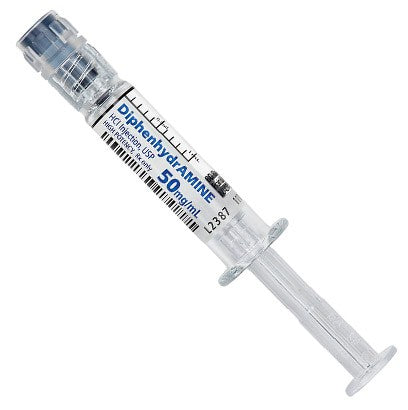
  • Pre-filled Syringes: Ready-to-administer for EMTs, emergency kits, and ambulances.
  • Multi-dose Vials: For hospital pharmacy and ICU stock.

Popular Brands

  • Benadryl® Injection (Johnson & Johnson / Pfizer)
  • Hospira Diphenhydramine
  • West-Ward Diphenhydramine
  • Fresenius Kabi Diphenhydramine
  • American Regent Diphenhydramine

Strengths

  • 50 mg/mL (most common and standard adult emergency dose)
  • 10 mg/mL (for pediatric or tailored dosing)
  • Other strengths available based on region and manufacturer

Sizes & Packaging

  • 1 mL and 2 mL Ampules or Vials (for single or emergency doses)
  • 10 mL Multi-dose Vials (for clinic and hospital use)
  • Pre-filled syringes (for rapid administration in emergency kits)

Precautions

  • Professional Administration Only: Should be administered by healthcare personnel due to potential for side effects and need for patient monitoring.
  • Not for Home Use: Prescription only; NOT intended for home allergy management.
  • CNS Depression/Caution: May cause drowsiness, sedation, or confusion; patients should not drive or operate heavy machinery after administration.
  • Contraindicated in Certain Patients: Not advised in patients with hypersensitivity to diphenhydramine or related drugs, acute asthma attacks, newborns, or breastfeeding women without direct medical supervision.
  • Drug Interactions: May interact with alcohol, sedatives, MAO inhibitors, or other CNS depressants.
  • Monitor for Overdose: High or repeated doses may cause anticholinergic toxicity or cardiac arrhythmias—close monitoring required.

Why Choose Diphenhydramine Injection?

Diphenhydramine Injection offers fast, reliable, and life-saving allergic reaction control when every second matters. It is a core medication for hospital crash carts, ambulance emergency kits, and clinical allergy management, recommended by top healthcare professionals for its speed, potency, and proven record in critical situations.

Order Diphenhydramine Injection from accredited medical suppliers for trusted, powerful emergency allergy relief and anaphylaxis management!

Diphenhydramine Injection

Fast-Acting Allergy Relief & Emergency Anaphylaxis Treatment

Diphenhydramine Injection is a powerful, prescription-strength antihistamine used for immediate relief of severe allergic reactions, acute anaphylaxis, motion sickness, and certain drug-induced symptoms. Medical professionals rely on Diphenhydramine Injections (commonly known by the brand name Benadryl® Injection) to deliver rapid, effective control of life-threatening allergies and emergency symptoms. Available in sterile, pre-filled vials or ampules, this injectable antihistamine is an essential medication in hospitals, ambulances, clinics, and emergency rooms around the world.

Information

  • Generic Name: Diphenhydramine Hydrochloride Injection
  • Available As: IV (intravenous) or IM (intramuscular) injection
  • Common Brand Name: Benadryl® Injection
  • Manufacturer: Trusted pharmaceutical companies (see popular brands below)
  • Formulation: Sterile, preservative-free solution
  • Prescription Status: Rx only (Physician-prescribed)

Purpose

Diphenhydramine Injection is engineered for quick, systemic antihistamine action in emergency situations. It acts by blocking histamine, reducing allergic response, itching, hives, airway swelling, and the risk of anaphylactic shock.

Uses

  • Emergency Anaphylaxis Management: First-line injectable treatment for life-threatening allergic reactions and anaphylactic shock.
  • Severe Allergic Reactions: Rapid control of urticaria (hives), angioedema, itching, and rashes when oral administration isn’t possible.
  • Antidote for Drug-Induced Dystonia: Reverses acute extrapyramidal reactions from medications like antipsychotics.
  • Motion Sickness Control: Prevent and treat severe motion sickness and nausea in critical care settings.
  • Premedication for Reactions: Used before blood transfusions or chemotherapy to prevent or manage allergic responses.
  • Post-Insect Stings or Bites: When rapid relief is necessary after wasp, bee, or other insect stings.

Types & Formulations

  • IV Diphenhydramine Injection: For hospital rapid-response and emergency settings.
  • IM Diphenhydramine Injection: For situations where IV access is not available.
  • Pre-filled Syringes: Ready-to-administer for EMTs, emergency kits, and ambulances.
  • Multi-dose Vials: For hospital pharmacy and ICU stock.

Popular Brands

  • Benadryl® Injection (Johnson & Johnson / Pfizer)
  • Hospira Diphenhydramine
  • West-Ward Diphenhydramine
  • Fresenius Kabi Diphenhydramine
  • American Regent Diphenhydramine

Strengths

  • 50 mg/mL (most common and standard adult emergency dose)
  • 10 mg/mL (for pediatric or tailored dosing)
  • Other strengths available based on region and manufacturer

Sizes & Packaging

  • 1 mL and 2 mL Ampules or Vials (for single or emergency doses)
  • 10 mL Multi-dose Vials (for clinic and hospital use)
  • Pre-filled syringes (for rapid administration in emergency kits)

Precautions

  • Professional Administration Only: Should be administered by healthcare personnel due to potential for side effects and need for patient monitoring.
  • Not for Home Use: Prescription only; NOT intended for home allergy management.
  • CNS Depression/Caution: May cause drowsiness, sedation, or confusion; patients should not drive or operate heavy machinery after administration.
  • Contraindicated in Certain Patients: Not advised in patients with hypersensitivity to diphenhydramine or related drugs, acute asthma attacks, newborns, or breastfeeding women without direct medical supervision.
  • Drug Interactions: May interact with alcohol, sedatives, MAO inhibitors, or other CNS depressants.
  • Monitor for Overdose: High or repeated doses may cause anticholinergic toxicity or cardiac arrhythmias—close monitoring required.

Why Choose Diphenhydramine Injection?

Diphenhydramine Injection offers fast, reliable, and life-saving allergic reaction control when every second matters. It is a core medication for hospital crash carts, ambulance emergency kits, and clinical allergy management, recommended by top healthcare professionals for its speed, potency, and proven record in critical situations.

Order Diphenhydramine Injection from accredited medical suppliers for trusted, powerful emergency allergy relief and anaphylaxis management!

FAQs for Diphenhydramine Injection (Benadryl): Fast-Acting Antihistamine for Allergic Reactions, Itching & Emergency Use

  • Can Diphenhydramine Be Injected?

    Yes, diphenhydramine can be administered by injection—either intravenously (IV) or intramuscularly (IM)—when rapid antihistamine effects are needed, or when oral intake is not possible.

  • Is Diphenhydramine Injection the Same as Benadryl?

    Yes, injectable diphenhydramine is the same medication as Benadryl, delivering the same antihistamine effects but in a form for faster, more direct relief.

  • What Is a Diphenhydramine Injection Used For?

    Diphenhydramine injection is commonly used for: Severe allergic reactions / anaphylaxis Acute urticaria (hives) or itching Drug-induced extrapyramidal symptoms (dyskinesia) Motion sickness or nausea Premedication for chemotherapy, transfusions, or contrast allergy prevention Adjunct in insomnia or sedation (hospital setting)

  • How to Give a Diphenhydramine Injection?

    Healthcare professionals administer diphenhydramine by IV or IM injection. IV should be given slowly (25 mg/min) to avoid side effects. IM injection is given deep into a large muscle (thigh, gluteal).

  • Where Do You Inject Diphenhydramine?

    IM: Upper outer quadrant of the gluteal muscle, or deltoid. IV: Directly into a vein after proper dilution and slow injection.

  • How Much Diphenhydramine Injection Can You Get?

    Adults: 10–50 mg per dose, every 4–6 hours; max 400 mg/day. Children (over 12 years): Similar to adult dosing; always follow doctor’s advice. Never self-inject—always use under medical supervision.

  • How Long Does a Diphenhydramine Injection Last?

    Effects generally last 4–6 hours. Symptom relief is rapid and can be felt within minutes of administration.

  • What Is the Onset of Action of Diphenhydramine Injection?

    Onset is typically within 2–10 minutes IV, or 20–30 minutes IM. Injected diphenhydramine works much faster than oral tablets.

  • Does Benadryl Injection Make You Sleepy?

    Yes. Sedation or drowsiness is a common side effect, as with all first-generation antihistamines.

  • Can Injectable Diphenhydramine Be Given Orally?

    No. Injectable form is not intended for oral use—**dosage and safety may differ. Only use as prescribed and administered by a healthcare professional.

  • What Is 1% Diphenhydramine Injection?

    This refers to the concentration: 1% solution is 10 mg/mL. The most common forms are 1% or 50 mg/mL for hospital and emergency use.

  • Can You Get Antihistamine Injections?

    Yes. Diphenhydramine is the most widely used injectable antihistamine for emergencies, chemotherapy premedication, and acute allergic reactions.

  • Who Should Avoid Using Diphenhydramine?

    Children under 2 years old Those with severe hypertension, narrow-angle glaucoma, asthma, urinary retention, or enlarged prostate Pregnant or breastfeeding women (consult a doctor) Patients taking MAO inhibitors or other sedatives

  • Why Do They Give You Benadryl Before Chemo?

    Benadryl (diphenhydramine) is given to prevent allergic reactions to chemotherapy agents or to reduce nausea/symptoms related to chemo drugs and infusions.

  • Is Diphenhydramine the Same as Cortisone?

    No. Diphenhydramine is an antihistamine; cortisone is a corticosteroid. They are different drug classes but can be used together for severe allergic reactions.

  • What Are the Side Effects of Diphenhydramine Injection?

    Common risks include: Drowsiness, sedation, dizziness Dry mouth, blurred vision, urinary retention Nausea, headache, hypotension Allergic reaction (rare), confusion (elderly)

  • How Long Does a Benadryl Injection Last?

    Coverage is typically 4–6 hours. Repeat doses may be given if needed (per doctor’s direction).

Diphenhydramine Injection (Benadryl): Fast-Acting Antihistamine Injection for Allergic Reactions, Itching & Emergency Use | Uses, Benefits, Dosing & Safety

Diphenhydramine Injection (commonly known by the brand name Benadryl) is a powerful first-generation injectable antihistamine used to rapidly treat severe allergic reactions, anaphylaxis, acute itching, motion sickness, and as premedication for chemotherapy and blood transfusions. Trusted by healthcare professionals in emergency rooms, hospitals, and clinics, diphenhydramine injection delivers fast, reliable symptom relief when oral medications aren’t suitable.

Order Diphenhydramine Injection from our pharmacy for rapid allergy relief and hospital-grade emergency care. Use only with prescription and medical supervision.

Get Notified When Back in Stock