
Bupivacaine Hydrochloride Monohydrate API Powder For Compounding (Rx)
How to Order:
You will receive instructions on how to create an account along with Rx Ordering Details.
(Note: Acceptable licenses must have Prescriptive Authority in the license issuing state.)
Premium Pharmaceutical-Grade Local Anesthetic for Advanced Compounding – Pain Management, Surgical, Dental & Topical Use
Achieve powerful, long-lasting local and regional anesthesia with Bupivacaine Hydrochloride Monohydrate API Powder For Compounding by Medisca—the gold standard for custom anesthetic and pain management solutions. This USP-grade, high-purity active pharmaceutical ingredient is trusted by compounding pharmacies, hospitals, pain clinics, dental offices, and surgical centers for patient-specific formulations providing superior pain control in procedures and acute or chronic pain therapy.
Ships in 2-4 business days.
Key Features & Top Health Benefits
- USP-Grade, High-Purity Bupivacaine: Meets United States Pharmacopeia standards for consistent potency, purity, and safety—optimal for precision compounding.
- Long-Lasting Local Anesthesia: Renowned for a superior duration of action compared to lidocaine and other anesthetics, making it perfect for extended pain relief in surgical, dental, and post-procedural care.
- Flexible Compounding Applications: Formulate customized injectables, topical gels, creams, ointments, pain management infusions, slow-release formulations, nerve block syringes, and more.
- Pain Clinic & Hospital Essential: Used for epidural, spinal, and peripheral nerve block anesthesia in surgical, obstetric, and acute pain protocols.
- Dental & Oral Surgery: Compounded for long-acting dental blocks, oral gels, and regional oral nerve anesthesia for prolonged dental procedures and post-op recovery.
- Versatile Topical & Post-Op Use: Compound into topical preparations for wound infiltration, chronic pain patches, rectal/vaginal/labor analgesia, and musculoskeletal pain relief.
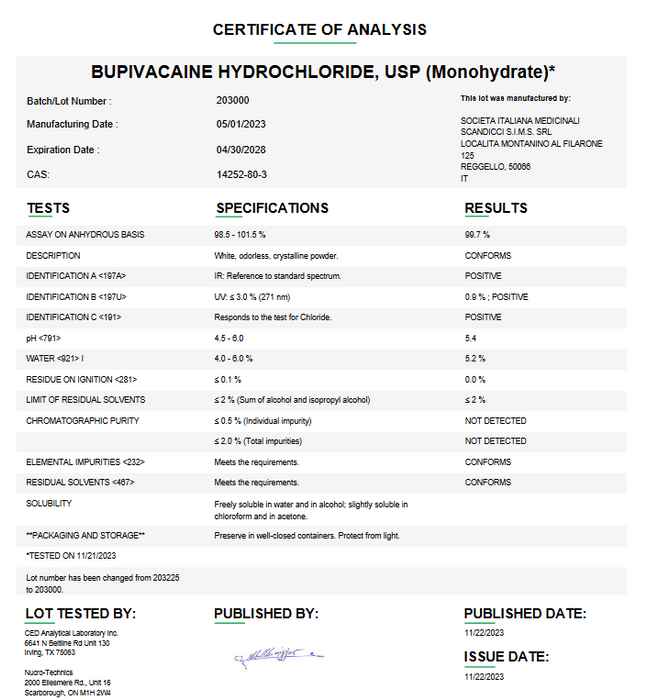
- Medisca Quality Assurance: Manufactured to cGMP and USP standards, each batch is thoroughly tested for identity, purity, and potency for maximum patient safety.
Top Clinical & Compounding Applications
- Injectable solutions for nerve block, epidural, or spinal anesthesia
- Custom topical pain relief gels and creams
- Dental anesthesia formulations for oral surgery, extractions, or restorative procedures
- Slow-release compounded infusions and pain management patches
- Perioperative and post-operative local anesthesia
- Targeted compounded formulas for chronic pain, musculoskeletal disorders, or labor pain control
- Combination preparations with other local anesthetics (e.g., lidocaine, tetracaine) as per Rx
Why Choose Bupivacaine HCl Monohydrate by Medisca?
- Pharmaceutical-grade quality for tailored compounding
- Unmatched duration and intensity of local anesthesia
- Flexible dosing and diverse delivery forms for every patient and procedural need
- Preferred by anesthesiologists, dentists, surgeons, pain clinicians, and compounding pharmacists
- Comprehensive batch-to-batch reliability and robust technical support
Top Searched Terms for Bupivacaine Hydrochloride Monohydrate API Powder
- bupivacaine hydrochloride monohydrate API powder for compounding
- pharmacy grade bupivacaine powder USP
- local anesthetic compounding pharmacy
- custom nerve block anesthetic compound
- bupivacaine for epidural anesthesia
- dental anesthesia compounding ingredient
- injectable bupivacaine for surgery
- long-acting topical pain cream compounding
- hospital compounded anesthetic for labor pain
- bupivacaine vs lidocaine duration
- precision compounded anesthesia for pain clinic
- compounded bupivacaine for post-op recovery
- Medisca bupivacaine supplier
- slow-release local anesthesia formulation pharmacy
- chronic pain patch compounded anesthetic
Professional Compounding & Usage Information
- For licensed compounding professionals only – not for direct consumer sale
- Formulations: Prepare as per prescription: injectable (for nerve block/epidural/spinal), topical cream, gel, ointment, slow-release patch, dental solution, or infusion.
- Dosing: Individualized for procedure; consult Rx and clinical protocol (topical 0.25–0.5%, injectable preparations per prescriber and procedural standards).
- Storage: Store in a sealed container, away from light and moisture; maintain tight Rx and batch documentation to USP <795>/<797> standards.
- Labeling: Dispense with appropriate warnings, patient counseling, and provider instructions.
Possible Side Effects & Patient Counseling Points
Common:
- Temporary numbness, tingling, local discomfort
- Mild redness or swelling at application/injection site
Serious (Seek Immediate Attention):
- Systemic toxicity (CNS: seizures, confusion, ringing in the ears)
- Cardiac toxicity (arrhythmias, hypotension, cardiac arrest—especially with inadvertent IV administration)
- Allergic reaction (rash, swelling, difficulty breathing)
Counsel patients: Use only as directed. Report persistent numbness, severe pain, or systemic symptoms. Do not self-administer injectables unless specifically trained and instructed.
Precautions
- For prescription compounding and professional healthcare use only
- Avoid accidental intravenous administration to prevent serious toxicity
- Use caution in patients with liver, heart disease, or allergy to amide anesthetics
- Monitor closely during administration, especially with nerve blocks and large doses
- Adhere fully to federal, state, and USP regulations for compounding anesthesia
Empower your compounding pharmacy, surgery center, or pain clinic with Bupivacaine Hydrochloride Monohydrate API Powder For Compounding by Medisca—the trusted choice for custom pharmaceutical-grade anesthesia and pain relief formulations, preferred by clinical experts around the globe.
