Skip to content
Year-End Sale is Live Now - Up to 50% off
New users? Get 5% off on your first purchase.
Free US shipping over $100
Year-End Sale is Live Now - Up to 50% off
New users? Get 5% off on your first purchase.
Free US shipping over $100

Epinephrine Snap-V Emergency Anaphylaxis Kit with Injection Vial (Rx)

Year End Sale 23%
Original price $ 259.95
Current price $ 199.95
SKU 71923-0300-13
*Mountainside Medical does not fill personal prescriptions Medical Professional License Required to Unlock Account

How to Order:

Send an email request to: sales@mountainside-medical.com

You will receive instructions on how to create an account along with Rx Ordering Details.

(Note: Acceptable licenses must have Prescriptive Authority in the license issuing state.)

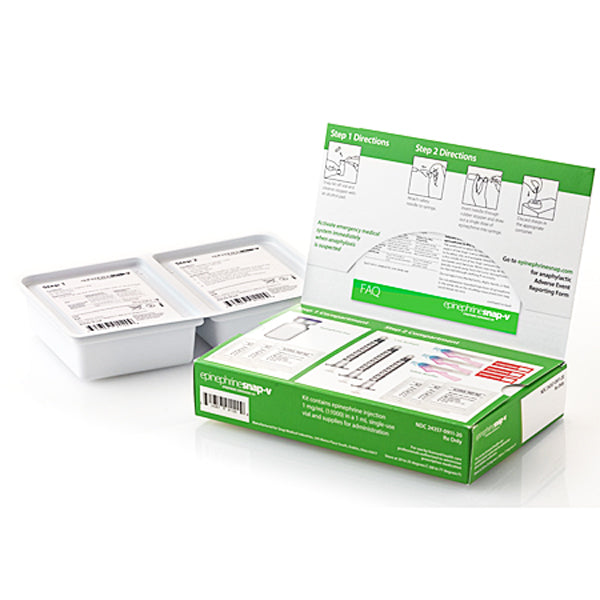
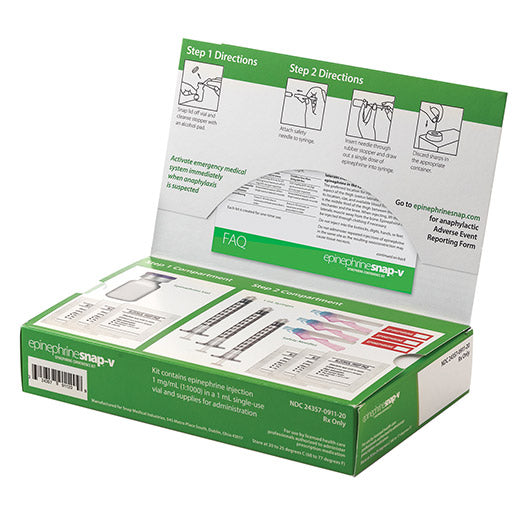
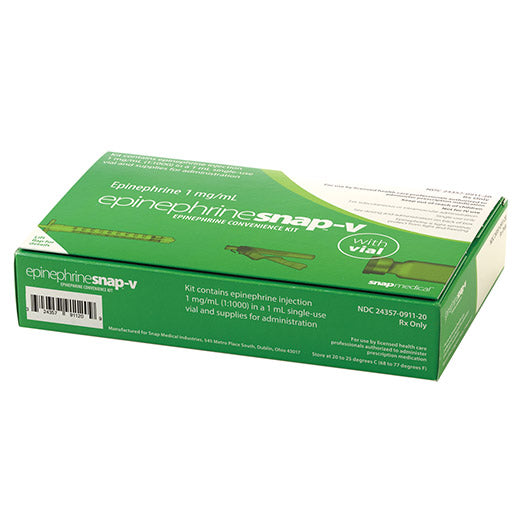
Epinephrine Snap-V Emergency Anaphylaxis Kit with Injection Vial. Each Epinephrine Snap-V kit contains one 1 mL vial of epinephrine 1 mg/mL for injection.
Epinephrine Snap-V kit contains enough epinephrine for up to 3 doses and includes all related supplies for epinephrine administration as well as dosing information. It is packaged with the healthcare provider in mind by placing simple directions and ease of use at the forefront when treating an anaphylactic emergency. The kit is indicated for use in both adults and children.

Epinephrine Snap V kit contains:

  • (1) 1mL vial of Adrenalin 1:1000 1mg/mL
  • (3) 1mL LuerLok™ Syringe
  • (3) 23-gauge 1" Safety Needles
  • (6) Alcohol Pads
  • (3) Epinephrine Syringe Labels
  • Adrenalin Package Insert
  • FAQ Card containing Dosing Chart for use with Adults and Children

Epinephrine dosing is based on body weight. Each kit is created for one-time use.

Brand: Focus Health Group

Epinephrine Snap-V Emergency Anaphylaxis Kit with Injection Vial (Rx)
$ 259.95 $ 199.95
🔒 Medical License Required
Frequently Asked Questions for Allergic Reaction Medications
  • What are the most common medications used for allergic reactions?

    Common medications include antihistamines (like diphenhydramine/Benadryl, loratadine/Claritin, cetirizine/Zyrtec), corticosteroids (like prednisone, methylprednisolone), and epinephrine (EpiPen) for severe reactions (anaphylaxis).

  • When should I use an EpiPen (epinephrine autoinjector)?

    Use an EpiPen immediately at the first sign of a severe allergic reaction (anaphylaxis), such as trouble breathing, swelling of the face or throat, severe hives, or dizziness/fainting.

  • Can I take antihistamines and corticosteroids together for an allergic reaction?

    Yes, in some situations, healthcare providers may recommend both to help control symptoms and prevent recurrence, but follow your doctor’s advice.

  • What is the difference between antihistamines and epinephrine for allergic reactions?

    Antihistamines treat mild to moderate symptoms (itching, rash, runny nose) while epinephrine is used for life-threatening reactions (anaphylaxis) and works rapidly to reverse airway and circulatory complications.

  • Are over-the-counter (OTC) medications effective for allergic reactions?

    For mild reactions like hives or sneezing, OTC antihistamines can be effective. For severe reactions, prescription medications and emergency care are needed.

  • What are the side effects of allergic reaction medications?

    Antihistamines: drowsiness, dry mouth, dizziness. Steroids: increased appetite, mood changes, insomnia, elevated blood sugar. Epinephrine: rapid heart rate, jitteriness, anxiety, headache.

  • Can I use asthma inhalers for an allergic reaction?

    Asthma inhalers may help if wheezing is present and you have asthma, but they are not a substitute for epinephrine in anaphylaxis.

  • How fast do allergic reaction medications work?

    Epinephrine: seconds to minutes. Antihistamines: 15–60 minutes. Corticosteroids: several hours (they help prevent symptoms from returning but do not work immediately).

  • What should I do if symptoms return after treating an allergic reaction?

    Seek medical help. Sometimes a biphasic reaction can occur, where symptoms return hours after initial improvement. You may need further observation or treatment.

  • Are allergic reaction medications safe during pregnancy or breastfeeding?

    Some are safe, but pregnant or nursing individuals should consult their healthcare provider before using any medication.

  • Can allergic reaction medications be used for children?

    Many are approved for children but doses vary by age and weight. Always consult a pediatrician before use.

  • What should I have in my allergy emergency kit?

    An emergency kit may include an epinephrine autoinjector (EpiPen), antihistamines, a list of allergies, and instructions for use.

Search Any Type of Product, Medication, or Alignment