
Click or scroll to zoom
Tap or pinch to zoom
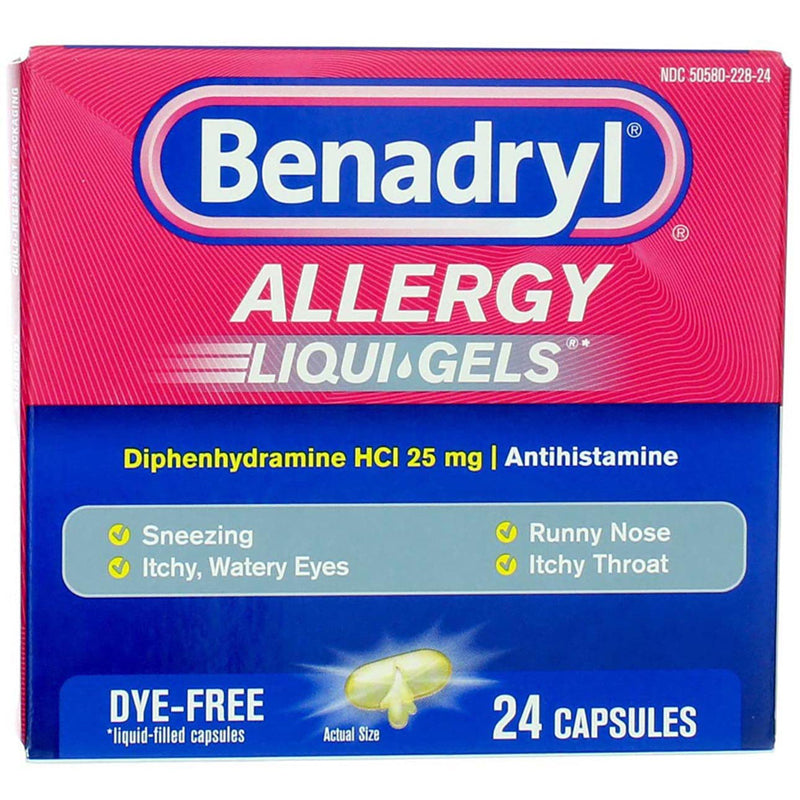
Benadryl Dye-Free Allergy Relief Medicine Antihistamine, 24 Liquidgels
Year End Sale 39%
Original price
$ 13.95
Current price
$ 8.50
SKU 50582-0228-24
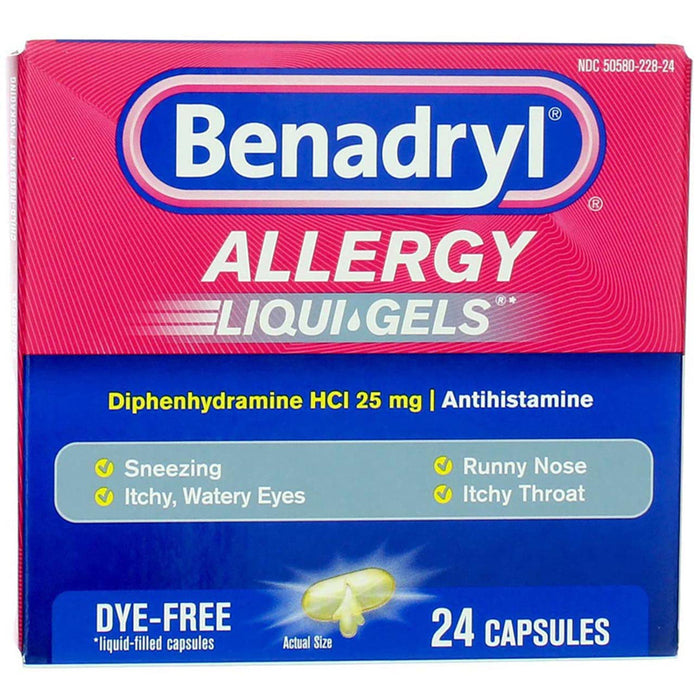
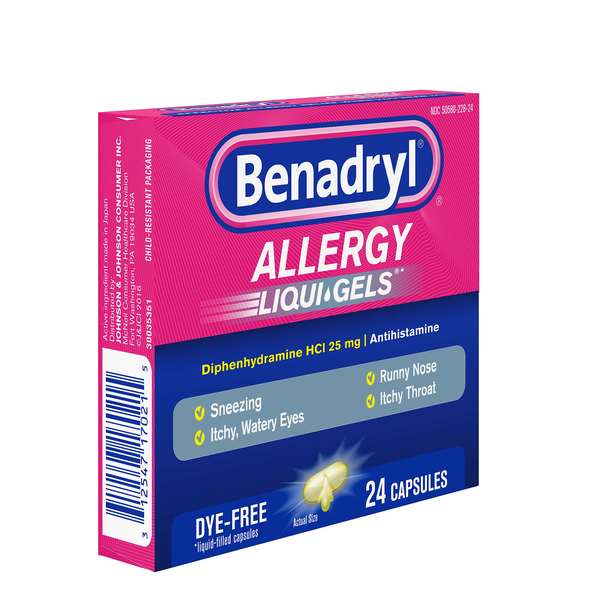
Benadryl Dye-Free Liqui-Gels are an antihistamine used to provide effective relief from a variety of allergy symptoms. These easy-to-swallow liquid-gel softgels are free of dyes and provides hours of antihistamine relief. 24-count bottle Benadryl Allergy Dye-Free Liqui-Gels, antihistamine allergy medicine with diphenhydramine HCl that provides multi-symptom allergy relief and cold symptom relief. Relieves allergy symptoms such as sneezing; runny nose; itchy nose; itchy throat; itchy, watery eyes, and it relieves cold symptoms such as sneezing and runny nose. Dye-free Benadryl liquid gels work when you need it most. They offer the benefits of an antihistamine allergy medicine without the additional colors or dyes other brands may have. Intended for adults and children ages 6 and up, these Benadryl tablets come in a 24 count pack for multi-symptom allergy relief.
- Alleviates allergy symptoms
- Easy-to-swallow soft liquid-gel format
- Dye free and no added colors
- Contains 25 mg of diphenhydramine HCI
- Packaged with 24 capsules per box
Beneficial Uses:
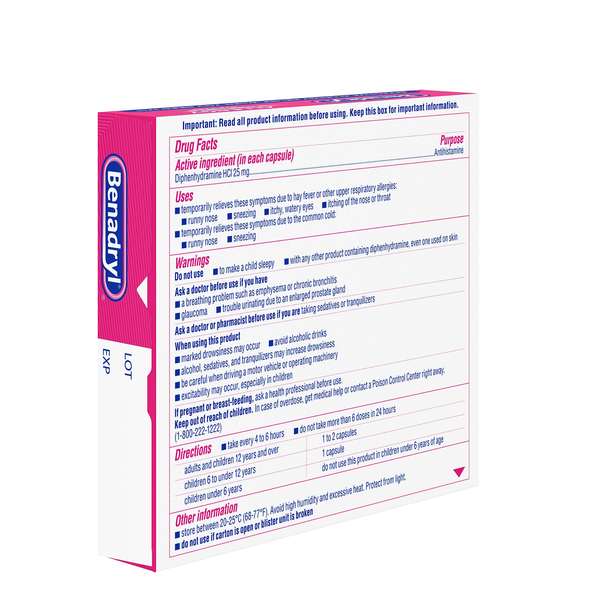
- Providing temporary relief from symptoms caused by hay fever and/or other upper respiratory allergies, such as a runny nose, sneezing, itchy, watery eyes, and itching of the nose or throat
- Providing temporary relief from symptoms caused by the common cold, such as a runny nose and/or sneezing
Directions:
- Use this product as directed, following all of the instructions accompanying this product
- Adults and children 12 years of age and older should take 1-2 capsules every 4 to 6 hours, or as directed by your doctor
- Children 6-12 years of age should take 1 capsule every 4 to 6 hours, or as directed by your doctor
- Do not take more than 6 capsules in 24 hours
- Store between 15-25°C (59-77°F), avoiding high humidity and protecting them from light and heat
Warnings:
- Not intended for use by those under 6 years of age
- Do not use this product with any other products that contain the ingredient diphenhydramine, even those that are only used topically (on the skin)
- Do not use this product to make a child fall asleep
- Consult with your healthcare provider before using this product if you are pregnant, breastfeeding, taking sedatives or tranquilizers, have glaucoma, have any breathing problems, or if you have trouble urinating due to an enlarged prostate gland
- Avoid consuming alcoholic beverages while taking this product
-Use caution while driving a motor vehicle or operating other heavy machinery while taking this product
Active Ingredient - Diphenhydramine HCI 25 mg
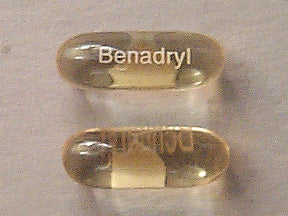
Inactive Ingredients - Gelatin, glycerin, polyethylene glycol, purified water, and sorbitol.(Capsules are imprinted with edible dye-free ink)
- Alleviates allergy symptoms
- Easy-to-swallow soft liquid-gel format
- Dye free and no added colors
- Contains 25 mg of diphenhydramine HCI
- Packaged with 24 capsules per box
Beneficial Uses:
- Providing temporary relief from symptoms caused by hay fever and/or other upper respiratory allergies, such as a runny nose, sneezing, itchy, watery eyes, and itching of the nose or throat
- Providing temporary relief from symptoms caused by the common cold, such as a runny nose and/or sneezing
Directions:
- Use this product as directed, following all of the instructions accompanying this product
- Adults and children 12 years of age and older should take 1-2 capsules every 4 to 6 hours, or as directed by your doctor
- Children 6-12 years of age should take 1 capsule every 4 to 6 hours, or as directed by your doctor
- Do not take more than 6 capsules in 24 hours
- Store between 15-25°C (59-77°F), avoiding high humidity and protecting them from light and heat
Warnings:
- Not intended for use by those under 6 years of age
- Do not use this product with any other products that contain the ingredient diphenhydramine, even those that are only used topically (on the skin)
- Do not use this product to make a child fall asleep
- Consult with your healthcare provider before using this product if you are pregnant, breastfeeding, taking sedatives or tranquilizers, have glaucoma, have any breathing problems, or if you have trouble urinating due to an enlarged prostate gland
- Avoid consuming alcoholic beverages while taking this product
-Use caution while driving a motor vehicle or operating other heavy machinery while taking this product
Active Ingredient - Diphenhydramine HCI 25 mg
Inactive Ingredients - Gelatin, glycerin, polyethylene glycol, purified water, and sorbitol.(Capsules are imprinted with edible dye-free ink)
