Skip to content
Year-End Sale is Live Now - Up to 50% off
New users? Get 5% off on your first purchase.
Free US shipping over $100
Year-End Sale is Live Now - Up to 50% off
New users? Get 5% off on your first purchase.
Free US shipping over $100

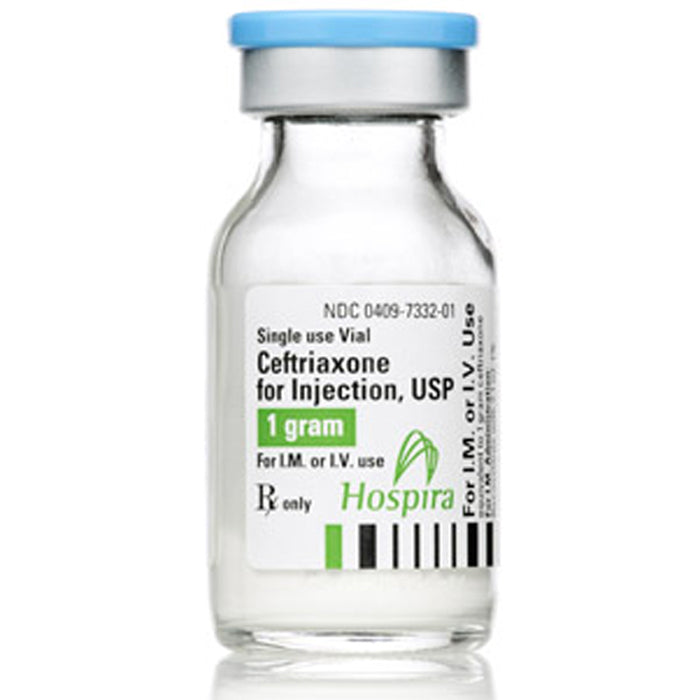
Ceftriaxone Sodium Injection 250 mg 1 mL Vials, 10 Pack by Pfizer (Rx)

Year End Sale 35%
Original price $ 34.95
Current price $ 22.60
SKU 00409-7337-01
*Mountainside Medical does not fill personal prescriptions Medical Professional License Required to Unlock Account

How to Order:

Send an email request to: sales@mountainside-medical.com

You will receive instructions on how to create an account along with Rx Ordering Details.

(Note: Acceptable licenses must have Prescriptive Authority in the license issuing state.)

Ceftriaxone Sodium Injection 250 mg 1 mL Vials are used to treat a variety of bacterial infections. As a broad-spectrum cephalosporin antibiotic, it works by inhibiting cell wall synthesis, effectively killing bacteria. It is often utilized for infections such as respiratory tract infections, urinary tract infections, skin infections, and sexually transmitted infections like gonorrhea. This injection provides a rapid therapeutic response, is administered intravenously or intramuscularly, and is crucial in managing severe and systemic bacterial infections.

Ceftriaxone Sodium for Injection is a sterile, broad-spectrum cephalosporin antibiotic used for the treatment of various bacterial infections. This formulation by Pfizer Injectables contains 250 mg of ceftriaxone sodium per 1 mL vial and is packaged in packs of 10 vials. It is designed for intravenous (IV) or intramuscular (IM) administration, and it is effective against a wide range of Gram-positive and Gram-negative bacteria.

Details and Features:

Dosage Form: 250 mg of ceftriaxone per 1 mL vial
Packaging: 10 vials per pack
Administration Routes: Intravenous (IV) or intramuscular (IM)
Spectrum: Broad-spectrum antibiotic effective against various bacteria, including respiratory system, urinary tract, skin, and other types of infections
Use: Commonly used to treat infections such as bacterial meningitis, pneumonia, sepsis, and gonorrhea

Mechanism of Action:

Ceftriaxone, a third-generation cephalosporin antibiotic, works by inhibiting bacterial cell wall synthesis. It binds to penicillin-binding proteins (PBPs) inside the bacterial cell wall, disrupting the cross-linking of peptidoglycan layers, which are essential for cell wall structural integrity and maintenance. This disruption leads to cell wall breakdown and eventual cell lysis, effectively killing the bacteria.

Warnings:

  • Hypersensitivity: Contraindicated in patients with known allergy to ceftriaxone, cephalosporins, or any of the excipients. Use with caution in those with a history of penicillin allergies due to possible cross-reactivity.
  • Neonatal Risk: Not recommended for use in neonates with hyperbilirubinemia due to risk of bilirubin encephalopathy.
  • Calcium Interaction: Avoid mixing with calcium-containing solutions due to the risk of precipitation, which can cause serious adverse effects.
  • Gastrointestinal Effects: Potential development of Clostridium difficile-associated diarrhea (CDAD), ranging from mild diarrhea to fatal colitis.
  • Renal and Hepatic Impairment: Dose adjustments may be needed for patients with significant renal or hepatic dysfunction.

Side Effects:

Potential side effects of Ceftriaxone Sodium for Injection include:

  • Local Reactions: Pain, redness, or swelling at the injection site.
  • Gastrointestinal: Diarrhea, nausea, vomiting, stomach cramps. In some cases, pseudomembranous colitis due to C. difficile can occur.
  • Hematologic: Eosinophilia, thrombocytosis, or leukopenia.
  • Liver Function: Transient changes in liver enzymes.
  • Hypersensitivity Reactions: Rash, pruritus, or more severe reactions such as
  • Stevens-Johnson syndrome. Anaphylaxis is rare but possible.
  • Renal and others: Possible renal function changes and the formation of gallbladder sludge.

Ceftriaxone should be administered by healthcare professionals with consideration to appropriate dosing guidelines and patient-specific factors to ensure safety and effectiveness. Regular monitoring for adverse reactions, especially in patients with renal or hepatic concerns, should be performed.

Ceftriaxone Sodium Injection 250 mg 1 mL Vials, 10 Pack by Pfizer (Rx)
$ 34.95 $ 22.60
🔒 Medical License Required
FAQs for Ceftriaxone Injections – #1 Broad-Spectrum Antibiotic for Potent Infection Control
  • What Is Ceftriaxone Injection Used For?

    Ceftriaxone injection is used to treat a wide range of serious bacterial infections including: Sepsis, pneumonia, meningitis, pelvic inflammatory disease, gonorrhea, and complicated urinary tract infections (UTIs) Pre- and post-surgical infection prevention Severe hospital-acquired infections, and more It is one of the strongest antibiotics prescribed for life-threatening or stubborn infections.

  • How Does Ceftriaxone Work and How Fast?

    Ceftriaxone rapidly kills bacteria by inhibiting cell wall synthesis. After injection, it reaches high blood concentrations within 1-3 hours, offering quick and effective relief—many patients notice improvement within 24-48 hours after their first dose.

  • Can ceftriaxone cause diarrhea?

    Yes, like other antibiotics, ceftriaxone may disrupt gut bacteria, leading to mild to moderate diarrhea. Rarely, it can cause severe Clostridium difficile-associated diarrhea. Taking probiotics with ceftriaxone can help reduce this risk – but consult your doctor first.

  • Can ceftriaxone cause headaches?

    Some patients may experience headaches as a side effect, though this is generally mild and temporary.

  • Can I take fluconazole and ceftriaxone together?

    Yes, fluconazole and ceftriaxone are sometimes prescribed together to treat mixed fungal and bacterial infections. Your healthcare provider will monitor for possible interactions.

  • How long does ceftriaxone injection stay in your system?

    Ceftriaxone has a long half-life (6–9 hours in adults), staying active in your bloodstream for up to 24 hours after each dose, which is why it is often given once daily.

  • What to avoid while taking ceftriaxone?

    Avoid: Alcohol Certain calcium-containing IV solutions (risk of precipitation) Unnecessary antacids or supplements unless advised Discuss all medications and supplements with your doctor to avoid harmful interactions.

  • Should I take probiotics with ceftriaxone?

    Taking probiotics during and after antibiotics is recommended to help restore healthy gut flora and minimize the risk of antibiotic-associated diarrhea.

  • What are the neurological or brain-related side effects?

    Rare side effects on the brain include confusion, seizures, encephalopathy, or hallucinations, especially in patients with kidney impairment or high doses.

  • Does ceftriaxone affect blood pressure

    Alterations in blood pressure are very rare but can occur, especially in susceptible individuals or if given rapidly by IV. Always monitor your blood pressure if at risk.

  • How many days do you take ceftriaxone injection?

    The duration of ceftriaxone therapy depends on the infection type. Courses can last from 3 to 14 days, as determined by your healthcare provider.

  • Why Choose Ceftriaxone Injection?

    Highly effective for serious and resistant bacterial infections Once daily dosing for convenience Clinically proven with a strong safety record Top choice among doctors and hospitals globally

Search Any Type of Product, Medication, or Alignment