Skip to content
Year-End Sale is Live Now - Up to 50% off
New users? Get 5% off on your first purchase.
Free US shipping over $100
Year-End Sale is Live Now - Up to 50% off
New users? Get 5% off on your first purchase.
Free US shipping over $100

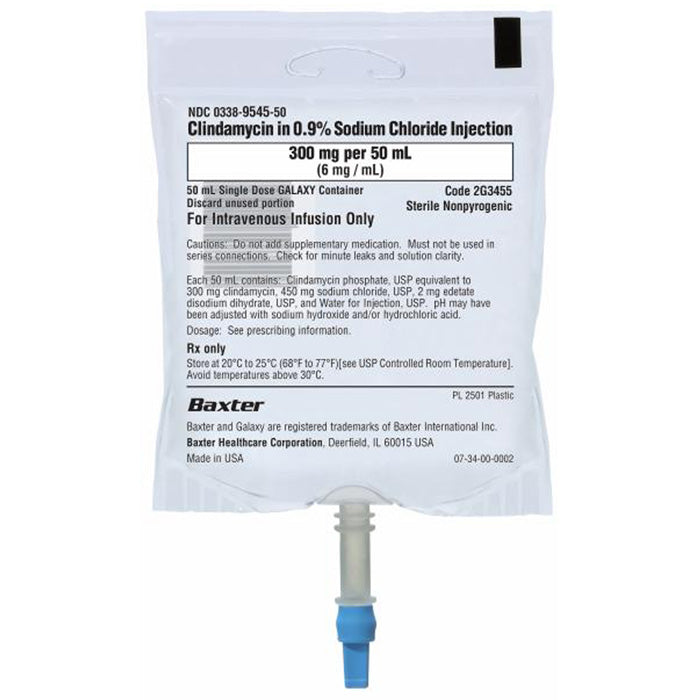
IV Bags, Clindamycin in 0.9% Sodium Chloride Injection 50 mL x 24/Case (RX)

Year End Sale 4%
Original price $ 225.00
Current price $ 215.00
SKU 00338-9545-24
*Mountainside Medical does not fill personal prescriptions Medical Professional License Required to Unlock Account

How to Order:

Send an email request to: sales@mountainside-medical.com

You will receive instructions on how to create an account along with Rx Ordering Details.

(Note: Acceptable licenses must have Prescriptive Authority in the license issuing state.)

Baxter Clindamycin in 0.9% Sodium Chloride Injection IV Bags is an intravenous (IV) antibiotic medication used to treat infections caused by bacteria. Clindamycin is the active ingredient and it is dissolved in a solution of 0.9% sodium chloride (also known as normal saline solution). The solution is contained within an IV bag, which is a sterile plastic bag that can be connected to an IV line for administration into a patient's vein. Each bag contains 50 mL of the Clindamycin solution, which is usually administered over a period of 30-60 minutes. This medication may be prescribed for a variety of infections, such as pneumonia, skin and soft tissue infections, and certain types of abdominal infections. It is important to follow your doctor's instructions for using this medication and to finish the full course of treatment even if you start feeling better.

  • Ease of use: Baxter Clindamycin is supplied in IV bags, which makes it easy and convenient to administer. It eliminates the need for reconstitution or dilution, saving time and effort.
  • Precise dosing: The solution is pre-mixed and labeled with the dosage, making it easier for healthcare providers to accurately administer the correct dosage without any errors.
  • Ready to use: The IV bags come ready to use, which reduces the risk of contamination during preparation. This also saves time and minimizes potential medication errors that may occur during mixing and preparation.
  • Reliable source: Baxter is a well-known and reputable pharmaceutical company with a long-standing history of providing quality medications. This ensures that patients receive safe and effective treatment.
  • Versatility: Baxter Clindamycin is available in different strengths, making it suitable for treating a variety of bacterial infections.
  • Stability: The IV bags are stable at room temperature, which means they can be stored easily without the need for specialized storage or refrigeration.
  • Cost-effective: By eliminating the need for reconstitution and minimizing potential medication errors, Baxter Clindamycin in 0.9% Sodium Chloride Injection IV bags can help save costs associated with preparation and potential complications from incorrect dosing.
  • Effective against a wide range of infections: Clindamycin is a broad-spectrum antibiotic that has been proven effective against a variety of bacteria such as Streptococcus, Staphylococcus, Bacteroides fragilis, and others.
  • Speedy onset of action: As an IV formulation, Baxter Clindamycin can provide a quicker onset of action compared to oral antibiotics since it enters the bloodstream directly.
  • Complete course: The IV bags contain an exact measured amount of medication required for each dose prescribed by your doctor; this ensures that you complete your entire course of treatment as prescribed for the best results and to prevent antibiotic resistance.
IV Bags, Clindamycin in 0.9% Sodium Chloride Injection 50 mL x 24/Case (RX)
$ 225.00 $ 215.00
🔒 Medical License Required
FAQs for Clindamycin
  • What is Clindamycin?

    Clindamycin is a powerful, prescription-only lincosamide antibiotic that treats a wide variety of serious bacterial infections. It works by inhibiting bacterial protein synthesis, stopping bacteria from multiplying and allowing your body to clear the infection.

  • Top Uses of Clindamycin

    Tooth Infections (Dental abscess) Skin Infections (Cellulitis, MRSA, acne) Bone and Joint Infections (Osteomyelitis) Respiratory Tract Infections (Pneumonia, lung abscess) Gynecological Infections (Pelvic inflammatory disease, bacterial vaginosis) Ear, Nose, and Throat Infections Sepsis (Serious bloodstream infections)

  • Clindamycin Dosage Guidelines

    Adults: 150–450 mg every 6–8 hours (as prescribed) Children: Dosage based on weight and infection type Always follow your doctor’s instructions. Complete the entire course, even if you feel better.

  • Clindamycin and Alcohol: Is it Safe?

    Avoid alcohol while taking clindamycin. Mixing alcohol with antibiotics can worsen side effects like stomach upset, dizziness, and can delay your recovery.

  • Clindamycin vs. Amoxicillin: Which Is Better?

    Clindamycin is used when you have a penicillin allergy or for bacteria resistant to penicillins. Amoxicillin is effective against many common bacteria but less effective against certain resistant strains compared to clindamycin. For tooth abscesses and severe skin infections, many dentists and doctors prescribe clindamycin over amoxicillin, especially if the patient is allergic to penicillin.

  • Clindamycin Interactions

    May interact with muscle relaxants, erythromycin, and some vaccines. Tell your doctor about all medications and supplements you're taking.

  • Common Side Effects of Clindamycin

    Nausea, vomiting, diarrhea Stomach pain Rash or itching Metallic/bitter taste in mouth Serious (rare): Severe diarrhea (C. difficile), allergic reaction, liver issues

  • Is clindamycin used for tooth infection?

    Yes! Clindamycin is a first-choice antibiotic for tooth infections, especially for people allergic to penicillin or where other antibiotics fail.

  • What are signs a tooth infection is spreading?

    Swelling of the face or jaw Severe pain Fever or chills Difficulty swallowing or breathing Seek medical help immediately if these symptoms occur.

  • Why would a dentist prescribe clindamycin?

    Dentists prescribe clindamycin for serious dental infections or in patients allergic to penicillin. It's highly effective against stubborn oral bacteria.

  • Is clindamycin a tetracycline?

    No. Clindamycin is a lincosamide antibiotic, not related to tetracyclines.

  • Is clindamycin the strongest antibiotic?

    It is very potent, especially against anaerobic bacteria and some resistant strains, but the “strongest” antibiotic depends on the infection and the bacteria involved.

  • What infections will clindamycin clear up?

    Dental abscesses Skin/soft tissue infections Bone and joint infections Certain ear, nose, and throat infections Gynecological infections (BV, pelvic infections) Some lung infections

  • Is clindamycin safe in pregnancy?

    Clindamycin is generally considered safe during pregnancy (Category B), but always consult your doctor for your specific case.

  • How quickly does clindamycin work?

    Most people notice improvement within 2–3 days. Always finish the full prescribed course.

  • What should I avoid while taking clindamycin?

    Alcohol Antidiarrheal medicines (unless prescribed) Sunbathing/tanning beds (for topical forms) Overuse of probiotics without guidance

  • Is clindamycin a penicillin?

    No. It's not a penicillin, making it a great option for those with penicillin allergies.

  • What are the most common side effects of clindamycin?

    Stomach upset (nausea, diarrhea), metallic taste, rash.

  • Which is better, doxycycline or clindamycin?

    Both are highly effective, but clindamycin is often prescribed for dental and serious anaerobic infections, while doxycycline is common for acne and respiratory infections. The choice depends on the infection.

  • Why would a doctor prescribe clindamycin instead of amoxicillin?

    When the patient is allergic to penicillin Infecting bacteria are resistant to amoxicillin For certain severe or anaerobic infections

  • Is 3 days of clindamycin enough?

    Most infections require at least 5–7 days. Always finish your full prescription unless told otherwise by your doctor.

  • What bacteria does clindamycin not treat?

    Clindamycin does not treat most Gram-negative bacteria (e.g., E. coli, Pseudomonas) and does not work for viral infections.

  • What does clindamycin do to skin?

    Used topically, clindamycin treats acne by reducing bacteria and inflammation. Oral clindamycin treats severe skin infections.

  • Who cannot take clindamycin?

    Individuals with a history of colitis/C. difficile infection Those allergic to clindamycin Caution in people with liver/kidney disease

  • What female infections does clindamycin treat?

    Bacterial vaginosis Pelvic inflammatory disease Certain uterine or pelvic infections

  • Why Choose Clindamycin?

    Fast-acting for tough infections Effective for penicillin-allergy patients Fights resistant bacteria Prescription only, ensuring proper guidance and safety

Search Any Type of Product, Medication, or Alignment