Skip to content
Year-End Sale is Live Now - Up to 50% off
New users? Get 5% off on your first purchase.
Free US shipping over $100
Year-End Sale is Live Now - Up to 50% off
New users? Get 5% off on your first purchase.
Free US shipping over $100

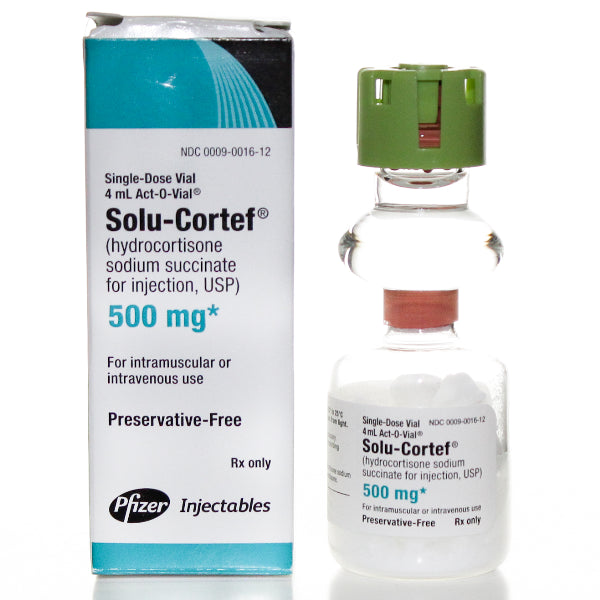
Solu-Cortef for Injection 500 mg Single Dose Vial 4 mL by Pfizer (RX)

Year End Sale 23%
Original price $ 149.95
Current price $ 116.00
SKU 00009-0016-12
*Mountainside Medical does not fill personal prescriptions Medical Professional License Required to Unlock Account

How to Order:

Send an email request to: sales@mountainside-medical.com

You will receive instructions on how to create an account along with Rx Ordering Details.

(Note: Acceptable licenses must have Prescriptive Authority in the license issuing state.)

Solu-Cortef for Injection 500 mg is a corticosteroid used to treat inflammation and immune response related to conditions such as adrenal insufficiency, allergic reactions, arthritis, and severe asthma. It contains hydrocortisone, which reduces inflammation and suppresses overactive immune processes. Often used in emergency settings, Solu-Cortef can be vital for managing acute conditions, including severe allergic reactions and shock.

Solu-Cortef (hydrocortisone sodium succinate) for Injection is a corticosteroid medication manufactured by Pfizer Injectables. It is available as a single-dose vial containing 500 mg of hydrocortisone for reconstitution and injection. This medication is used to treat a wide range of conditions due to its potent anti-inflammatory and immunosuppressive properties, including severe allergies, adrenal insufficiency, and various autoimmune and inflammatory disorders.

Details and Features:

Active Ingredient: Hydrocortisone sodium succinate (500 mg per vial).
Formulation: Lyophilized powder requiring reconstitution before administration.
Presentation: Single-dose vial that provides a convenient method for delivering necessary corticosteroid therapy.
Administration: Can be given intravenously or intramuscularly, allowing flexibility in clinical settings for rapid or sustained effect.

Mechanism of Action:

Solu-Cortef is a synthetic form of hydrocortisone, a glucocorticoid, and works by:

  • Anti-Inflammatory Effects: Inhibits the production of multiple inflammatory mediators, reducing inflammation and immune responses at the cellular level.
    Immunosuppression: Suppresses the activity of the immune system, which can be useful in treating autoimmune diseases and reducing allergic reactions.
  • Mimicking Cortisol: Functions like natural cortisol produced by the adrenal glands, regulating metabolism and providing critical responses to stress.

Side Effects:

Common side effects may include:

  • Increased blood sugar levels.
  • Fluid retention leading to swelling (edema).
  • Hypertension (elevated blood pressure).
  • Mood swings and anxiety.
  • Increased appetite and subsequent weight gain.

Serious potential side effects include:

  • Risk of infection due to immunosuppressive nature.
  • Osteoporosis or weakening of bones with prolonged use.
  • Peptic ulcers or gastrointestinal bleeding.
  • Adrenal suppression affecting natural steroid production.
  • Cushingoid appearance with high doses over long periods.

Warnings:

  • Infection Risk: Use cautiously in patients with latent or active infections, as Solu-Cortef can mask signs of infections and compromise immune response.
  • Adrenal Insufficiency Risk: Gradual tapering off is advised to avoid withdrawal symptoms and adrenal crisis from sudden discontinuation after long-term use.
  • Metabolic Effects: Diabetic patients may require more frequent monitoring of blood glucose levels, with possible adjustments to their diabetic treatment.
  • Fluid Retention and Hypertension: Monitor cardiovascular status in patients with heart failure or existing hypertension.
  • Psychological Effects: Observe for psychiatric symptoms, as corticosteroids can induce mood swings or exacerbate existing mental health conditions.
  • Bone Health: Consider monitoring bone density for patients needing long-term therapy to assess osteoporosis risk.

Solu-Cortef is a versatile and effective tool in managing conditions requiring corticosteroid intervention. As with any corticosteroid, careful patient assessment and monitoring are essential to mitigate potential adverse effects and optimize therapeutic outcomes.

Solu-Cortef for Injection 500 mg Single Dose Vial 4 mL by Pfizer (RX)
$ 149.95 $ 116.00
🔒 Medical License Required
FAQs About Corticosteroid Shots
  • What Is a Corticosteroid Shot?

    A corticosteroid shot (or cortisone injection) is a minimally invasive procedure where synthetic steroid medication is injected directly into joints, tendons, or soft tissues to rapidly reduce inflammation, pain, and swelling. They are commonly used for knee arthritis, shoulder pain, bursitis, tendinitis, gout, and more.

  • Why Do Doctors Not Like to Give Cortisone Shots?

    While highly effective, many doctors limit cortisone or steroid shots because: Overuse can weaken cartilage and soft tissue Too many injections increase risk of joint damage, infection, or systemic side effects Potential for temporary pain flare or “cortisone flare” post-injection Thus, cortisone injections are reserved for the most appropriate cases.

  • What Is the Main Reason for Corticosteroid Use?

    The primary purpose is targeted inflammation control – reducing joint pain, improving mobility, and controlling diseases like rheumatoid arthritis, osteoarthritis, bursitis, and tendinopathies.

  • How Long Does a Cortisone Shot Injection Last?

    Relief can start within 24-72 hours and typically lasts from a few weeks to several months. Duration varies by condition, joint, and individual response.

  • Are Steroid Injections Good for Knee Arthritis?

    Yes, corticosteroid injections are a proven, effective short-term treatment for reducing pain and swelling in moderate to severe knee osteoarthritis. Though not a cure, they improve quality of life and function.

  • What Is an Alternative to a Cortisone Shot?

    Hyaluronic acid injections (viscosupplementation) Physical therapy NSAIDs (nonsteroidal anti-inflammatory drugs) PRP (platelet-rich plasma) injections Lifestyle modification and exercise These can be used alone or in combination depending on severity and patient needs.

  • What Is the Downside of Getting Cortisone Shots?

    Temporary pain or “cortisone flare” after injection Bruising or infection risk Tendon or cartilage weakening if overused Possible increase in blood sugar for diabetics Rarely: facial flushing, allergic reaction, or local fat loss (lipoatrophy)

  • What Is the Difference Between a Cortisone Shot and a Corticosteroid Injection?

    They are the same thing. " Corticosteroid" is the medical term; "cortisone shot" is the common term. Both refer to steroid-based injections used for inflammation.

  • What Is the Success Rate of Corticosteroid Injections?

    Success rates vary, but up to 75–80% of patients experience significant pain relief for weeks or months, especially when the cause is inflammation.

  • Do Steroid Shots Make You Gain Weight?

    While short-term, local injections rarely cause weight gain, repeated or high-dose steroid shots (especially into soft tissue or multiple joints) can increase risk of fluid retention and weight gain. Systemic steroid side effects are uncommon with occasional use.

  • How Many Cortisone Shots Will They Give You?

    Most doctors limit injections to 3–4 times per year per joint to prevent long-term damage. Frequency depends on the joint, diagnosis, and your overall health.

  • How Much Does a Cortisone Shot Cost?

    Corticosteroid injection cost ranges from $100–$300 per shot in the U.S., depending on clinic, location, and insurance coverage.

  • What Should I Avoid After a Cortisone Shot?

    Avoid strenuous activity for 24–48 hours Do not submerge joint in water (baths, pools, hot tubs) for 24 hours Monitor for infection signs (redness, swelling, fever) Follow your doctor’s post-injection instructions

  • What Next if a Cortisone Shot Doesn’t Work?

    Consider alternative injections (hyaluronic acid/PRP/biologics) Physical therapy or alternative medications Consult an orthopedic specialist for surgical options if pain persists

  • What Knee Injection Lasts 3 Years?

    Hyaluronic acid (gel) injections and some new-generation regenerative treatments (like stem cell therapy) may provide longer pain relief (sometimes up to 2–3 years), but results vary.

  • Key Health Benefits of Our Corticosteroid Shots:

    FDA-approved, medical-grade formulations Minimal discomfort with expert placement Rapid, targeted anti-inflammatory response Used for knee and joint pain, arthritis, bursitis, gout, tendonitis Trusted by orthopedic doctors, sports medicine clinics, and pain specialists worldwide

Search Any Type of Product, Medication, or Alignment