
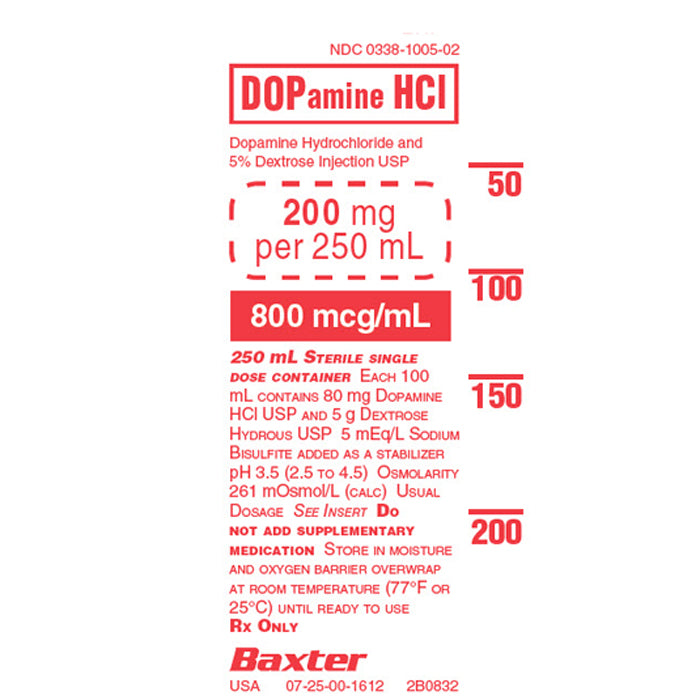
IV Bags, Dopamine and 5% Dextrose IV Bags Injection IV infusion Dose 500 mL , 12/Case
How to Order:
You will receive instructions on how to create an account along with Rx Ordering Details.
(Note: Acceptable licenses must have Prescriptive Authority in the license issuing state.)
Hospital-Grade Critical Care Vasopressor & Inotropic Support for Shock, Hypotension, and Cardiac Emergencies
Take rapid control of hemodynamic instability in the ICU, ER, or surgical suite with Dopamine Hydrochloride and 5% Dextrose Injection 500 mL IV Bags by Baxter IV Systems. Specially formulated for continuous intravenous infusion, this ready-to-use solution provides reliable vasopressor and inotropic support for patients in shock, acute heart failure, sepsis, hypotension, and other life-threatening, low blood pressure states. Baxter’s proven infusion bag delivery system ensures rapid availability and ease-of-use in every code cart, crash cart, and intensive care unit.
Key Features & Top Clinical Benefits
- Advanced Hemodynamic Management: Delivers precise titration of dopamine for restoring and maintaining adequate blood pressure, cardiac output, and organ perfusion in critically ill or unstable patients.
- Immediate Vasopressor & Inotropic Therapy: First-line for septic shock, cardiogenic shock, severe hypotension, and acute circulatory failure.
- Balanced Solution: Each 500 mL IV bag contains pre-mixed dopamine hydrochloride and 5% dextrose in water for safe, effective, and efficient administration.
- Baxter IV Bag System: Trusted by hospitals and ICU teams worldwide for its sterile, tamper-evident, easy-to-hang design—no in-house mixing required, reduces medication errors and time to treatment.
- Hospital, ICU & Emergency Department Essential: A must-have for clinicians managing acute shock, cardiac arrest, trauma resuscitation, perioperative blood pressure instability, and advanced cardiac life support (ACLS) protocols.
Top Uses & Life-Saving Indications
- Septic shock (sepsis with low blood pressure)
- Cardiogenic shock and acute heart failure
- Hypotension unresponsive to fluid resuscitation
- Post-resuscitation hemodynamic support
- Perioperative and surgical blood pressure support
- Trauma and emergency volume/pressure restoration
- Advanced cardiac life support (ACLS) vasopressor protocols
Why Choose Dopamine HCl & 5% Dextrose IV by Baxter?
- Ready-to-use, pharmacy-grade solution—no calculations, sterile compounding, or delays
- Flexible, titratable dosing for individualized patient care
- Rapid access for life-threatening emergencies
- Compatible with all hospital IV infusion pumps and standard lines
- Proven clinical efficacy and industry-leading Baxter quality and compliance
- Reduces medication errors and time-to-therapy compared to manual mixing
Top Searched Terms for Dopamine and 5% Dextrose IV Bags
- dopamine IV infusion for shock
- vasopressor for hypotension and sepsis
- hospital dopamine hydrochloride IV bag
- inotropic support ICU
- Baxter dopamine and dextrose infusion
- critical care vasopressor medication
- ready-to-use dopamine IV for low blood pressure
- cardiac arrest and shock dopamine drip
- emergency dopamine HCl dextrose IV bag
- best medication for septic shock hospital
- dopamine infusion for heart failure
- dopamine ACLS protocol hospital
- Baxter IV dopamine nursing
- pediatric, adult dosing for dopamine infusion
- ICU and ER pressor pharmacy supply
Directions for Use
- Route: Intravenous infusion ONLY. For use with IV pumps and close cardiac monitoring.
-
Dosage:
- Adults: Start at 2-5 mcg/kg/min, titrate for desired hemodynamic/urine output; max dose per prescriber or protocol.
- Pediatrics: Weight-based dosing per hospital guidelines.
- Administration: Inspect for clarity, hang on IV pole, spike with sterile set, and program pump as directed.
- Continuous monitoring of ECG, blood pressure, and urine output is required during infusion.
Possible Side Effects
Common:
- Tachycardia (rapid heart rate)
- Palpitations
- Nausea, vomiting
- Headache
Serious/Seek Immediate Attention:
- Ventricular arrhythmias
- Chest pain or angina
- Hypertensive crisis
- Extravasation/ischemia at infusion site
- Tissue necrosis (if IV infiltrates)
Always monitor IV site for infiltration; administer via central line when possible for high-dose or long-term infusions.
Precautions
- For use by trained medical professionals in hospital/critical care settings only
- Not for IV bolus, SUBQ, or IM injection
- Monitor volume status to avoid fluid overload
- Use with extreme caution in patients with tachyarrhythmias, MAO inhibitor use, or peripheral vascular disease
- Adjust infusion for renal, hepatic, and pediatric patients as per hospital protocol
- Not for home or layperson use
For rapid, reliable vasopressor and inotropic support in the most critical cases, trust Dopamine Hydrochloride and 5% Dextrose Injection 500 mL IV Bags by Baxter IV Systems—the gold standard for hospital, ICU, and ER management of shock, hypotension, sepsis, and cardiac failure.
