 Skip to content

Filters
- Crisp Linen Scent (1)
- Disinfectant (4)
- Disinfectant Solution (4)
- disinfectant spray (4)
- Eliminators Odor (1)
- Lysol (1)
- Lysol Disinfectant (1)
- Lysol Spray (1)
- Surface Disinfectant (4)
- Alcohol Based (1)
- Germicidal Cleaner (1)
- Germicidal Spray (1)
- Hepatitis C Virus (1)
- HIV-1 (1)
- HIV-1 Disinfectant (1)
- Hospital Disinfectant (3)
- Hospital grade (1)
- Pump Spray (1)
- Sanitizer (1)
- Staphylococcus Aureus (1)
- Covid-19 (1)
- hand disinfectant (2)
- Kills Human Coronavirus in 1 minute (1)
- Kills Influenza Type A (1)
- Kills SARS-CoV-2 (COVID-19) (1)
- all-purpose cleaner (1)
- best disinfectant (1)
- covid-19 (1)
- EPA registered disinfectant (1)
- hospital grade cleaner (1)
- Hydrogen Peroxide (1)
- kill 99.9% germs (1)
- no bleach disinfectant (1)
Filters
- Crisp Linen Scent (1)
- Disinfectant (4)
- Disinfectant Solution (4)
- disinfectant spray (4)
- Eliminators Odor (1)
- Lysol (1)
- Lysol Disinfectant (1)
- Lysol Spray (1)
- Surface Disinfectant (4)
- Alcohol Based (1)
- Germicidal Cleaner (1)
- Germicidal Spray (1)
- Hepatitis C Virus (1)
- HIV-1 (1)
- HIV-1 Disinfectant (1)
- Hospital Disinfectant (3)
- Hospital grade (1)
- Pump Spray (1)
- Sanitizer (1)
- Staphylococcus Aureus (1)
- Covid-19 (1)
- hand disinfectant (2)
- Kills Human Coronavirus in 1 minute (1)
- Kills Influenza Type A (1)
- Kills SARS-CoV-2 (COVID-19) (1)
- all-purpose cleaner (1)
- best disinfectant (1)
- covid-19 (1)
- EPA registered disinfectant (1)
- hospital grade cleaner (1)
- Hydrogen Peroxide (1)
- kill 99.9% germs (1)
- no bleach disinfectant (1)
Disinfectant Spray for Disinfectant Solution
-
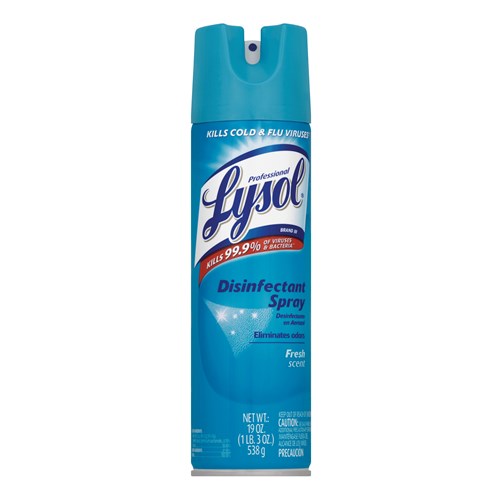
 Sale 29%
Lysol Disinfecting Spray with Crisp Linen Scent 12.5 oz Spray
Original price $ 13.95Current price $ 9.956 reviews -
 Sale 29%
Germicidal Cleaner Surface Disinfectant Spray Alcohol-Based Liquid 24 oz
 Original price $ 17.95Current price $ 12.80
 -
 Sale 50%
Surface Disinfectant Spray Deodorizer Cleaner One-Step, 32 oz (Fungicide, Mildewstat, Virucide)
Original price $ 9.99Current price $ 4.953 reviews -
 Sale 27%
Clorox Healthcare Hydrogen Peroxide Surface Disinfectant Spray Cleaner & Sanitizer 32 oz
Original price $ 19.95Current price $ 14.50


Disinfectant Sprays
Disinfectant sprays are chemical solutions designed to kill germs — such as bacteria, viruses, and fungi — on surfaces, delivered in a spray form. In general, a disinfectant is defined as “a chemical liquid that destroys bacteria,” and it’s meant to be applied on non-living objects to eliminate harmful microorganisms that can cause infection and disease. A disinfectant spray specifically refers to that germ-killing liquid packaged in a bottle or can with a spray mechanism (trigger pump or aerosol). This allows you to spray the disinfectant evenly onto surfaces that need to be sanitized making it convenient to quickly cover areas like countertops, doorknobs, or bathroom fixtures with the germicidal solution.
How Disinfectant Sprays Work
Disinfectant sprays contain active ingredients that destroy or deactivate pathogens. Common active ingredients include alcohols (such as ethanol or isopropanol), bleach (sodium hypochlorite), hydrogen peroxide, or quaternary ammonium compounds (e.g., benzalkonium chloride). For example, many Lysol® disinfectant spray products use a combination of ethanol (around 58%) and a small amount of a quaternary ammonium compound as the germ-killing agents. Other spray formulas might use benzalkonium chloride as the primary disinfectant, while some “botanical” or eco-friendly sprays use ingredients like thymol (a thyme oil extract) as the antimicrobial component. Regardless of the specific chemical used, the purpose is the same: to reduce the number of germs on a surface, preventing them from multiplying and spreading illness.
When you spray a disinfectant on a surface, the solution coats the surface and begins to kill microorganisms on contact. However, most disinfectant sprays need a certain “dwell time” to work effectively. This means the surface should remain wet with the spray for a specific period (often a few minutes) as listed on the product label, so that the chemicals have time to destroy the germs. Simply spraying and immediately wiping it dry may not allow enough time for full disinfection. As an example, a product might instruct: “Spray until surface is thoroughly wet. Allow to remain wet for 5 minutes before wiping.” Following these directions ensures the spray kills 99.9% of the bacteria and viruses as claimed. In fact, to be legally sold as a “disinfectant” in the U.S., a spray must contain EPA-approved antimicrobial ingredients and is classified as an antimicrobial pesticide, meaning it has proven ability to kill germs on surfaces. Always read the label to know what pathogens a particular spray is effective against (e.g., some kill cold and flu viruses, SARS-CoV-2 (COVID-19 virus), norovirus, etc.) and the required usage instructions.
Disinfectant sprays are handy tools for quick and effective surface sanitization. They provide a convenient way to apply germ-killing solutions across a broad area. By spraying and properly allowing the disinfectant to do its job, you can significantly reduce the presence of harmful microbes on surfaces, helping to prevent infections. Whether it’s a can of Lysol used at home or a commercial spray used in a hospital, these products are a key part of maintaining clean, hygienic environments. Remember to follow the instructions on the label for safe and effective use, and disinfectant sprays will serve as a powerful ally in your fight against germs.