Skip to content
Free US shipping over $100

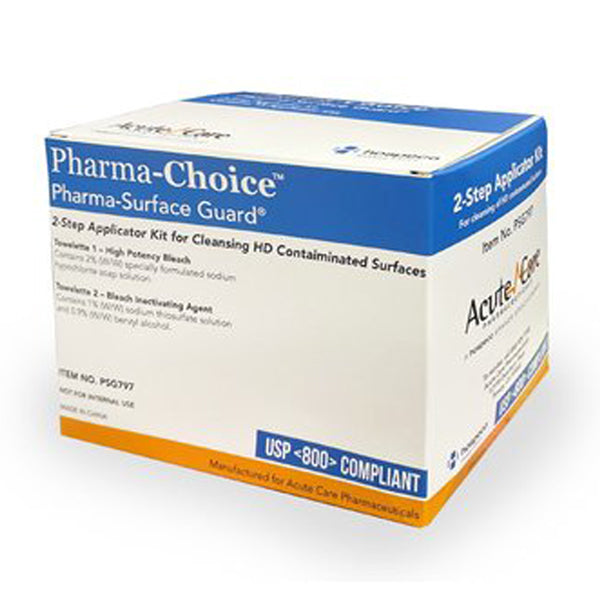
Pharma-Surface Guard Spill Clean Kit 2-Step Applicator Kit For Cleansing HD Contaiminated Surfaces

Sale 40%
Original price $ 115.95
Current price $ 69.95
SKU 94922-0426-32

Pharma-Surface Guard™ two-step process is designed to clean spills without causing oxidation on stainless steel surfaces. It also cleans and inactivates most chemotherapy drugs and other HDs on work surfaces. Pharma-Surface Guard™ is the first stainless steel cleaner / chemo neutralizer kit made with ISO Class 5 cleanroom wipers making it USP <797> compatible.

Pharma-Surface Guard™ (Pharma-Choice™ brand) is a 2-step applicator kit to clean and inactivate cytotoxic agents on chemotherapy work surfaces. This product provides for a cleaner and safer chemotherapy work surface preventing risk of cross-contamination and bacteria resistance.


Product includes:

Towelette 1- High Potency Bleach (contains 2% (WW) specially formulated sodium hypochlorite soap solution.


Towelette 2 - Bleach Inactivating Agent (contains 1% (W/W) sodium thiosulfate solution and 0.09% (W/W) benzyl alcohol. This combination formulation yields the correct final proportion for localized chemotherapy inactivating activity.


Benefits:

• Clean and inactivate anti-cancer drugs on chemotherapy work surfaces

• Stainless steel cleaner - 2nd pad eliminates residual chlorine left from pad #1 reducing potential for corrosion (rust)

• Includes lint-less ISO Class 5 cleanroom grade saturated wipers (9 in. x 9 in.)


Brand: Acute Care Pharmaceuticals

NDC: 94922-0426-32

Size: 15 X 2  each


FAQs about Disinfectant Wipes
  • What Should You NOT Use Disinfecting Wipes On?

    Avoid using on porous surfaces (unsealed wood, leather, some fabrics) and screens (phones, laptops, TVs) unless specified safe. Always spot-test first!

  • Do I Have to Wash My Hands After Using Disinfectant Wipes?

    Yes. It's best practice to wash hands after use to remove any chemical residue, especially before eating or touching your face.

  • How to Use Disinfectant Wipes Correctly?

    Use 1 wipe for ~2 ft² area. Wipe until visibly wet. Let surface air dry; don’t wipe dry immediately. Wash hands after use.

  • Can I Use Disinfectant Wipes to Clean a Toilet?

    Yes! They are perfect for disinfecting toilet seats, flush handles, and exterior surfaces (not for use inside the tank or bowl).

  • What Are the Downsides of Disinfecting Wipes?

    Overuse can cause skin dryness, trigger sensitivities, and contribute to antimicrobial resistance. Not suitable for all surfaces—always read labels.

  • Can You Use Disinfecting Wipes to Clean a Shower?

    Yes, but suitable for most non-porous surfaces only. Not for natural stone or unfinished surfaces.

  • Is It Safe to Use Disinfectant Wipes Without Gloves?

    Short-term use is generally safe, but gloves are recommended for frequent use or sensitive skin.

  • How Long Does a Disinfectant Wipe Last?

    Once opened, use within 3 months for maximum potency. Each wiped surface remains disinfected for several minutes (contact-time dependent).

  • What Happens if You Over Sanitize Your Hands?

    Excessive use may damage skin barrier, causing dryness, irritation, or micro-cuts, and may weaken hand microbiome.

  • Difference Between Antibacterial Wipes and Disinfecting Wipes?

    Antibacterial wipes: Target only bacteria. Disinfecting wipes: Kill bacteria and viruses for broader protection.

  • How Long to Let Disinfectant Sit?

    Allow the treated surface to remain wet for 4–10 minutes (see product label) for maximum efficacy.

  • Can I Use Disinfectant Wipes On Myself?

    No! Designed for surfaces only; not for use on skin, face, or wounds.

  • Do You Have to Rinse After Using Disinfectant Wipes?

    Rinsing is not required on most hard, non-food-contact surfaces. BUT on toys, baby/highchair trays, or surfaces contacting food, rinse with water after use.

  • What Is the Best Disinfectant for Toilet Seats?

    Hospital-grade disinfectant wipes or wipes with EPA “List N” approval for broad-spectrum germ killing.

  • What Are the Most Effective Disinfectant Wipes?

    Look for wipes with quaternary ammonium, bleach, or alcohol as active ingredients, EPA-registered, and proven to kill viruses, bacteria, and fungi.

  • Difference Between Sanitizing vs. Disinfecting Wipes?

    Sanitizing: Reduces but does not eliminate all pathogens. Disinfecting: Kills nearly all known harmful microbes on hard surfaces.

  • What Should You NOT Use Antibacterial Wipes On?

    Same as disinfecting: Avoid unfinished wood, delicate fabrics, and electronic screens unless specified.

Search Any Type of Product, Medication, or Alignment