Skip to content
Free US shipping over $100

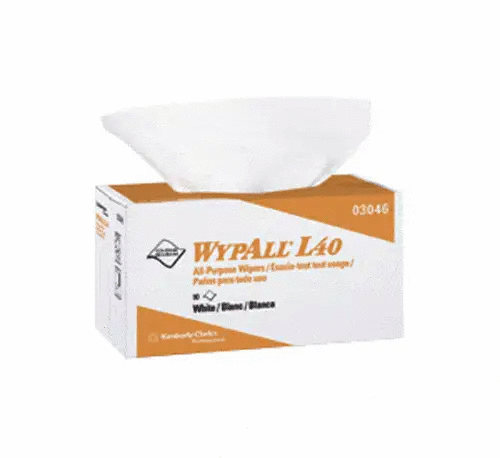
Wipeall L40 Wipers - Case of 90

Sale 35%
Original price $ 135.90
Current price $ 89.00
SKU KC-3046-IM

Kimberly Clark Wypall L40 Wipers - Case of 90 are a general-purpose, light-duty wipe that is great for routine industrial cleaning and maintenance. Designed to remove oil and liquids from surfaces, as well as face and hands, each wiper with its unique DRD base sheet technology provides large absorption capacities and high absorption rates.


Wypall L40 Wipers - Case of 90 Features:

  • General purpose light-duty wiper
  • Large absorption capacity
  • High absorption rate
  • Easily absorbs liquids, lubricants and oils
  • Soft enough for use on face and hands
  • Great for routine industrial cleaning and maintenance
  • Unique DRC base sheet technology
  • White
  • Pop-up box
  • 10.8” x 10” in size
  • Sold by: Case of 90 Boxes

Great for…

  • Office buildings
  • Healthcare
  • Industrial manufacturing
  • Clean rooms
  • Labs
  • Education
  • Food Processing /Food service
  • Grocery
  • High Traffic Areas
  • Lodging
  • Metal Manufacturing


When you need an everyday wipe that is tough on soils, yet gentle on skin, choose Wypall L40 Wipers. This particular model of the popular brand by Kimberly Clark is great for light, general purpose cleaning. They easily absorb liquids, lubricants and oils, without damaging the skin.


Order Wypall L40 Wipers - Case of 90 online or call 1-888-687-4334 to speak with a trained representative today!

FAQs about Disinfectant Wipes
  • What Should You NOT Use Disinfecting Wipes On?

    Avoid using on porous surfaces (unsealed wood, leather, some fabrics) and screens (phones, laptops, TVs) unless specified safe. Always spot-test first!

  • Do I Have to Wash My Hands After Using Disinfectant Wipes?

    Yes. It's best practice to wash hands after use to remove any chemical residue, especially before eating or touching your face.

  • How to Use Disinfectant Wipes Correctly?

    Use 1 wipe for ~2 ft² area. Wipe until visibly wet. Let surface air dry; don’t wipe dry immediately. Wash hands after use.

  • Can I Use Disinfectant Wipes to Clean a Toilet?

    Yes! They are perfect for disinfecting toilet seats, flush handles, and exterior surfaces (not for use inside the tank or bowl).

  • What Are the Downsides of Disinfecting Wipes?

    Overuse can cause skin dryness, trigger sensitivities, and contribute to antimicrobial resistance. Not suitable for all surfaces—always read labels.

  • Can You Use Disinfecting Wipes to Clean a Shower?

    Yes, but suitable for most non-porous surfaces only. Not for natural stone or unfinished surfaces.

  • Is It Safe to Use Disinfectant Wipes Without Gloves?

    Short-term use is generally safe, but gloves are recommended for frequent use or sensitive skin.

  • How Long Does a Disinfectant Wipe Last?

    Once opened, use within 3 months for maximum potency. Each wiped surface remains disinfected for several minutes (contact-time dependent).

  • What Happens if You Over Sanitize Your Hands?

    Excessive use may damage skin barrier, causing dryness, irritation, or micro-cuts, and may weaken hand microbiome.

  • Difference Between Antibacterial Wipes and Disinfecting Wipes?

    Antibacterial wipes: Target only bacteria. Disinfecting wipes: Kill bacteria and viruses for broader protection.

  • How Long to Let Disinfectant Sit?

    Allow the treated surface to remain wet for 4–10 minutes (see product label) for maximum efficacy.

  • Can I Use Disinfectant Wipes On Myself?

    No! Designed for surfaces only; not for use on skin, face, or wounds.

  • Do You Have to Rinse After Using Disinfectant Wipes?

    Rinsing is not required on most hard, non-food-contact surfaces. BUT on toys, baby/highchair trays, or surfaces contacting food, rinse with water after use.

  • What Is the Best Disinfectant for Toilet Seats?

    Hospital-grade disinfectant wipes or wipes with EPA “List N” approval for broad-spectrum germ killing.

  • What Are the Most Effective Disinfectant Wipes?

    Look for wipes with quaternary ammonium, bleach, or alcohol as active ingredients, EPA-registered, and proven to kill viruses, bacteria, and fungi.

  • Difference Between Sanitizing vs. Disinfecting Wipes?

    Sanitizing: Reduces but does not eliminate all pathogens. Disinfecting: Kills nearly all known harmful microbes on hard surfaces.

  • What Should You NOT Use Antibacterial Wipes On?

    Same as disinfecting: Avoid unfinished wood, delicate fabrics, and electronic screens unless specified.

Search Any Type of Product, Medication, or Alignment