


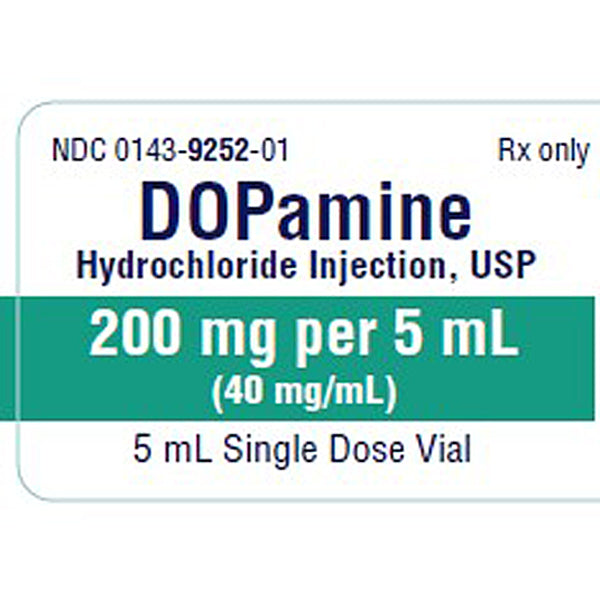

Dopamine Hydrochloride Injection 200 mg/ Per 5 mL (40 mg/mL) Single-Dose Vials 5 mL, 25/Box (Rx)
How to Order:
You will receive instructions on how to create an account along with Rx Ordering Details.
(Note: Acceptable licenses must have Prescriptive Authority in the license issuing state.)
Dopamine Hydrochloride Injection 200 mg/5 mL is used as an inotropic agent to treat various types of shock, including cardiogenic and septic shock, by improving heart function and blood flow. It stimulates dopaminergic and adrenergic receptors, increasing cardiac output, enhancing renal perfusion, and elevating blood pressure. This medication is administered intravenously in critical care settings to stabilize hemodynamics and support cardiovascular function in acutely ill patients.
Dopamine Hydrochloride Injection is a cardiovascular medication used to treat hemodynamic imbalances present in shock syndromes due to myocardial infarctions, trauma, endotoxic septicemia, open-heart surgery, renal failure, and chronic cardiac decompensation. It is indicated for increased cardiac output, raised blood pressure, and improved renal flow and urine output. This formulation by Hikma Injectables comes in single-dose vials with a concentration of 200 mg per 5 mL (40 mg/mL), packaged in boxes containing 25 vials.
Details and Features
Active Ingredient: Dopamine Hydrochloride
Concentration: 40 mg/mL
Volume: 5 mL per vial
Packaging: 25 single-dose vials per box
Use: IV administration for the treatment of shock states
Manufacturer: Hikma Injectables
Purpose: Primarily used to enhance perfusion to vital organs by improving cardiac output, blood pressure, and urine output
Mechanism of Action
Dopamine serves as a sympathomimetic agent working by stimulating dopaminergic and adrenergic receptors. Its mechanism is dose-dependent:
Low doses primarily stimulate dopaminergic receptors, promoting vasodilation and increased renal blood flow, leading to enhanced urine output.
Intermediate doses have a predominant effect on β1-adrenergic receptors in the heart, increasing cardiac output.
High doses primarily stimulate α-adrenergic receptors, leading to vasoconstriction and increased systemic vascular resistance, thus raising blood pressure.
Warnings
-
Cardiovascular Effects: Continuous monitoring of cardiac rhythm, blood pressure, and urine output is essential. Avoid use in patients with pheochromocytoma or uncorrected tachyarrhythmias.
-
Peripheral Ischemia: High doses or prolonged use can lead to vasoconstriction causing tissue ischemia, particularly in extremities.
- Hypovolemia: Correct any underlying hypovolemia with appropriate volume expanders before dopamine administration. Interaction with MAO Inhibitors: May potentiate the effects of dopamine; dose adjustments are needed.
Side Effects
Common Side Effects:
- Tachycardia
- Palpitations
- Headache
- Nausea or vomiting
Serious Side Effects:
- Arrhythmias or exacerbation of existing arrhythmias
- Hypertension or severe hypotension
- Peripheral ischemia or gangrene from prolonged high-dose infusion
- Polyuria due to increased renal perfusion
Administration and Monitoring
Dopamine Hydrochloride Injection should be administered intravenously via an infusion pump for accurate control of dosing. Healthcare providers must ensure constant monitoring of vital signs, particularly heart rate and blood pressure, during infusion. Adjustments in dosing should be made based on the therapeutic response and any side effects. Close attention should be given to patients with compromised cardiovascular status and any sudden changes in rhythm should prompt reevaluation of therapy.
