
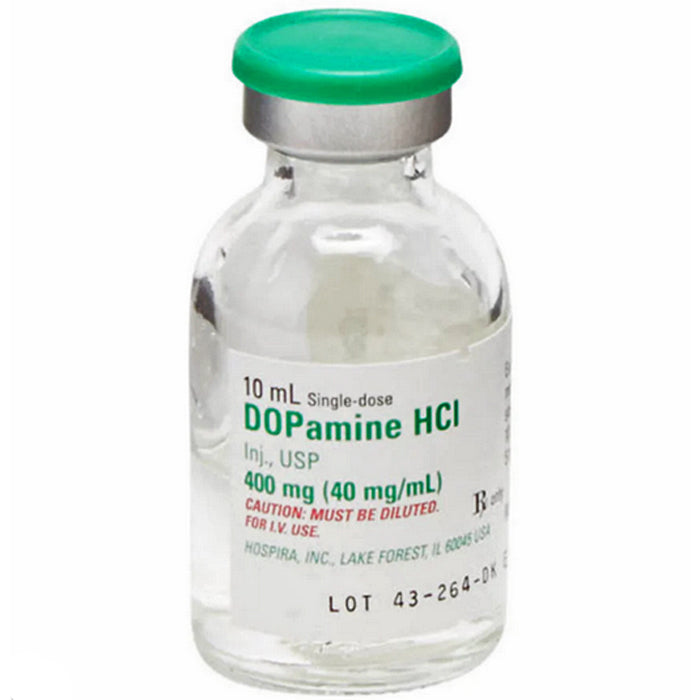

Dopamine Hydrochloride Injection 40 mg/mL Single-Dose Vials 10 mL, 10/Box by Pfizer (RX)
How to Order:
You will receive instructions on how to create an account along with Rx Ordering Details.
(Note: Acceptable licenses must have Prescriptive Authority in the license issuing state.)
Dopamine Hydrochloride Injection is utilized to address acute heart failure, shock, and low blood pressure. As an inotropic agent, it increases cardiac output and blood pressure by stimulating dopamine and adrenergic receptors. This injectable solution is vital in critical care settings, assisting in improving perfusion to essential organs and managing hemodynamic imbalance due to trauma, heart attack, or surgery. Its precise administration helps stabilize patients during acute medical conditions by enhancing cardiovascular function.
Details and Features:
-
Concentration and Volume: Each vial contains 40 mg/mL of dopamine hydrochloride in a 10 mL solution, providing ample dosage for titration specific to patient needs.
-
Packaging: Available in boxes of 25 single-dose vials, geared towards both hospital pharmacies and emergency departments.
-
Administration Route: Designed for intravenous infusion, which is critical for ensuring immediate systemic effects.
- Indications: Utilized primarily for the management of hemodynamic imbalances such as shock states—due to myocardial infarctions, cardiac surgery complications, sepsis—or in acute renal failure where enhanced renal perfusion is desired.
Mechanism of Action:
Dopamine functions by activating adrenergic and dopaminergic receptors in a dose-dependent manner, making it versatile for cardiovascular support:
-
Low Doses (0.5-2 mcg/kg/min): Selectively stimulates dopaminergic receptors leading to vasodilation in the renal, mesenteric, coronary, and cerebral vasculature which can improve renal perfusion and urine output.
-
Moderate Doses (2-10 mcg/kg/min): Primarily activates beta-1 adrenergic receptors, resulting in increased cardiac output due to enhanced myocardial contractility and heart rate.
- High Doses (10-20 mcg/kg/min): Engages alpha-adrenergic receptors, causing vasoconstriction and increased systemic vascular resistance, providing a significant rise in blood pressure.
Warnings:
-
Cardiovascular Risks: May induce arrhythmias, tachycardia, or exacerbation of myocardial ischemia; continuous ECG monitoring is recommended.
-
Hypertensive Crisis: High doses can precipitate marked vasoconstriction and hypertension.
-
Extravasation Hazard: As a vasoconstrictor, extravasation can lead to severe tissue necrosis. Given this risk, administration via a central line is advised when possible, and prompt investigation should occur should extravasation be suspected.
-
Specific Contraindications: Patients with pheochromocytoma or uncorrected tachyarrhythmias should avoid dopamine use due to potential adverse effects.
- Hypovolemia: Ineffectiveness in the absence of sufficient circulatory volume; imperative to correct hypovolemia prior to initiating therapy.
Side Effects:
-
Cardiac Effects: Tachycardia, various arrhythmias.
-
Vasculature Effects: Hypertension, vasoconstrictive complications.
-
Respiratory Effects: Dyspnea as a potential adverse reaction.
- Digestive and Nervous System: Nausea, vomiting, headache, and anxiety.
Clinical Considerations:
-
Patient Monitoring: Intensive monitoring of vital signs, particularly blood pressure, cardiac function, and urinary output is crucial.
-
Individualized Dosing: Optimal outcomes rely on individualized dosing; hence, patient monitoring and titration are necessary to achieve desired therapeutic effects without adverse outcomes.
- Preparatory Measures: Ensure all resuscitative equipment and pharmacological support are available in the care environment prior to administration.
This comprehensive product should only be administered by healthcare professionals within controlled medical settings. For complete usage guidelines, always refer to the detailed prescribing information and engage healthcare providers in therapy decision-making.
