Skip to content
New users? Get 5% off on your first purchase.
Free US shipping over $100
New users? Get 5% off on your first purchase.
Free US shipping over $100

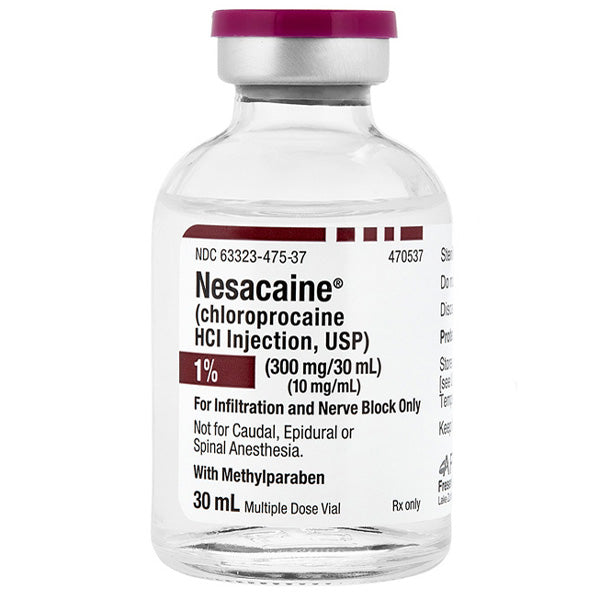
Nesacaine Chloroprocaine HCL 1% Injection 30 mL Multiple-Dose Vials 25-Pack (RX)

Sale 24%
Original price $ 785.00
Current price $ 599.95
SKU 63323-0475-37
*Mountainside Medical does not fill personal prescriptions Medical Professional License Required to Unlock Account

How to Order:

Send an email request to: sales@mountainside-medical.com

You will receive instructions on how to create an account along with Rx Ordering Details.

(Note: Acceptable licenses must have Prescriptive Authority in the license issuing state.)

Nesacaine Chloroprocaine HCL 1% Injection 30 mL Multiple-Dose Vials 25-Pack is a medication used for local anesthesia in various medical procedures. It contains chloroprocaine hydrochloride, an anesthetic agent, which numbs the area and blocks nerve impulses to prevent pain during the procedure. This pack contains 25 multiple-dose vials, with each vial containing 30 mL of the medication for use in multiple procedures. It is commonly used for procedures such as spinal and epidural anesthesia, nerve blocks, and local anesthesia for surgeries or minor procedures. It should only be administered by a qualified healthcare professional.

Benefits:

  • Effective pain relief: Nesacaine Chloroprocaine HCL 1% Injection is a local anesthetic that is commonly used to provide pain relief during procedures such as spinal or epidural anesthesia, nerve blocks, and minor surgical procedures. It works by blocking the nerves that transmit pain signals, providing effective and fast-acting pain relief.
  • Multiple-dose vials: The 30 mL multiple-dose vials of Nesacaine Chloroprocaine HCL 1% Injection are beneficial because they can be used for multiple procedures. This is convenient for healthcare professionals and can also save on costs for both the healthcare provider and the patient.
  • Versatile use: Nesacaine Chloroprocaine HCL 1% Injection can be used for a variety of procedures, including spinal anesthesia, epidural anesthesia, nerve blocks, and minor surgical procedures. This makes it a versatile and useful medication for medical procedures.
  • Faster onset of action: Nesacaine Chloroprocaine HCL 1% Injection is a fast-acting local anesthetic, with a quick onset of action. This means that patients can experience pain relief more quickly, which is beneficial for procedures that require immediate and efficient pain management.
  • Low risk of serious side effects: Compared to other local anesthetics, Nesacaine Chloroprocaine HCL 1% Injection has a lower risk of serious side effects such as cardiac toxicity and neurotoxicity. This makes it a safer option for patients, particularly those who may be at a higher risk for adverse reactions.
  • Multiple pack size option: The 25-pack of Nesacaine Chloroprocaine HCL 1% Injection is beneficial for healthcare facilities as it provides a larger quantity of medication for a reasonable cost. This can help ensure that the facility is adequately stocked and prepared for any procedures that may require local anesthesia.
  • Pre-apportioned dosage: The 30 mL multiple-dose vials of Nesacaine Chloroprocaine HCL 1% Injection are pre-apportioned, meaning that they are already measured out into individual doses. This makes it easier for healthcare professionals to administer the correct dosage to patients, reducing the risk of medication errors.
  • Well-established safety profile: Nesacaine Chloroprocaine HCL 1% Injection has been used for many years by healthcare professionals and has a well-established safety profile. This adds an extra level of reassurance for both patients and healthcare providers.
  • FDA-approved medication: Nesacaine Chloroprocaine HCL 1% Injection is a FDA-approved medication, which means it has undergone strict testing and is considered safe and effective for its intended use. This can provide peace of mind and confidence for patients and healthcare providers alike.
  • Can be used in patients with allergies: Nesacaine Chloroprocaine HCL 1% Injection can be a suitable alternative for patients who are allergic to other local anesthetics, such as lidocaine or bupivacaine. This means that it can be a valuable option in situations where other local anesthetics may not be suitable.
Nesacaine Chloroprocaine HCL 1% Injection 30 mL Multiple-Dose Vials 25-Pack (RX)
$ 785.00 $ 599.95
🔒 Medical License Required
FAQs about Epidural Medications
  • What Medications Are Used in an Epidural?

    The most common medications in an epidural include: Local anesthetics (like lidocaine, bupivacaine, or ropivacaine) Opioids (narcotics) (such as fentanyl, morphine, or sufentanil) Sometimes steroids (like methylprednisolone or triamcinolone) for inflammation and nerve pain, especially in back conditions

  • What Are the Three Types of Epidurals?

    Single-shot epidural: One-time injection of medication into the epidural space for temporary relief. Continuous epidural infusion: Catheter delivers medication over an extended period (common in labor and long surgeries). Combined spinal-epidural (CSE): Combines fast-acting spinal injection with longer-lasting epidural for maximum pain control.

  • Which Two Drugs Are Used in a Standard Epidural?

    A standard epidural typically uses a combination of a local anesthetic (like bupivacaine) and an opioid analgesic (such as fentanyl or morphine) for effective pain relief.

  • What Pain Medication Is Given Instead of an Epidural?

    Alternatives to epidurals for pain control include: IV pain medications (opioids, acetaminophen) Spinal blocks Peripheral nerve blocks Non-opioid analgesics and NSAIDs Consult your healthcare provider for the safest pain management options.

  • What Drug Is in an Epidural for Back Pain?

    Steroids (typically methylprednisolone, triamcinolone, or dexamethasone) combined with a local anesthetic are used in epidural steroid injections for chronic back pain and inflammation.

  • What Drugs Are Used in Epidurals for Labour?

    The most common epidural medications for labor are bupivacaine or ropivacaine mixed with fentanyl for powerful, safe, and rapid pain relief during childbirth.

  • What Is the Most Common Injection for Back Pain?

    Epidural steroid injections with corticosteroids like methylprednisolone or triamcinolone, in combination with a local anesthetic, are the most common and effective treatments for chronic back pain and sciatica.

  • What Kind of Anesthesia Is Used for an Epidural?

    Regional anesthesia is used in an epidural, blocking nerve signals in a targeted part of the body while keeping patients conscious and alert.

  • What Is the Most Common Use for an Epidural?

    The most common use is for labor pain management during childbirth. Epidurals are also frequently used for chronic back pain, spinal stenosis, herniated discs, and sciatica.

  • Do All Epidurals Have Narcotics?

    No, not all epidurals contain narcotics. Some use only local anesthetics, while others combine local anesthetics with opioids for enhanced pain relief.

  • What Pain Meds Do They Give You After Birth?

    Pain relief after birth may include: Oral painkillers (acetaminophen, ibuprofen) Mild opioids when necessary Topical anesthetics Always follow your healthcare provider’s recommendations.

  • What Is the Name of the Injection for Sciatica Pain?

    The standard treatment is an epidural steroid injection (ESI), often using methylprednisolone or triamcinolone.

  • What Is the Best Painkiller for Spinal Stenosis?

    Epidural steroid injections (with corticosteroids and local anesthetics) provide targeted pain relief for spinal stenosis. Oral NSAIDs and neuropathic pain medications can also help.

  • What Is the Best Steroid for Epidural Injection?

    Methylprednisolone acetate is one of the most commonly used and effective steroids in epidural steroid injections.

  • Who Is Not a Good Candidate for an Epidural?

    Contraindications include: Blood clotting disorders Infection at the injection site Certain neurological conditions Severe hypovolemia Allergy to epidural medications Consult your healthcare provider for a thorough evaluation.

  • What Is the Alternative to an Epidural Steroid Injection?

    Alternatives include: Physical therapy Oral anti-inflammatory drugs (NSAIDs) Nerve blocks Radiofrequency ablation Surgery (in severe cases)

  • How Much Does an Epidural Typically Cost?

    The average cost of an epidural ranges from $1,000 to $3,000 depending on insurance, location, and additional procedures. Always check with your provider for exact pricing.

  • Why Choose Our Epidural Medications?

    Clinically-tested, hospital-grade formulations Sterile, safe, and highly effective for rapid pain relief Trusted by anesthesiologists, pain clinics, and hospitals Custom solutions for labor, back pain, spinal stenosis, and more Backed by the latest research in pain management and anesthesia

Search Any Type of Product, Medication, or Alignment

Added to your cart:

Cart subtotal

Get Notified When Back in Stock