






Epidural Medications for Multi dose anesthetic vials
-
 Sale 26%
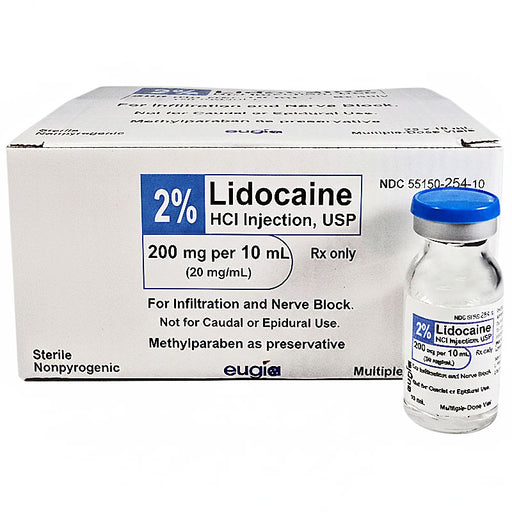
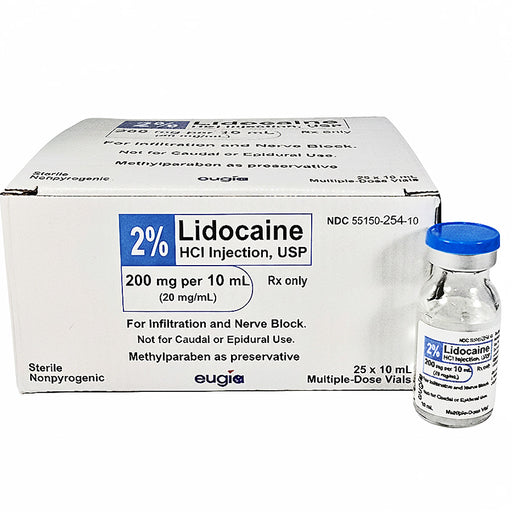
Lidocaine 2% HCL for Injection 10 mL Mutli Dose Vials, 25 Pack (Rx)
Original price $ 129.00Current price $ 95.00
Explore our selection of Epidural Medications for advanced pain management and anesthesia. Perfect for labor, surgery, or chronic pain, these medications offer targeted relief with minimal side effects. Optimize patient comfort, reduce inflammation, and control severe pain with fast-acting, sterile, and hospital-grade solutions. Ideal for nerve block, spinal anesthesia, and epidural injections, our medications ensure safety, reliability, and effective care in all medical settings.
Epidural Medications
Epidural anesthesia/analgesia involves injecting drugs into the epidural space – the area just outside the dural membrane surrounding the spinal cord. Medications delivered there diffuse to the spinal nerve roots, blocking pain signals from the lower body. By numbing the spinal nerves before they enter the cord, epidural drugs provide powerful pain relief for childbirth, surgery, or back/leg pain without general sedation.
Mechanism of Action
Local anesthetics: The primary epidural agents are local anesthetics (usually long-acting amides) such as bupivacaine, levobupivacaine, or ropivacaine. These drugs reversibly block voltage-gated sodium channels in nerve fibers, preventing depolarization and conduction of pain impulses. At typical epidural concentrations (e.g. 0.0625–0.125% for labor analgesia), they preferentially block unmyelinated pain fibers, producing strong sensory blockade with minimal muscle paralysis. Higher concentrations (e.g. 0.5–0.75%) cause dense motor block and are used for surgical anesthesia (e.g. C-section or abdominal surgery). Shorter-acting agents like lidocaine or 2-chloroprocaine can be used for rapid onset (e.g. as a test dose), but are less commonly used for prolonged epidural analgesia owing to shorter duration and higher toxicity.
Opioids: Lipid-soluble opioids (fentanyl, sufentanil) are often added to the epidural mixture. These rapidly cross the meninges and act on μ-opioid receptors in the dorsal horn of the spinal cord, greatly enhancing analgesia and allowing lower doses of local anesthetic. Fentanyl (1–3 µg/mL) and sufentanil (0.5–1 µg/mL) are commonly used in labor epidurals. (Hydrophilic opioids like morphine can be given intrathecally for long-lasting postoperative pain relief, but are used less often via epidural due to delayed effects and side effects.) Adding an opioid shortens onset and prolongs the duration of epidural analgesia, and improves sacral coverage.
Other adjuvants: Several adjuncts may further improve or prolong epidural anesthesia. Small doses of epinephrine (often 1–2 µg/mL) are sometimes added to local anesthetic solutions as a vasoconstrictor to prolong block duration, although its benefit in dilute labor epidurals is modest. Clonidine or dexmedetomidine (α₂-agonists) can be added to provide additional analgesia and reduce the required anesthetic dose, but they can cause sedation and hypotension. (These adjuvants are used off-label in obstetric epidurals and in lower-extremity surgical epidurals.) Overall, modern epidurals for labor or surgery typically combine a dilute long-acting local anesthetic with a small opioid and sometimes a vasoconstrictor to maximize pain control while minimizing motor block.
Uses
Epidural injections are used in several settings:
-
Labor and delivery: Epidural analgesia is the gold standard for labor pain relief. A catheter is placed in the lumbar epidural space and an infusion of low-concentration local anesthetic plus opioid is started. This allows effective pain relief throughout labor (T10–L1 for uterine contractions and S2–S4 for perineal pain). Typical regimens use bupivacaine or ropivacaine 0.1–0.125% combined with fentanyl or sufentanil. For example, an initial bolus might be 10–20 mL of 0.2% ropivacaine (20–40 mg total) with 50–100 µg fentanyl, followed by a continuous infusion (e.g. 10 mL/h) or patient-controlled boluses. Maternal blood pressure and fetal heart rate are monitored, since sympathetic blockade can cause hypotension. Modern low-dose epidurals (combined with opioids) provide excellent analgesia with minimal motor weakness. If an obstetric emergency arises (e.g. need for C-section), the epidural can be bolused with higher-concentration anesthetic or supplemented with a spinal dose for surgical anesthesia.
-
Surgical anesthesia (non-obstetric): Epidural anesthesia can be used for surgeries of the abdomen, pelvis, or lower limbs. Higher concentrations of local anesthetic are used to achieve denser block. For example, bupivacaine 0.5% (or ropivacaine 0.5–1.0%) at 15–30 mL will provide surgical anesthesia for several hours. Epidurals are commonly placed for major abdominal surgery, orthopedic lower limb surgery, or thoracic procedures (via a thoracic epidural). They may be continued postoperatively as a continuous infusion for pain control.
-
Postoperative analgesia: Epidural catheters placed for surgery are often continued into the postoperative period. A dilute anesthetic (e.g. bupivacaine 0.0625–0.1%) with a small opioid infusion effectively controls pain while allowing limb movement. For example, an infusion of ropivacaine 0.2% at 6–14 mL/h (12–28 mg/h) has been used for labor and postoperative analgesia Adding opioids allows even lower infusion rates.
-
Chronic spinal pain: In pain management, epidural steroid injections are given for conditions like herniated disc or spinal stenosis. These are single-shot injections of a corticosteroid (e.g. methylprednisolone, dexamethasone, betamethasone, or triamcinolone) often mixed with a local anesthetic such as lidocaine or bupivacaine. The goal is to reduce inflammation around nerve roots. Common doses (via interlaminar or transforaminal approach) include methylprednisolone 40–80 mg or dexamethasone ~4–10 mg, together with 1–5 mL of local anesthetic. These injections provide temporary pain relief and are performed under fluoroscopic guidance.
Administration and Dosage
Epidural drugs are administered via a needle and catheter:
-
Technique: The anesthesiologist identifies the epidural space (often at L2–L4) using loss-of-resistance, injects a test dose, then threads a fine catheter through the needle. Continuous infusions or repeated boluses are given through the catheter. Strict aseptic technique is used to prevent infection.
-
Test dose: Before administering full-dose anesthetic, a test dose (e.g. 3–5 mL of 1.5–2% lidocaine with epinephrine 1:200,000) is often given. A sudden increase in heart rate or blood pressure would indicate intravascular injection of the epinephrine. Excessive legs weakness or numbness would suggest intrathecal placement. A negative test confirms epidural positioning.
-
Initial dosing: For labor analgesia, a typical initial bolus might be 10–15 mL of 0.1–0.25% bupivacaine (with 50–100 µg fentanyl). (In epidural initiation for surgery, larger volumes of 0.5% solution are used, e.g. 15–30 mL bupivacaine 0.5%.) After the bolus, an infusion of dilute local anesthetic (with or without opioid) is started, often via a pump.
-
Infusion/maintenance: Maintenance rates vary by indication and patient size. In one example, a continuous epidural infusion might be 0.0625–0.1% bupivacaine (or 0.08–0.2% ropivacaine) at 8–12 mL/h, often with fentanyl 2 µg/mL or sufentanil 0.5 µg/mL. Patient-controlled epidural analgesia (PCEA) is also common: the patient may trigger small boluses (e.g. 3–5 mL) with a lockout period. Studies show that intermittent bolus administration can provide better spread and pain relief than a fixed-rate infusion.
-
Dosing examples (bupivacaine/ropivacaine): As guidance, one label suggests for labor: initial epidural 10–20 mL of 0.2% ropivacaine (20–40 mg) then 6–14 mL/h infusion of 0.2% (12–28 mg/h). In contrast, surgical anesthesia might use 0.5% (5 mg/mL) at 15–30 mL for onset (75–150 mg dose). (Exact dosing depends on patient factors and clinical judgment.)
Side Effects and Precautions
-
Cardiovascular: Epidural local anesthetics block sympathetic fibers, causing vasodilation and hypotension. Blood pressure and heart rate must be monitored, especially in obstetric patients. Bradycardia can occur if high thoracic levels are blocked. Systemic absorption of anesthetic can cause heart block or arrhythmias (rare at low doses). Adverse reactions reported (≥5% incidence) include hypotension, bradycardia, and nausea. Patients on β-blockers or with cardiac disease need careful dosing.
-
Neurologic: Excessively high epidural block (e.g. accidental intrathecal injection) can cause respiratory paralysis or total spinal anesthesia. Neurologic injury (nerve trauma, epidural hematoma or abscess) is rare but serious; strict sterile technique and avoidance of epidural in anticoagulated patients reduces risk. If a “wet tap” (dural puncture) occurs, cerebrospinal fluid leak may cause a post-dural puncture headache. Patients should be observed and treated if this develops.
-
Motor block and sedation: While labor epidurals use dilute anesthetic to spare motor function, some limb weakness can occur (dose-dependent). Heavy motor block can interfere with pushing in the second stage of labor. Large or rapid doses can cause sedation or anxiety.
-
Opioid effects: Epidural opioids (fentanyl, sufentanil) can cause pruritus (itching), nausea/vomiting, and sedation. Rarely, high doses may depress respiration (usually within hours of injection). Itching is common (sometimes >10% of patients). Urinary retention is also possible with strong opioids. These effects generally resolve as the drug wears off.
-
Local anesthetic toxicity: Signs of systemic toxicity (from intravascular injection or overdose) include tinnitus, metallic taste, seizures, or cardiac arrhythmias. This is uncommon with careful dosing and aspiration checks. Nonetheless, providers have resuscitation equipment on hand.
-
Epidural steroids (pain injections): When used for back pain, epidural corticosteroids carry steroid-specific risks. These include transient blood sugar elevation (especially in diabetics), adrenal suppression, and Cushingoid symptoms if repeated frequently. All epidural injections require strict sterility to avoid infection; do not perform in patients with active infection or coagulation disorders.