
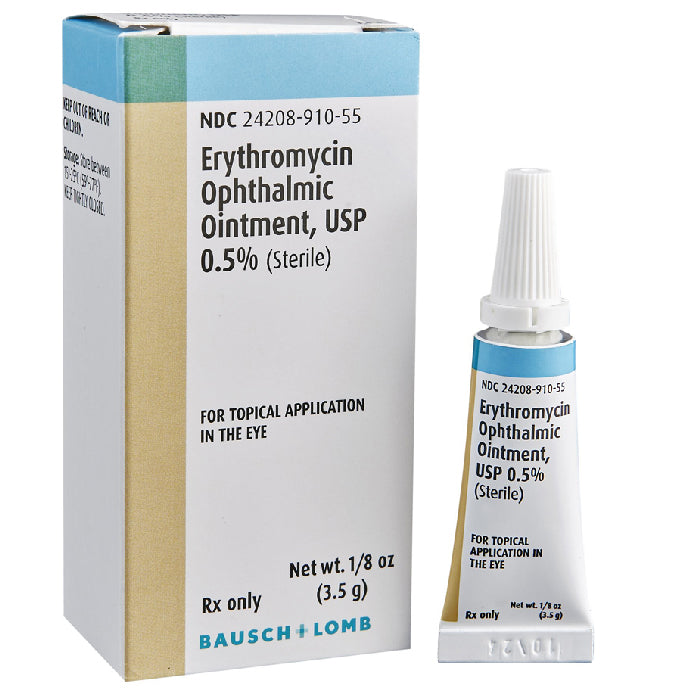
Erythromycin Eye Ointment 0.5%, Sterile 3.5 grams (Rx)
How to Order:
You will receive instructions on how to create an account along with Rx Ordering Details.
(Note: Acceptable licenses must have Prescriptive Authority in the license issuing state.)
Erythromycin Ophthalmic Ointment 0.5% is the leading FDA-approved, prescription antibiotic ointment for the treatment and prevention of a wide range of bacterial eye infections. Packaged in a convenient, single-use, sterile 3.5 gram tube, this broad-spectrum ophthalmic antibiotic offers maximum efficacy, comfort, and safety for sensitive eyes—ideal for patients of all ages, including newborns and children.
#1 Doctor-Recommended Antibiotic Eye Ointment for Eye Infections, Pink Eye, and Stye Relief
Fast, effective treatment for bacterial eye infections trusted by ophthalmologists and patients nationwide.
Key Benefits & Features
- Broad-Spectrum Antibiotic Power: Erythromycin 0.5% quickly eliminates many types of eye infection-causing bacteria (including Staphylococcus, Streptococcus, and more).
- Sterile, Preservative-Free Formula: Designed to minimize eye irritation while providing potent antibacterial protection.
- Safe for All Ages: Trusted for neonatal eye infection prevention, as well as in children and adults.
-
Optimal for Multiple Eye Conditions: Clinically proven to relieve and treat:
- Pink Eye (Conjunctivitis)
- Styes
- Blepharitis (eyelid inflammation)
- Corneal ulcers
- Prevention of ophthalmia neonatorum
- Post-surgical or post-injury infection prevention
- Easy Application: Soft, ophthalmic-grade ointment applies smoothly and stays in place.
- Convenient 3.5 Gram Tube: Perfect size for hospital, clinic, or home use.
Common Uses / Indications
- Treats bacterial conjunctivitis (pink eye), blepharitis, and other bacterial infections of the eye.
- Prevents ophthalmia neonatorum in newborns (routine neonatal eye protection).
- Post-operative or injury-related infection prevention.
- Soothes irritated eyes and helps reduce redness, swelling, and discharge associated with bacterial infection.
Directions
- Wash hands first.
- Tilt head back and gently pull down lower eyelid to create a pocket.
- Apply a ribbon of ointment inside the eyelid as directed by your healthcare provider.
- Close eye gently and roll eyeball around to distribute ointment.
- Wipe away excess with a clean tissue.
Always follow your doctor’s instructions and complete the full course of treatment.
Wny Choose Bausch & Lomb Americas
- Trusted Brand: Over a century of ophthalmic expertise.
- Sterility and Safety: Every tube sealed, sterile, and designed for sensitive eye needs.
- Pharmacy & Hospital Preferred: The go-to ophthalmic ointment for doctors and pharmacists nationwide.
Product Specifications
- Active Ingredient: Erythromycin 0.5% (Antibiotic)
- Inactive Ingredients: Mineral Oil, White Petrolatum, Lanolin Alcohols
- Tube Size: 3.5 grams
- Sterile: Yes
- Prescription Required: Yes (USA)
- NDC: (Provide NDC if known)
- Manufacturer: Bausch & Lomb Americas
Safe & Effective Treatment For All Ages
Whether you're treating a stubborn pink eye, soothing a painful stye, managing blepharitis, preventing neonatal eye infections, or seeking post-surgical protection, Bausch & Lomb Erythromycin Ointment 0.5% is the top choice recommended by ophthalmologists for trusted, antibiotic eye care.
Erythromycin Ophthalmic Ointment 0.5% for Newborn Babies
Erythromycin ointment 0.5% is widely recognized as the gold standard for preventing bacterial eye infections in newborns—especially ophthalmia neonatorum, a serious eye infection caused by exposure to bacteria such as Neisseria gonorrhoeae and Chlamydia trachomatis during childbirth.
Key Uses in Neonates
- Prevention of Ophthalmia Neonatorum: Erythromycin ointment is routinely applied in the eyes of all newborns soon after birth to prevent severe eye infections that can lead to blindness.
- Treatment of Neonatal Conjunctivitis: For newborns who show signs of developing bacterial conjunctivitis, erythromycin ointment may be used as directed by a healthcare provider.
Dosage & How to Apply for Newborns
Typical neonatal prophylaxis recommended by the Centers for Disease Control and Prevention (CDC) and the American Academy of Pediatrics:
- Dosage: Instill a ribbon (approximately 1 cm) of Erythromycin ophthalmic ointment 0.5% into each lower conjunctival sac of both eyes as soon as possible after birth, preferably within one hour.
-
Application:
- Wash your hands thoroughly.
- Squeeze a thin line of ointment along the inside of the lower eyelid.
- Gently close and move the baby’s eyelids to ensure even coverage.
- Wiping is not necessary after instillation; the ointment will naturally coat the eye.
- Single Application: For prophylactic use, a single application in each eye is sufficient. If treating an active infection, your healthcare provider may direct the frequency and duration (often 2-6 times daily for 7-14 days, depending on the severity).
Always follow guidelines provided by your hospital, pediatrician, or medical professional when administering ophthalmic antibiotics to newborns.
Order Today from Your Pharmacy or Healthcare Provider—Relieve Eye Discomfort Fast with America’s #1 Sterile Antibiotic Eye Ointment!
