Skip to content
Year-End Sale is Live Now - Up to 50% off
New users? Get 5% off on your first purchase.
Free US shipping over $100
Year-End Sale is Live Now - Up to 50% off
New users? Get 5% off on your first purchase.
Free US shipping over $100

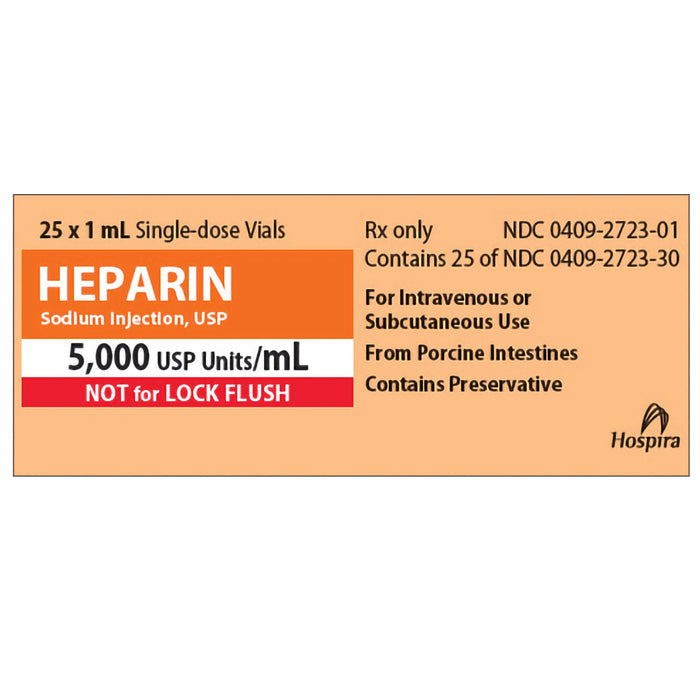
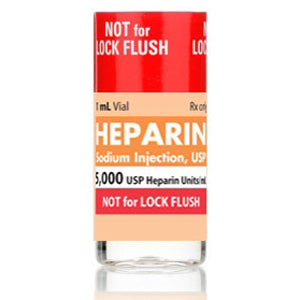
Heparin Sodium Injection 5000 Units Per 1 mL Single-Dose Vials 1 mL x 25/Pack (RX)

Year End Sale 38%
Original price $ 79.95
Current price $ 49.95
SKU 00409-2723-01
*Mountainside Medical does not fill personal prescriptions Medical Professional License Required to Unlock Account

How to Order:

Send an email request to: sales@mountainside-medical.com

You will receive instructions on how to create an account along with Rx Ordering Details.

(Note: Acceptable licenses must have Prescriptive Authority in the license issuing state.)

Heparin Sodium Injection 5000 Units Per 1 mL, Single-Dose Vials are a medication used to prevent and treat blood clots in the body. Each 1 mL vial contains 5000 units of the anticoagulant medication Heparin Sodium, which is given as a subcutaneous (under the skin) or intravenous (in the vein) injection. This specific formulation comes in single-dose vials, meaning each vial contains one dose of the medication. It is most commonly used in hospitals or healthcare settings, and is prescribed by a healthcare provider to patients who may be at risk for blood clots due to surgery, medical conditions, or certain medications.

Heparin Sodium Injection is used to prevent and treat blood clots in the veins, arteries, and lungs. It is also used for certain procedures such as hemodialysis and blood transfusions, as well as during heart surgery. Additionally, it may be used to prevent blood clots in medical conditions such as deep vein thrombosis (DVT) and pulmonary embolism (PE).

Heparin Sodium Injection has several potential benefits for patients:.

  • Treatment and Prevention of Blood Clots: Heparin Sodium Injection is a common medication used to treat and prevent blood clots in patients with conditions such as deep vein thrombosis, pulmonary embolism, and unstable angina.
  • Prevents Complications During Surgery: Heparin Sodium Injection is often given to patients before and during certain surgical procedures to prevent the formation of blood clots. This is especially important for patients who are at high risk for developing blood clots during and after surgery.
  • Reduces Risk of Heart Attack and Stroke: By preventing blood clots from forming, Heparin Sodium Injection helps reduce the risk of heart attack, stroke, and other serious cardiovascular events.
  • Treatment for Hemodialysis: In patients who require hemodialysis, Heparin Sodium Injection is used to prevent blood clots from forming in the dialysis machine or in the blood vessels.
  • Safe for Use During Pregnancy: Heparin Sodium Injection is considered safe for use during pregnancy, making it an important treatment option for pregnant women who are at risk for developing blood clots.
  • Individualized Dosing: Heparin Sodium Injection is available in different strengths to allow for individualized dosing based on a patient's specific needs.
  • Easy to Administer: Heparin Sodium Injection is usually given as a subcutaneous injection, which is a simple and relatively painless method of administration.
  • Rapid Onset of Action: Heparin Sodium Injection works quickly to prevent blood clots from forming, making it an effective option for treating acute conditions.
  • Monitoring and Reversal: Although rare, in the event of excessive bleeding or other adverse reactions, Heparin Sodium Injection can be quickly and easily reversed by administering a medication called protamine sulfate.
  • Widely Available and Cost-Effective: Heparin Sodium Injection is a widely available and relatively inexpensive medication, making it an affordable treatment option for patients.
Heparin Sodium Injection 5000 Units Per 1 mL Single-Dose Vials 1 mL x 25/Pack (RX)
$ 79.95 $ 49.95
🔒 Medical License Required
FAQs about Heparin Injection and Flush Syringes
  • What Is Heparin Injection Used For?

    Heparin injection is primarily used for preventing and treating blood clots in veins, arteries, or lungs. It is extensively utilized in the management of deep vein thrombosis (DVT), pulmonary embolism (PE), atrial fibrillation, and during dialysis to keep blood from clotting in medical tubing (heparin flush). Surgical and bedridden patients often receive heparin injections to reduce the risk of clot formation.

  • Can heparin cause headaches?

    While not common, mild side effects such as headache can occur. Always consult your healthcare provider for persistent symptoms.

  • Where do you inject heparin?

    Heparin injections are typically administered subcutaneously into the abdominal area. For IV use, it’s given in a clinical setting.

  • Are heparin injections high risk?

    Heparin is generally safe when administered under medical supervision. However, it is a high-risk medication due to possible complications such as bleeding or heparin-induced thrombocytopenia (HIT).

  • How long does a heparin shot last?

    The effects of a heparin injection generally last 4 to 6 hours, depending on dosage and individual metabolism.

  • What should you avoid while on heparin?

    Avoid alcohol, NSAIDs (like ibuprofen), and activities leading to injury or bleeding. Inform your doctor about all your medications.

  • How does heparin make you feel?

    Most people do not feel any different, but some may notice mild bruising, minor pain at the injection site, or occasional fatigue.

  • What is the cost of heparin injection?

    Pricing varies by dosage, manufacturer, and pharmacy. Generic heparin tends to be more cost-effective, with typical prices ranging from $20 to $150 per dose depending on concentration.

  • Can you take Tylenol with heparin?

    Acetaminophen (Tylenol) is generally considered safe with heparin, but always check with your healthcare provider before combining medications.

  • Is heparin injection painful?

    Heparin injections may cause mild discomfort or stinging at the injection site, but severe pain is uncommon.

  • What class of drug is heparin?

    Heparin belongs to the class of anticoagulants, also called "blood thinners," that reduce blood clot formation.

  • Where do you get a heparin shot?

    Heparin injections are available at hospitals, infusion clinics, pharmacies, or administered at home under medical guidance.

  • What is the most serious complication of heparin?

    The most serious complication is heparin-induced thrombocytopenia (HIT), a potentially life-threatening drop in blood platelets which can increase clot risk. Other major risks include severe bleeding.

Search Any Type of Product, Medication, or Alignment