 Skip to content


Filters
- Antigen Test (1)
- Nasopharyngeal Specimens (1)
- quickuve (2)
- QuickVue RSV Rapid Antigen Test (1)
- QuickVue RSV Test (1)
- Quidel (2)
- rapid test (1)
- Rapid Test Kit (1)
- Respiratory Syncytial Virus (1)
- rsv (1)
- 20183 (1)
- a and b test (1)
- doctor-only (1)
- flu test (1)
- Influenza (1)
- Influenza Test (1)
- test for flu (1)
- Test for Influenza (1)
Filters
- Antigen Test (1)
- Nasopharyngeal Specimens (1)
- quickuve (2)
- QuickVue RSV Rapid Antigen Test (1)
- QuickVue RSV Test (1)
- Quidel (2)
- rapid test (1)
- Rapid Test Kit (1)
- Respiratory Syncytial Virus (1)
- rsv (1)
- 20183 (1)
- a and b test (1)
- doctor-only (1)
- flu test (1)
- Influenza (1)
- Influenza Test (1)
- test for flu (1)
- Test for Influenza (1)
Influenza Test Kits for quickuve
-

 Sale 31%
Quidel Quickvue RSV Rapid Testing Kit Respiratory Syncytial Virus (RSV) 20 Test Per Box
Original price $ 425.00Current price $ 295.00 -
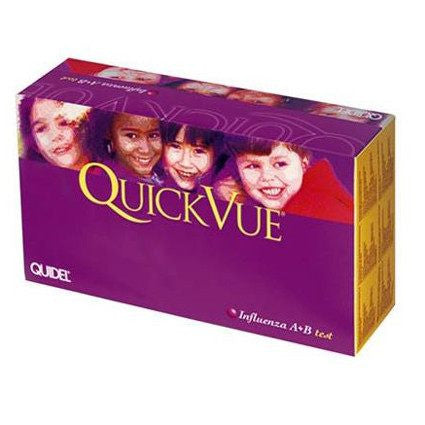
 Sale 34%
Quidel Quickvue Flu A+B Testing Kit 25/Box
Original price $ 699.99Current price $ 464.95🔒 Medical License Required


People Also Searched For
Influenza Test Kits
Influenza (flu) test kits are diagnostic tools used to detect the presence of influenza viruses in patient samples (usually nasal or throat swabs). They work by identifying viral components (such as antigens or genetic material) and are often used to diagnose flu infections in clinics or at home. Common types of influenza test kits include rapid antigen tests and molecular tests (like RT-PCR), and more recently authorized at-home combo tests.
-
Rapid Antigen Test Kits (RIDTs): These immunoassay kits detect influenza A and B viral antigens in respiratory specimens. They typically use lateral-flow strips (similar to a home pregnancy test) and give a qualitative result (positive or negative) in about 10–15 minutes. These point-of-care tests are widely available and can even be done at home. However, rapid antigen tests have limited sensitivity – roughly 50–70% compared to PCR. This means false negatives are common, especially when flu activity is high or for influenza B. In practice, a negative rapid test does not rule out flu if clinical suspicion is high.
-
Molecular (PCR/NAAT) Test Kits: These tests detect viral RNA using nucleic acid amplification (such as RT-PCR). Molecular assays are much more sensitive (~90–95%) and specific for influenza than antigen tests. They may be laboratory-based (taking ~1–4 hours) or rapid molecular versions (point-of-care kits giving results in 15–30 minutes). Some PCR kits can distinguish influenza A vs. B and even subtypes (A(H1N1)pdm09, A(H3N2), etc.). These tests are considered the gold standard for diagnosing flu due to their accuracy.
-
At-Home and Combo Test Kits: Recently, FDA-authorized over-the-counter (OTC) kits allow flu testing at home. For example, the Lucira COVID-19 & Flu Home Test is a single-use molecular kit that delivers results in ~30 minutes from a self-collected nasal swab. Another example is the Healgen Rapid Check COVID-19/Flu A&B Antigen Test: an OTC rapid kit that detects COVID-19 and influenza A/B antigens in ~15 minutes. These combo kits help users distinguish flu vs. COVID symptoms with one test.
-
Other tests: Influenza viral culture or immunofluorescence assays are available but are mainly used for public health surveillance, not routine clinical diagnosis (they take longer). Serology (antibody) tests for flu exist for research, but they aren’t used to diagnose acute flu in patients.
In summary, influenza test kits include rapid immunoassay strips and molecular/RT-PCR assays (in labs or at bedside), as well as new at-home self-test kits. Rapid antigen kits are fastest but less sensitive, whereas molecular kits are more accurate but may take longer. Clinicians must interpret results in context: e.g. a negative rapid test might require confirmatory PCR if flu is strongly suspected