
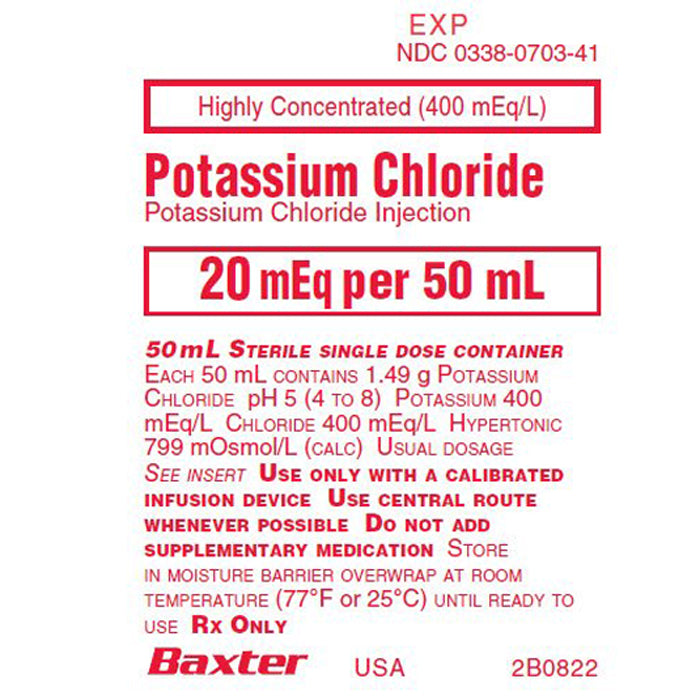
IV Bags, Potassium Chloride IV Bags Solution 50 mL, 24/Case
How to Order:
You will receive instructions on how to create an account along with Rx Ordering Details.
(Note: Acceptable licenses must have Prescriptive Authority in the license issuing state.)
Ensure optimized patient care with Potassium Chloride IV Bags 50 mL from Baxter IV Systems. Designed for controlled and efficient electrolyte replenishment, these ready-to-use intravenous bags are trusted for maintaining critical potassium balance in clinical settings. Each case contains 24 sterile, single-dose 50 mL bags, formulated and manufactured by Baxter — a leader in advanced IV therapies and solutions.
What It Is Used For
Potassium Chloride IV Bags are used primarily for:
- Treatment and prevention of hypokalemia (low potassium levels) in patients who are unable to take oral potassium or require rapid correction.
- Supporting potassium replacement as part of intravenous fluid and electrolyte therapy.
- Managing metabolic alkalosis, digitalis toxicity, or cardiac arrhythmias associated with low serum potassium.
Potassium chloride for injection, USP is a sterile, nonpyrogenic, aqueous solution intended for intravenous administration. It is a formulated product which, when diluted with suitable solvents, yields a solution containing 2.5 mEq of potassium chloride per milliliter and is supplied in 500-milliliter and 1,000-milliliter bags.
The potassium chloride in these bags is intended to provide electrolyte replacement in the treatment of hypokalemia. The product contains no bacteriostatic, antimicrobial, or other agent to prevent its use as a source of contamination. Administration of a nonpotassium-containing solute such as dextrose in the same intravenous line may result in precipitation of potassium chloride at the point of injection.
Product Details & Features
- Content: Each bag contains 50 mL of solution, with Potassium Chloride concentration as per clinical standard (check concentration on packaging, e.g., 20 mEq/50 mL).
- Sterile & Pyrogen-Free: Ensures patient safety with single-use, sealed bags.
- Ready-to-Use: No mixing required, minimizing preparation time and contamination risks.
- Latex-Free, DEHP-Free Bag: Safe for patients with latex sensitivities.
- Clear, Easy-Read Label: Facilitates accurate administration.
- Universal IV Port: Compatible with standard IV administration sets and infusion pumps.
- Convenient Case Quantity: 24 bags per case for efficient inventory management in hospitals, clinics, and emergency settings.
Directions for Use
Administration:
- For intravenous use only.
- Must be administered by a healthcare professional trained in IV therapy.
- May be given via peripheral or central vein depending on potassium concentration and patient needs.
- Confirm clear solution and intact packaging before use; discard if any particulate matter or discoloration is observed.
Dosage (General Guidelines)
- Dosage is individualized based on the patient’s serum potassium level, total body deficit, and clinical condition.
- Adult Dosage: Typical maximum rate for peripheral vein administration is 10 mEq/hour. Central line may allow higher rates (up to 20 mEq/hour, under intensive monitoring).
- Maximum daily dose: Usually should not exceed 200-300 mEq per day unless under strict inpatient monitoring.
- Pediatric Dosage: Determined by weight and clinical situation. Consult specialized resources or a pediatrician.
Always refer to official prescribing information and institutional protocols for specific dosing.
CDC Guidelines & Recommendations
- Aseptic Technique: Adhere to aseptic technique during administration to prevent line-associated bloodstream infections (CDC IV Administration Guidelines).
- IV Line Monitoring: Monitor for signs of infiltration or phlebitis; change administration sets as recommended.
- Label IV Solutions: Clearly label bags with patient identifiers and potassium concentration to prevent administration errors.
Warnings & Contraindications
- Do Not Use in Hyperkalemia: Contraindicated in patients with elevated potassium or conditions that contraindicate potassium administration (e.g., severe renal impairment, untreated Addison’s disease).
- IV Potassium is a High-Alert Medication: Risk of fatal cardiac arrhythmias with improper administration.
- Monitor Closely: Frequent laboratory monitoring of serum potassium and cardiac monitoring (ECG) during infusion.
- Dilution Required for High Doses: Do not administer undiluted potassium chloride directly.
Side Effects
Common:
- Local irritation, pain, or inflammation at the infusion site.
Serious (Seek Immediate Medical Care):
- Hyperkalemia: Weakness, arrhythmias, chest pain, muscle paralysis.
- Phlebitis, IV site infection or extravasation.
- Cardiac arrest (from wrong dose or rapid infusion).
For healthcare professional use only. Keep out of reach of children. Use only as directed by institutional policy or prescriber. For additional product and safety information, refer to the Baxter product insert and your institution's guidelines.
Baxter IV Systems—trusted for safe, effective, and efficient medication delivery in all clinical environments.
