
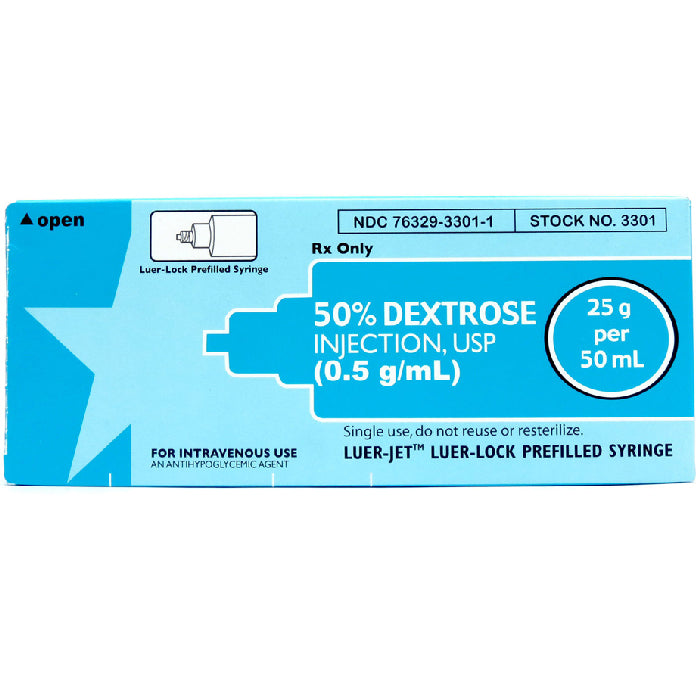
Dextrose 50% Injection Prefilled Syringes Luer-Jet Luer-Lock 50 mL (RX)
How to Order:
You will receive instructions on how to create an account along with Rx Ordering Details.
(Note: Acceptable licenses must have Prescriptive Authority in the license issuing state.)
Quickly restore blood sugar levels in life-threatening emergencies with 50% Dextrose Injection Prefilled Syringes (Luer-Jet Luer-Lock 50 mL) by International Medication Systems (IMS). Trusted by hospitals, ambulance services, emergency rooms, ICUs, and first responders, this ultra-concentrated hypertonic glucose solution is recognized as the first-line treatment for acute severe hypoglycemia, insulin shock, and altered mental status from low blood sugar.
Immediate Hyperglycemia Emergency Treatment for Severe Hypoglycemia, Insulin Shock, and Critical Care
Features & Top Health Benefits
- Rapid-Acting Severe Hypoglycemia Rescue: Delivers 25 grams of dextrose per 50 mL prefilled syringe for immediate correction of dangerously low blood glucose.
- Ready-To-Use, Prefilled Syringe System: No mixing or preparation needed—simply attach, inject, and save precious seconds in code situations.
- Hospital, EMS, and Crash Cart Essential: Standard hyperglycemia protocol solution for diabetes emergencies, seizures, and unconscious patients.
- Luer-Jet Luer-Lock Design: Ensures safe, secure connection to IV lines for quick and consistent medication delivery.
- Sterile, Single-Use, Tamper-Evident: Reduces medication errors and cross-contamination for safe use in high-pressure emergency settings.
- Manufactured by International Medication Systems: A global leader in emergency injectable pharmaceuticals, trusted by top medical professionals.
When is 50% Dextrose Injection Used?
- Acute severe hypoglycemia (low blood sugar) in diabetes
- Insulin shock and coma from insulin overdose
- Altered mental status, confusion, or unconsciousness due to hypoglycemia
- Cardiac arrest with suspected hypoglycemia
- Seizures related to low blood glucose
- Emergency correction of hypoglycemic reactions in critically ill and trauma patients
Why Choose IMS Dextrose 50% Prefilled Syringe?
- Immediate Availability: Always stocked in code carts, emergency kits, ambulances, and ERs for instant access.
- Precise Pre-Measured Dose: 50 mL syringe provides standardized dosing—no calculations or dilution needed.
- Reduces Treatment Delays: Essential for minimizing brain injury and improving outcomes in hypoglycemic emergencies.
- Universal Luer-Lock Compatibility: Compatible with all standard IV setups in hospital and EMS settings.
- Long Shelf Life, Stable Storage: Maintains reliability in field conditions, clinics, and transportation.
Top-Searched terms for Dextrose 50% Injection
- Dextrose 50% injection prefilled syringe
- D50 for severe hypoglycemia emergency
- Hypertonic glucose IV for low blood sugar
- 50 mL dextrose 50 syringe for EMS
- Hospital and crash cart dextrose
- IV dextrose for diabetic insulin shock
- Emergency blood sugar rescue
- International Medication Systems D50
- Luer-Lock prefilled syringe dextrose
- Prefilled hyperglycemia treatment
- Fast-acting IV glucose for seizure
- Hypoglycemia unresponsiveness treatment
- Best IV dextrose for ER/code cart
Instructions & Administration
- Route: Intravenous (IV) injection ONLY.
- Dosage: Standard adult dose is 25 grams (50 mL of D50), injected slowly. Pediatric dosing per physician orders.
-
How to Use:
- Remove Luer-Jet Luer-Lock syringe from packaging.
- Inspect solution for clarity.
- Attach to compatible IV line.
- Inject slowly, monitoring for extravasation.
- Monitor blood glucose and mental status.
Always consult hospital protocol or medical control for pediatric dosing or repeat administration.
Possible Side Effects
Common:
- Pain, redness, or swelling at injection site
- Phlebitis (vein irritation) if injected too quickly or in small veins
- Local tissue necrosis if extravasation occurs
Systemic:
- Hyperglycemia (high blood sugar)
- Electrolyte imbalances (hypokalemia, low potassium)
- Fluid overload in at-risk patients
Rare/Serious:
- Pulmonary edema
- Osmotic diuresis
- Allergic reaction (incredibly rare)
Always monitor blood glucose, electrolytes, and fluid status after administration.
Precautions
- Professional Use Only: For use by trained healthcare professionals in emergency settings.
- Do NOT inject subcutaneously, intramuscularly, or orally.
- Use caution in patients with heart failure, renal impairment, or history of hyperosmolar conditions.
- Check expiration date and clarity of solution before use.
- Store at room temperature.
Don’t let severe hypoglycemia put your patients at risk—choose 50% Dextrose Injection Prefilled Syringes Luer-Jet Luer-Lock 50 mL by International Medication Systems for fast, safe, and reliable glucose rescue in any critical emergency!
