
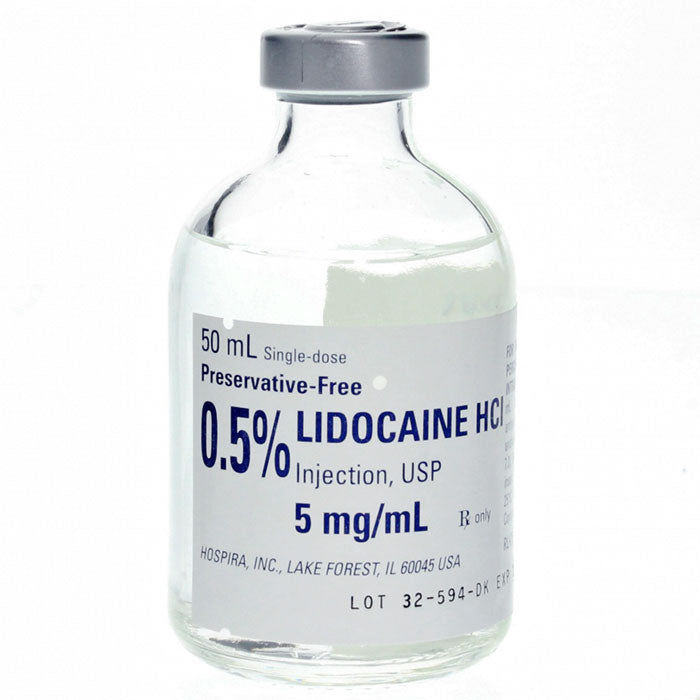
Lidocaine Hydrochloride 0.5% Injection 50 mL Single-Dose, Preservative-Free 25/tray (Rx)
How to Order:
You will receive instructions on how to create an account along with Rx Ordering Details.
(Note: Acceptable licenses must have Prescriptive Authority in the license issuing state.)
Lidocaine Hydrochloride 0.5% for Injection 50 mL is used as a local anesthetic to numb specific areas during minor surgical procedures or medical interventions. By blocking nerve signals, it alleviates pain and discomfort, ensuring patient comfort during procedures such as suturing or small incisions. It is also sometimes used to manage acute pain or discomfort in diagnostic examinations. This concentration of lidocaine provides effective, targeted anesthesia with a relatively rapid onset for various clinical applications.
Lidocaine Hydrochloride 0.5% Injection is a sterile, non-pyrogenic, and preservative-free solution used as a local anesthetic. It is commonly employed to produce local or regional anesthesia for surgical and diagnostic procedures. This particular formulation contains lidocaine hydrochloride at a concentration of 0.5% (5 mg/mL) and is supplied in 50 mL single-dose vials per tray, with each tray containing 25 vials. The absence of preservatives makes it suitable for patients who might have sensitivities to preservative agents.
Details and Features:
Volume: 50 mL per vial
Packaging: 25 vials per tray
Concentration: 0.5% Lidocaine Hydrochloride (5 mg/mL)
Use: Indicated for local or regional anesthesia by infiltration techniques, peripheral nerve block, and other methods when appropriate.
Preservative-Free: Ideal for patients sensitive to preservatives, reducing the risk of allergic reactions.
Mechanism of Action:
Lidocaine acts as a local anesthetic in the amide category. Its mechanism of action involves blocking sodium channels in the neuronal membrane, which inhibits the conduction of nerve impulses. By preventing the rapid influx of sodium necessary for the initiation and transmission of neuronal signals, lidocaine effectively produces a numbing effect in the localized area, resulting in anesthesia where applied.
Warnings:
-
Proper Use: Should be administered only by, or under the guidance of, medical professionals trained in managing local anesthesia and its potential complications.
-
Allergic Reactions: Contraindicated in patients with a known hypersensitivity to lidocaine, other amide-type local anesthetics, or any component of the formulation.
-
Toxicity Risk: Like other local anesthetics, potential systemic toxicity can occur, especially if administered in excessive doses or injected intravascularly. Observe for signs of lidocaine toxicity, such as CNS disturbances or cardiovascular issues.
-
Avoid Intravascular Injection: Confirm proper needle or catheter placement prior to administration to prevent inadvertent intravascular injection.
- Use with Caution: In patients with liver disease, heart block, or severe renal dysfunction, as metabolic processes altering drug breakdown can increase the risk of toxicity.
Side Effects:
Potential side effects from Lidocaine Hydrochloride may include:
-
Local Reactions: Mild pain, erythema, or swelling at the injection site.
-
Central Nervous System Effects: Lightheadedness, dizziness, drowsiness, or in severe cases, seizures.
-
Cardiovascular Effects: Hypotension, bradycardia, or arrhythmias in cases of excessive plasma levels.
- Allergic Reactions: Though rare, some patients can experience skin rashes, itching, or in severe cases, anaphylaxis.
Lidocaine Hydrochloride 0.5% Injection should be used prudently, taking into account the individual patient's health status, necessary dosage, and monitoring throughout the administration to manage and mitigate any possible adverse effects promptly.
