

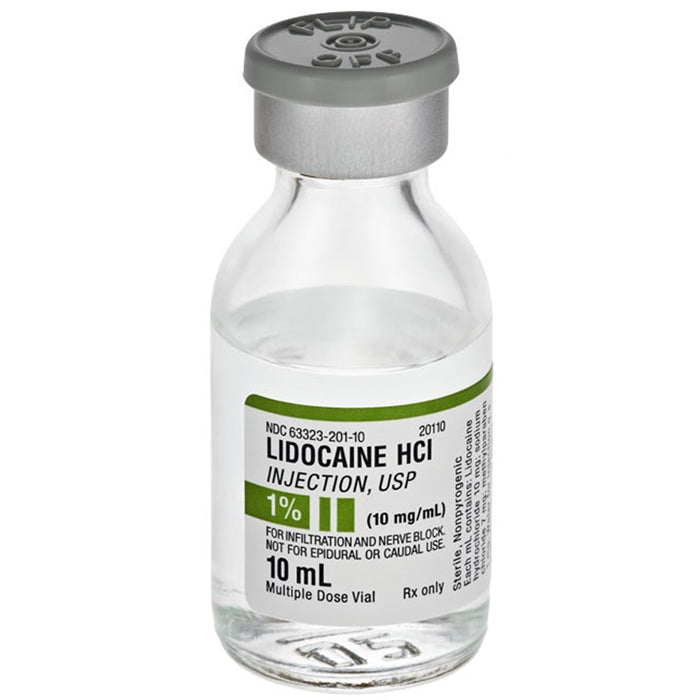
Lidocaine 1% Injection Multiple Dose Vials 10 mL by Fresenius 25/Tray (Rx)
How to Order:
You will receive instructions on how to create an account along with Rx Ordering Details.
(Note: Acceptable licenses must have Prescriptive Authority in the license issuing state.)
Lidocaine 1% Injection is used as a local anesthetic to temporarily numb areas of the body during surgical procedures, dental work, or diagnostic procedures. Lidocaine works by blocking nerve signals in the body, providing pain relief in the targeted area. It's also used to treat certain types of irregular heartbeats (arrhythmias) by stabilizing the heart's electrical activity. This versatile medication is favored for its rapid onset and effectiveness. It is often administered by healthcare professionals to ensure proper dosage and monitoring.
Lidocaine 1% Injection by Fresenius offers precise, reliable anesthetic relief for various medical and dental procedures. Available in multiple-dose 10 mL vials, this product is perfect for clinics and hospitals requiring efficient, versatile, and rapid-onset local anesthesia. Each tray contains 25 vials, providing a comprehensive solution to meet your patient care demands. Trust in Fresenius, a leader in medical products, to deliver consistent quality and performance with this powerful local anesthetic.
Details and Features:
Concentration: 1% Lidocaine Hydrochloride
Volume: 10 mL per vial
Packaging: 25 multiple-dose vials per tray
Manufacturer: Fresenius
Applications: Utilized for local or regional anesthesia in various surgical, dental, and diagnostic procedures
Storage: Room temperature with protection from light
Versatility: Suitable for multiple applications due to multidose capability
Quality Assurance: Manufactured to meet rigorous pharmaceutical standards
Mechanism of Action:
Lidocaine is an amide-type local anesthetic that works by inhibiting sodium ion influx into nerve cells. This action stabilizes the neuronal membrane potential, effectively preventing the initiation and transmission of nerve impulses. The result is numbing of the targeted area, providing pain relief and facilitating the performance of procedures without causing patient discomfort. Rapid absorption and fast action make Lidocaine 1% Injection a preferred choice for fast-acting localized anesthesia.
Directions:
1. Preparation: Check for any visible particulates or discoloration in the solution before use.
2. Dosage: Follow specific dosing guidelines as prescribed by a healthcare professional. Dosage depends on the procedural requirements and the patient’s status.
3. Administration: Use only by trained healthcare professionals. Administer via subcutaneous, intramuscular, or direct infiltration at the site requiring anesthesia.
4. Injection Site: Choose the site based on the procedure, and adhere to sterile technique during administration.
5. Post-Administration: Monitor the patient for clinical response and any adverse effects.
Warnings:
-
Allergic Reactions: Caution in patients previously experiencing hypersensitivity to amide-type local anesthetics.
Systemic Toxicity: Excessive dosing may lead to systemic toxicity, characterized by central nervous system and cardiovascular manifestations.
Special Populations: Use caution in patients with cardiovascular disease, liver dysfunction, or in elderly individuals.
Pregnancy and Lactation: Use only if the potential benefit justifies the risk to the fetus or nursing infant.
Side Effects:
Side effects can vary depending on dosage and patient sensitivity but may include:
-
Nervous System Effects: Lightheadedness, dizziness, euphoria, drowsiness, or, rarely, seizures.
-
Cardiovascular Reactions: Hypotension, bradycardia, or arrhythmias if absorbed systemically in high concentrations.
-
Local Reactions: Mild tenderness or redness at the injection site.
- Allergic Reactions: Rash, urticaria, or in severe cases, anaphylaxis.
For guaranteed comfort and efficiency in medical procedures, trust Lidocaine 1% Injection by Fresenius to meet the highest standards in local anesthesia. Always adhere strictly to dosing instructions and patient monitoring protocols to ensure safety and efficacy.
