Skip to content
Year-End Sale is Live Now - Up to 50% off
New users? Get 5% off on your first purchase.
Free US shipping over $100
Year-End Sale is Live Now - Up to 50% off
New users? Get 5% off on your first purchase.
Free US shipping over $100

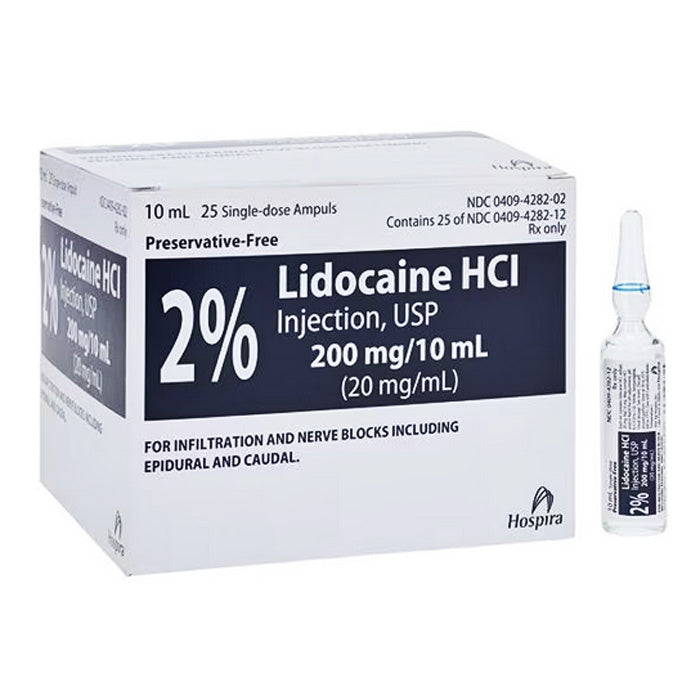
Lidocaine 2% for Injection 10 mL Ampules 25/tray by Pfizer (RX)

Year End Sale 20%
Original price $ 225.00
Current price $ 179.95
SKU 00409-4282-02
*Mountainside Medical does not fill personal prescriptions Medical Professional License Required to Unlock Account

How to Order:

Send an email request to: sales@mountainside-medical.com

You will receive instructions on how to create an account along with Rx Ordering Details.

(Note: Acceptable licenses must have Prescriptive Authority in the license issuing state.)

Lidocaine 2% for Injection in 10 mL ampules is used as a local anesthetic to provide pain relief by inducing numbness in targeted areas during various medical and surgical procedures. It functions by blocking nerve impulses, thereby minimizing pain and discomfort. This concentration is particularly effective for minor surgical interventions, dental procedures, and local blocks. Its rapid onset and efficiency make it an essential tool in achieving patient comfort and optimal procedural outcomes in diverse clinical settings.

Lidocaine 2% for Injection is a sterile, non-pyrogenic local anesthetic solution used to provide local or regional anesthesia. It is commonly employed in medical and dental procedures to numb specific areas and prevent pain. The solution contains 2% lidocaine hydrochloride (20 mg/mL) and is provided in 10 mL ampules. Pfizer Injectables packages these ampules in trays of 25.

Details and Features:

Volume: 10 mL per ampule
Packaging: 25 ampules per tray
Concentration: 2% Lidocaine Hydrochloride (20 mg/mL)
Usage: Suitable for local infiltration anesthesia, peripheral nerve blocks, and other applications requiring localized numbing
Single-Dose: Designed for single-use application considerations

Mechanism of Action:

Lidocaine acts as a local anesthetic by blocking voltage-gated sodium channels in the neuronal cell membranes. This action inhibits the rapid influx of sodium necessary for the initiation and conduction of neuronal impulses. Consequently, this block prevents action potential propagation, causing a temporary loss of sensation in the targeted area, thus providing anesthetic effects.

Warnings:

  • Allergic Reactions: Contraindicated in those with known hypersensitivity to lidocaine or other amide-type anesthetics.
  • Systemic Toxicity: Excessive dosage, inadvertent intravascular injection, or rapid absorption may lead to systemic toxic reactions involving the central nervous and cardiovascular systems.
  • Proper Administration: Ensure correct techniques to avoid intravascular injection by frequent aspiration checks. Dosage should be adapted to individual health, body weight, and procedure needs.
  • Special Populations: Use extra caution in patients with cardiac abnormalities, hepatic disease, or in the elderly, where lidocaine metabolism might be impaired.

Side Effects:

Possible side effects associated with Lidocaine 2% for Injection include:

  • Local Reactions: Occasional mild reactions at the site of injection, such as redness or swelling.
  • CNS Effects: Symptoms like lightheadedness, dizziness, restlessness, or at high dosages, more severe reactions such as seizures or unconsciousness.
  • Cardiovascular Reactions: May include hypotension, arrhythmias, or bradycardia in cases of high systemic levels.
  • Allergic Responses: Though infrequent, allergic cases can manifest as skin rashes, itching, or in rare injections, anaphylaxis.

Lidocaine 2% should be administered only by trained health professionals familiar with potential side effects and emergency treatment protocols. Monitoring during administration is key, and resuscitation equipment should be available in case of adverse reactions. Dosages must be tailored to individual patient requirements and procedure types, ensuring safety and efficacy.

Lidocaine 2% for Injection 10 mL Ampules 25/tray by Pfizer (RX)
$ 225.00 $ 179.95
🔒 Medical License Required
FAQs for Lidocaine Injections
  • What Is a Lidocaine Injection Used For?

    Lidocaine injection is widely used for: Numbing specific areas before procedures (e.g., dental work, skin surgery) Blocking nerve pain (nerve block injections, epidurals) Relieving muscle/joint pain Treating heart rhythm problems (as an antiarrhythmic agent)

  • Lidocaine Dosage and Administration

    Typical dose depends on site and procedure (consult your healthcare provider). Administered intradermally, subcutaneously, or intramuscularly. NEVER self-inject without medical supervision!

  • How long does lidocaine last if injected?

    Lidocaine typically provides pain relief for 1 to 3 hours, depending on the dose, injection site, and individual response.

  • Why do numbing injections hurt so bad?

    The initial sting may be due to needle insertion or the acidic pH of the solution. Discomfort is brief and quickly followed by numbness.

  • Can lidocaine cause vomiting?

    Yes, nausea and vomiting are potential but uncommon side effects of lidocaine.

  • Where should you NOT inject lidocaine?

    Avoid injecting into arteries, infected areas, or near major nerves. Use extreme caution around the spinal cord and head/neck.

  • How painful is a lidocaine injection?

    Most patients feel a quick pinch or burning lasting just a few seconds.

  • What kind of pain is lidocaine good for?

    Lidocaine is highly effective for acute pain, minor surgery, nerve pain, and dental pain.

  • How much time does a lidocaine injection take to work?

    Lidocaine starts numbing the area within 1 to 3 minutes after injection.

  • Is lidocaine an opioid?

    No, lidocaine is a local anesthetic, NOT an opioid. It does not cause addiction.

  • What happens if lidocaine hits a nerve?

    It may cause temporary numbness, tingling, or rarely, nerve injury if directly injected.

  • Does lidocaine injection make you sleepy?

    Lidocaine usually does not cause drowsiness at standard doses but high doses can lead to CNS effects.

  • Will lidocaine raise your blood pressure?

    Lidocaine does not normally raise blood pressure; however, overdoses can affect heart function.

  • How long does lidocaine stay in your bloodstream?

    Lidocaine is metabolized within 1.5 to 2 hours, but traces can remain longer based on dose and liver function.

  • What does lidocaine do to the heart?

    Lidocaine is used to treat arrhythmias; in rare cases, overdose can cause heart problems.

  • How deep does a lidocaine injection go?

    Depends on purpose: subcutaneous, intradermal, or deeper (nerve blocks).

  • What is the major side effect of lidocaine?

    Major side effect: Toxicity, including seizures, arrhythmias, and CNS depression at very high doses.

  • Can you drive after a lidocaine injection?

    Yes, if you are alert and not sedated. Ask your doctor if unsure, especially after large doses.

Search Any Type of Product, Medication, or Alignment