Skip to content
Year-End Sale is Live Now - Up to 50% off
New users? Get 5% off on your first purchase.
Free US shipping over $100
Year-End Sale is Live Now - Up to 50% off
New users? Get 5% off on your first purchase.
Free US shipping over $100

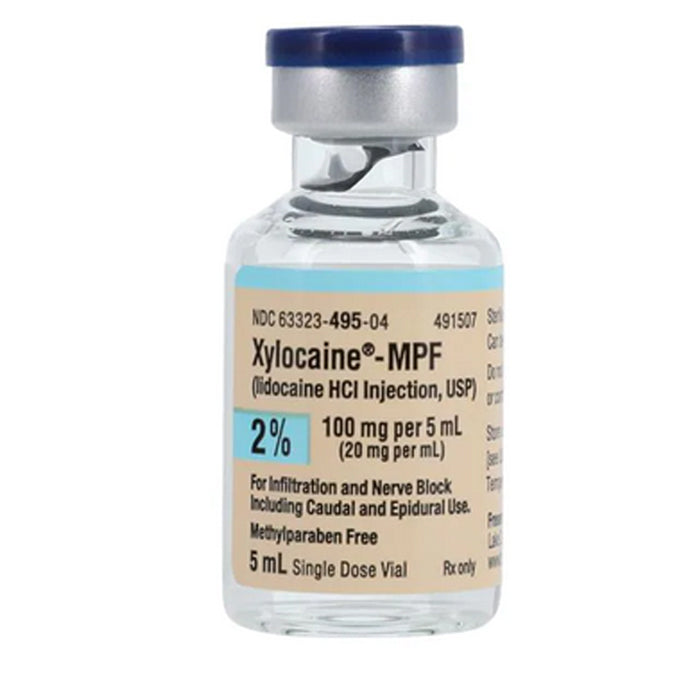
Xylocaine MPF Lidocaine 2% Injection 5 mL Vials Preservative Free, 25/Tray

Year End Sale 34%
Original price $ 195.95
Current price $ 129.00
SKU 63323-0495-07
*Mountainside Medical does not fill personal prescriptions Medical Professional License Required to Unlock Account

How to Order:

Send an email request to: sales@mountainside-medical.com

You will receive instructions on how to create an account along with Rx Ordering Details.

(Note: Acceptable licenses must have Prescriptive Authority in the license issuing state.)

Xylocaine MPF Lidocaine 2% Injection 5 mL is a local anesthetic used to provide quick and effective pain relief during surgical, dental, or minor medical procedures. It works by blocking nerve signals in specific areas, ensuring patient comfort. This preservative-free formulation reduces the risk of allergic reactions. Widely used in medical and dental settings, it facilitates various interventions with enhanced patient safety and comfort.

Xylocaine MPF Lidocaine 2% Injection, Preservative Free, offers fast-acting local anesthesia for various medical and surgical procedures. Manufactured by Fresenius USA, this formulation ensures optimal patient safety and comfort. Packaged in 5 mL single-dose vials, it provides precise dosing and reduces contamination risk in clinical environments.

Details and Features:

  • Product Name: Xylocaine MPF Lidocaine 2% Injection
  • Volume: 5 mL single-dose vials
  • Packaging: 25 vials per tray
  • Formulation: Preservative-Free (MPF)
  • Concentration: 2% lidocaine hydrochloride
  • Usage: Suitable for local anesthesia in surgical and dental procedures, and nerve blocks
  • Benefits: Rapid onset with reliable analgesic effectiveness
  • Storage: Keep vials at controlled room temperature

Mechanism of Action:

Lidocaine works by inhibiting the sodium ion channels in neuronal membranes. This blockade prevents the generation and propagation of nerve impulses, effectively creating a temporary localized nerve block to provide anesthesia and relieve pain during procedures.

Directions for Use:

  1. Preparation: Inspect the vial for particulate matter or discoloration prior to use.
  2. Dosage: Follow physician instructions; dosage depends on the procedure and patient needs.
  3. Administration: Administer via slow injection into the target area for effective local anesthesia.
  4. Single Use: Discard any unused portion as the vial is intended for single use only.

Warnings:

  • Allergic Reactions: Contraindicated in patients with known hypersensitivity to lidocaine or amide-type anesthetics.
  • Systemic Toxicity: Careful monitoring required, especially at higher doses, to detect central nervous system and cardiovascular toxicity.
  • Methemoglobinemia: Certain patients may be predisposed; monitor accordingly.
  • Pregnancy and Lactation: Use only if clearly necessary and evaluate potential risks and benefits.

Side Effects:

  • Common: Transient discomfort at the injection site, numbness, or tingling.
  • Serious: Allergic reactions, CNS effects (seizures, confusion), cardiovascular disturbances (hypotension, bradycardia).

Xylocaine MPF Lidocaine 2% Injection from Fresenius USA provides a reliable, preservative-free option for local anesthesia, ensuring patient safety and procedural efficacy across various medical applications.

Xylocaine MPF Lidocaine 2% Injection 5 mL Vials Preservative Free, 25/Tray
$ 195.95 $ 129.00
🔒 Medical License Required
FAQs for Lidocaine Injections
  • What Is a Lidocaine Injection Used For?

    Lidocaine injection is widely used for: Numbing specific areas before procedures (e.g., dental work, skin surgery) Blocking nerve pain (nerve block injections, epidurals) Relieving muscle/joint pain Treating heart rhythm problems (as an antiarrhythmic agent)

  • Lidocaine Dosage and Administration

    Typical dose depends on site and procedure (consult your healthcare provider). Administered intradermally, subcutaneously, or intramuscularly. NEVER self-inject without medical supervision!

  • How long does lidocaine last if injected?

    Lidocaine typically provides pain relief for 1 to 3 hours, depending on the dose, injection site, and individual response.

  • Why do numbing injections hurt so bad?

    The initial sting may be due to needle insertion or the acidic pH of the solution. Discomfort is brief and quickly followed by numbness.

  • Can lidocaine cause vomiting?

    Yes, nausea and vomiting are potential but uncommon side effects of lidocaine.

  • Where should you NOT inject lidocaine?

    Avoid injecting into arteries, infected areas, or near major nerves. Use extreme caution around the spinal cord and head/neck.

  • How painful is a lidocaine injection?

    Most patients feel a quick pinch or burning lasting just a few seconds.

  • What kind of pain is lidocaine good for?

    Lidocaine is highly effective for acute pain, minor surgery, nerve pain, and dental pain.

  • How much time does a lidocaine injection take to work?

    Lidocaine starts numbing the area within 1 to 3 minutes after injection.

  • Is lidocaine an opioid?

    No, lidocaine is a local anesthetic, NOT an opioid. It does not cause addiction.

  • What happens if lidocaine hits a nerve?

    It may cause temporary numbness, tingling, or rarely, nerve injury if directly injected.

  • Does lidocaine injection make you sleepy?

    Lidocaine usually does not cause drowsiness at standard doses but high doses can lead to CNS effects.

  • Will lidocaine raise your blood pressure?

    Lidocaine does not normally raise blood pressure; however, overdoses can affect heart function.

  • How long does lidocaine stay in your bloodstream?

    Lidocaine is metabolized within 1.5 to 2 hours, but traces can remain longer based on dose and liver function.

  • What does lidocaine do to the heart?

    Lidocaine is used to treat arrhythmias; in rare cases, overdose can cause heart problems.

  • How deep does a lidocaine injection go?

    Depends on purpose: subcutaneous, intradermal, or deeper (nerve blocks).

  • What is the major side effect of lidocaine?

    Major side effect: Toxicity, including seizures, arrhythmias, and CNS depression at very high doses.

  • Can you drive after a lidocaine injection?

    Yes, if you are alert and not sedated. Ask your doctor if unsure, especially after large doses.

Search Any Type of Product, Medication, or Alignment