Skip to content
Free US shipping over $100

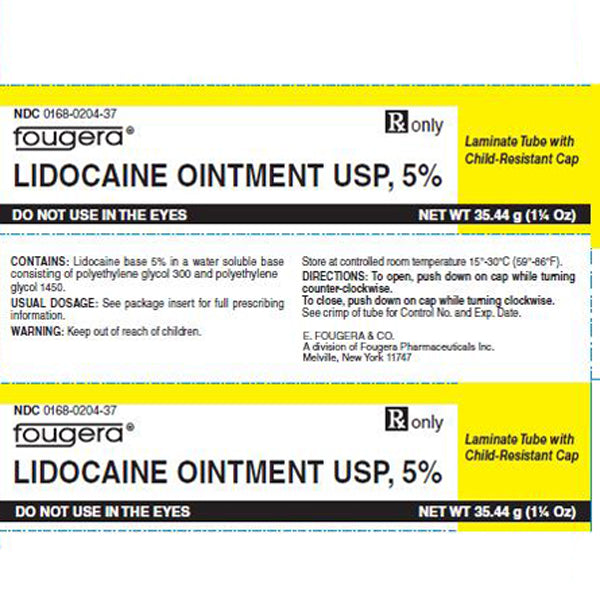
Lidocaine Topical Ointment 5%, 35 gram Tube (Rx)

Sale 36%
Original price $ 49.95
Current price $ 32.00
SKU 00168-0204-37
*Mountainside Medical does not fill personal prescriptions Medical Professional License Required to Unlock Account

How to Order:

Send an email request to: sales@mountainside-medical.com

You will receive instructions on how to create an account along with Rx Ordering Details.

(Note: Acceptable licenses must have Prescriptive Authority in the license issuing state.)

Fougera Lidocaine Ointment 5%, 35 gram Tube is a topical ointment used as an local anesthetic that temporary relief of pain associated with minor burns, including sunburn, abrasions of the skin, and insect bites.

Mechanism of action:
Lidocaine stabilizes the neuronal membrane by inhibiting the ionic fluxes required for the initiation and conduction of impulses, thereby effecting local anesthetic action.
Onset of anesthesia:
Lidocaine Ointment 5% effects local, topical anesthesia. The onset of action is 3-5 minutes. It is ineffective when applied to intact skin.
Hemodynamics:
Excessive blood levels may cause changes in cardiac output, total peripheral resistance, and mean arterial pressure. These changes may be attributable to a direct depressant effect of the local anesthetic agent on various components of the cardiovascular system.
Pharmacokinetics and metabolism:
Lidocaine may be absorbed following topical administration to mucous membranes, its rate and extent of absorption depending upon the specific site of application, duration of exposure, concentration, and total dosage. In general, the rate of absorption of local anesthetic agents following topical application occurs most rapidly after intratracheal administration. Lidocaine is also well-absorbed from the gastrointestinal tract, but little intact drug appears in the circulation because of biotransformation in the liver.
Lidocaine is metabolized rapidly by the liver, and metabolites and unchanged drug are excreted by the kidneys. Biotransformation includes oxidative N-dealkylation, ring hydroxylation, cleavage of the amide linkage, and conjugation. N-dealkylation, a major pathway of biotransformation, yields the metabolites monoethylglycinexylidide and glycinexylidide. The pharmacological/toxicological actions of these metabolites are similar to, but less potent than, those of lidocaine. Approximately 90% of lidocaine administered is excreted in the form of various metabolites, and less than 10% is excreted unchanged. The primary metabolite in urine is a conjugate of 4-hydroxy-2,6-dimethylaniline.
The plasma binding of lidocaine is dependent on drug concentration, and the fraction bound decreases with increasing concentration. At concentrations of 1 to 4 μg of free base per mL, 60 to 80 percent of lidocaine is protein bound. Binding is also dependent on the plasma concentration of the alpha-l-acid glycoprotein.
Lidocaine crosses the blood-brain and placental barriers, presumably by passive diffusion.
Studies of lidocaine metabolism following intravenous bolus injections have shown that the elimination half-life of this agent is typically 1.5 to 2.0 hours. Because of the rapid rate at which lidocaine is metabolized, any condition that affects liver function may alter lidocaine kinetics. The half-life may be prolonged two-fold or more in patients with liver dysfunction. Renal dysfunction does not affect lidocaine kinetics but may increase the accumulation of metabolites.

Factors such as acidosis and the use of CNS stimulants and depressants affect the CNS levels of lidocaine required to produce overt systemic effects. Objective adverse manifestations become increasingly apparent with increasing venous plasma levels above 6.0 μg free base per mL. In the rhesus monkey arterial blood levels of 18-21 μg/mL have been shown to be threshold for convulsive activity.

Brand: Fougera Pharmaceuticals

Size: 35.44 gram tube

NDC: 00168-0204-37

UPC: 301680204376

Buy Fougera Lidocaine Ointment 5%, 35 gram Tube online at Mountainside Medical Equipment.

FAQs ABout Lidocaine Ointments
  • What is Lidocaine Ointment Used For?

    Lidocaine ointment is a topical numbing agent (local anesthetic) designed to relieve pain and discomfort associated with: Skin irritations, minor burns, and insect bites Hemorrhoids and anorectal discomfort Sunburns and minor cuts Minor surgical procedures and cosmetic treatments (tattoo removal, laser) Nerve pain (neuropathic pain, postherpetic neuralgia) Dental procedures (as recommended)

  • What is the Strongest Lidocaine Ointment?

    Our formula features the highest available over-the-counter lidocaine concentration (up to 5%—the maximum OTC strength allowed), delivering superior numbing action where you need it most. Prescription-strength options are also available under medical supervision.

  • Is Lidocaine Ointment Safe to Use During Pregnancy?

    Consult your healthcare provider before using lidocaine ointment while pregnant or breastfeeding. Although generally considered safe when used as directed on small skin areas, lidocaine should only be used during pregnancy under medical advice.

  • Where Should You NOT Apply Lidocaine?

    Avoid eyes, inside the nose, mouth, or ears. Do not apply to large areas of broken, blistered, or irritated skin. Do not use on deep puncture wounds or serious burns. Avoid areas with mucous membranes unless specifically instructed by your doctor.

  • How Quickly Does Lidocaine Ointment Work?

    Lidocaine ointment usually begins to work within 2–5 minutes, reaching peak effect at around 20–30 minutes and lasting up to several hours depending on use.

  • Which is Stronger, Lidocaine or Hydrocortisone?

    Lidocaine is stronger for fast-acting numbness and local pain relief. Hydrocortisone is more effective for reducing inflammation and itching caused by allergies and mild rashes. For pain relief and numbing, lidocaine leads the way; for anti-inflammatory effects, hydrocortisone is preferred.

  • Does Lidocaine Cream Help With Nerve Pain?

    Yes, lidocaine ointment is clinically proven to reduce nerve pain (neuropathic pain) and provide targeted relief for conditions such as shingles and chronic pain disorders. It works by blocking nerve signals in the skin.

  • What Are the Side Effects of Lidocaine?

    Common side effects may include: Mild irritation, redness, or itching at the application site Rare allergic reactions (rash, swelling) Numbness lasting longer than expected Dizziness or drowsiness (if used excessively or over large areas) Severe side effects are rare but may include irregular heartbeat or seizures if too much is absorbed through the skin.

  • How to Apply Lidocaine Cream?

    Clean and dry the affected area. Apply a thin layer (as directed on the package or by your doctor). Wash your hands thoroughly after applying (unless treating hands). Avoid covering with tight bandages unless directed. Repeat only as needed and according to the instructions.

  • What is the Major Drawback of Topical Lidocaine?

    The main drawback is the potential for accidental overuse or improper application, which can lead to serious side effects including systemic toxicity. Safe use includes applying only to small, intact skin areas and following dosing guidelines.

  • What Happens If You Apply Too Much Topical Lidocaine?

    Overuse or application on large areas can cause: Systemic absorption leading to toxicity (nausea, dizziness, heart irregularities, seizures) Prolonged or excessive numbness In severe cases, life-threatening complications If you suspect an overdose or experience unusual symptoms, seek immediate medical attention.

  • Why Choose Our Lidocaine Ointment?

    Maximum strength 5% lidocaine formula (OTC) Fast-absorbing, non-greasy, fragrance-free Medical-grade skin numbing & pain relief Soothes itching, burning, and discomfort quickly Clinically tested and recommended by dermatologists

Search Any Type of Product, Medication, or Alignment