 Skip to content





Magnesium Sulfate Injection for Magnesium by Pfizer Injectables
-
 Sale 14%
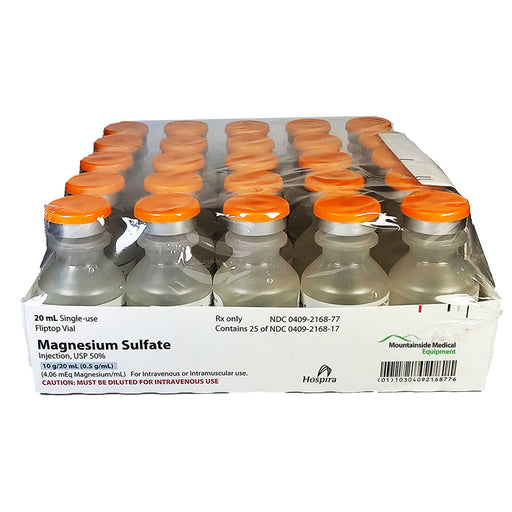
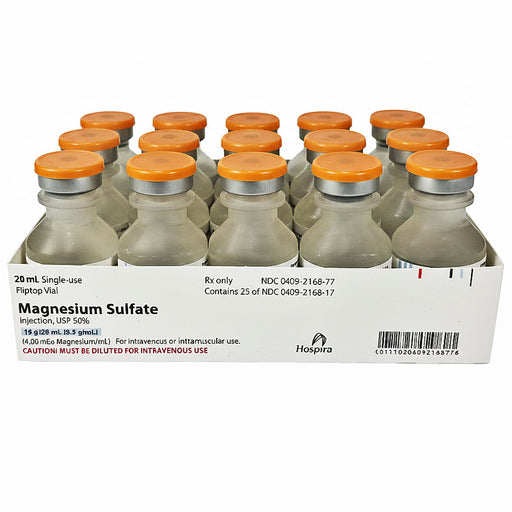
Magnesium Sulfate Injection 50% Single Use Vial 10 gram/20mL (0.5/mL) 20mL , 25/pack (Rx)
 Original price $ 429.00Current price $ 369.00
Magnesium Sulfate Injection
Magnesium sulfate injection is a sterile aqueous solution of magnesium salts (MgSO₄·7H₂O) used by healthcare providers. It delivers a specific dose of ionic magnesium intravenously (or intramuscularly) to correct magnesium deficiency or provide therapeutic effects. Magnesium is a vital mineral for neuromuscular function and enzymatic processes. As a drug, magnesium sulfate acts as a CNS depressant and smooth-muscle relaxant (a calcium‐antagonist/anticonvulsant). In practice it is given only in hospital/clinic settings, under continuous monitoring, because it can profoundly affect the heart, lungs, and reflexes.
Magnesium sulfate injection is a medication containing the mineral magnesium (as magnesium sulfate) in a sterile water solution. It is given by injection – usually as a slow intravenous (IV) infusion (sometimes intramuscularly) – under medical supervision. In effect, it is an IV form of magnesium used to raise blood magnesium levels quickly. (Magnesium is a naturally occurring electrolyte important for nerve and muscle function). According to the official prescribing information, “Magnesium Sulfate Injection…is a sterile, nonpyrogenic, concentrated solution of magnesium sulfate heptahydrate in Water for Injection. It is administered by the intravenous (IV) or intramuscular (IM) routes as an electrolyte replenisher or anticonvulsant”. In other words, this injectable form of magnesium is used to replace magnesium when levels are dangerously low and to act as an anticonvulsant in certain emergencies.
Uses & Indications
Magnesium sulfate injection has several important uses, mainly to replenish magnesium and prevent seizures in specific conditions. Key indications include:
- Hypomagnesemia (magnesium deficiency): It is used to treat very low blood magnesium levels when oral supplements are insufficient or not possible. For example, it can correct acute hypomagnesemia due to dialysis, severe vomiting/diarrhea, or other causes of magnesium loss.
- Eclampsia/Preeclampsia (pregnancy): It is routinely used as an anticonvulsant in pregnant patients with preeclampsia or eclampsia (pregnancy-related high blood pressure with risk of seizures). In this setting, magnesium sulfate injection prevents and treats seizures (“eclamptic fits”). For example, the Cleveland Clinic notes it “may be used to prevent and treat seizures during pregnancy in people with high blood pressure disorders, such as preeclampsia or eclampsia” and patient guides likewise state it is given to “prevent seizures (fits)…caused by eclampsia”.
- Other acute uses (cardiac, respiratory): In acute care, IV magnesium sulfate can also be used for severe cases of certain heart rhythm disturbances (e.g. torsades de pointes ventricular arrhythmia) and as a muscle relaxant in life-threatening asthma exacerbations, though these uses are less common. (Its role as a bronchodilator and antiarrhythmic comes from its effect on neuromuscular and cardiac cells.) Note: These uses are specialized and would be administered in a monitored setting.
In summary, magnesium sulfate injection is essentially IV magnesium. It rapidly raises serum magnesium and is thus used whenever a quick correction is needed (for example, in intensive care or emergency settings). Common official drug guides list hypomagnesemia and eclampsia-related seizures as the primary indications.
Administration
Magnesium sulfate injection is given only under medical supervision, usually in a hospital or clinic. It is typically administered as a diluted IV infusion over minutes to hours, depending on the situation. (Undiluted concentrations are too strong for direct injection.) Dosing and infusion rates vary by indication. For example, in eclampsia a common regimen is a 4–6 gram IV loading dose followed by a maintenance infusion, with close monitoring of blood pressure, reflexes and urine output. Because high magnesium levels can cause side effects (like low blood pressure, slowed breathing, or lethargy), patients on magnesium sulfate infusions are carefully monitored in a hospital.
Administration: Techniques and Dosing
General: Magnesium sulfate injection is administered by IV route (preferred), or IM route only if IV access is unavailable (rare in modern practice). It should be given via a controlled infusion pump or slow IV push, with resuscitation equipment at hand. Typical available strength is 50% solution (500 mg/mL) in 10 mL ampules, which must be diluted before infusion. For example, infuse 4–6 g (8–12 mEq) of MgSO₄ diluted in 100 mL normal saline over 15–30 minutes (as a loading dose). Always verify the patient, dose, and concentration with a colleague (double-check “right drug/dose”).
-
IV Infusion (Continuous or Intermittent): Use large-bore IV access. Dilute the drug to ≤20% concentration (e.g. ≤200 mg/mL) in IV fluid. Program the infusion pump at the ordered rate. Do not exceed ~150 mg of MgSO₄ per minute during infusion rapid IV bolus can cause severe hypotension or cardiac arrest). Typical regimens include: a 4–6 g loading dose over 15–20 min for eclampsia, then a maintenance infusion of 1–2 g/hr; for torsades or acute arrhythmia 1–2 g IV over 10–20 min; for status asthmaticus 1–2 g IV over 15–60 min. Always follow local protocols.
-
IV Push (Bolus): If given by syringe push, dilute first (e.g. mix 10 mL of 50% MgSO₄ in 40 mL NS to make 10% solution) and inject slowly over at least 5–10 minutes (not to exceed 150 mg/min). For example, a 1–2 g syringe push (after dilution) over several minutes might be used in emergencies. Rapid undiluted bolus is contraindicated.
-
Intramuscular Injection: Only if no IV access and in emergencies. Use two separate injections for large doses (e.g. 5 g in each buttock for a 10 g dose). Note IM injections are very painful and absorption is slow; IV use is strongly preferred.
-
Route & Rates (from drug guides): The usual IV infusion concentration is ~2 g in 100 mL NS (20 mg/mL). For torsades, 1–2 g over 10–20 min; for asthma, 2 g over 20 min; maintenance for eclampsia ~1 g/hr. Never exceed ~1 mEq/kg/hr (125 mg/kg/hr) in any infusion.
Monitoring & Safety for Providers
Magnesium sulfate is a high‐alert medication. Continuous monitoring by skilled staff is mandatory:
- Vitals & Cardiac: Continuous cardiac monitoring (ECG) and frequent BP, pulse, and respiratory rate. Magnesium can cause hypotension and bradycardia. (Notably, it tends to lower systolic BP more than diastolic, preserving fetal perfusion.)
- Neurologic: Check deep-tendon reflexes (especially patellar/knee jerk) and respiratory rate before each loading dose and periodically during infusion. Do not give more if reflexes are diminished or RR <12–16/min. Loss of reflexes is an early sign of toxicity. Institute seizure precautions in eclamptic patients.
- Renal function & Output: Magnesium is renally excreted. Confirm adequate urine output (>30 mL/hr) before and during infusion. In obstetrical use, if urine output falls (<30 mL/hr) despite fluids, MgSO₄ should be paused and delivery expedited. Reduce dose or avoid in renal impairment.
- Laboratory: Periodic serum magnesium levels are not always needed if infusion rates are standard, but levels can guide therapy in prolonged use. Also check calcium levels if concerned (Mg can cause hypocalcemia).
- Emergency preparedness: Have calcium gluconate (1 g of 10% solution) readily available as the antidote for magnesium toxicity. Equip staff to manage airway support; IV Mg overdose can cause respiratory depression up to apnea. Maintain airway and ventilation support (e.g. bag-mask) during infusions.
During Infusion: Watch for side effects: facial flushing, sweating, nausea, headache are common. More serious signs include excessive drowsiness, muscle weakness, hypotension, or arrhythmias. If any signs of overdose (respiratory depression, loss of reflexes) appear, stop the infusion immediately, assess, and give IV calcium (e.g. 1 g Ca-gluconate over 3–5 min) as needed.
Key Precautions & Interactions
- Do not combine with calcium channel blockers (e.g. nifedipine or verapamil) or other vasodilators, as Mg²⁺ is also a calcium antagonist and can cause profound hypotension and heart block.
- Use caution with neuromuscular blockers or CNS depressants: Mg potentiates muscle relaxants and sedatives. Avoid giving neuromuscular blockers (e.g. during Mg infusion) unless absolutely needed.
- Contraindications: Known heart block, anuria, or myasthenia gravis. Also avoid giving MgSO₄ if serum magnesium is already high (hypermagnesemia).
- Pregnancy & Lactation: Magnesium sulfate is intended in preeclampsia/eclampsia (Category D – fetal risk, but benefits outweigh risks). Breastfeeding is generally safe after MgSO₄ use. Non-pregnant patients generally should not receive MgSO₄ unless indicated.
- Drug Interactions: Inform the care team about all CNS depressants (opioids, sedatives), diuretics, aminoglycoside antibiotics, digoxin, and others. For example, Mg²⁺ can antagonize some anticonvulsants and potentiate neuromuscular blockade.
Storage & Handling
Magnesium sulfate injection is stored at room temperature (do not freeze). Verify the correct strength (e.g. 50% vs 10%) before use. Use sterile technique when drawing into infusion syringes or bags. Label all prepared solutions clearly. Because it is a vesicant, inspect IV sites frequently for infiltration; if extravasation occurs, stop the infusion, leave the catheter in place to aspirate, and apply cold compress.
Nursing/Provider Tips
- Always double-check the order and dose with a colleague (patient safety). Remember it’s a high-alert electrolyte.
- Train staff on recognizing toxicity: depressed reflexes and respiratory rate are early warning signs. Document reflex/respirations hourly during infusion.
- If treating eclampsia, continue MgSO₄ at least 24 hours after delivery or last seizure and taper as per protocol.
- In asthma or arrhythmia protocols, MgSO₄ is typically a one-time infusion – be prepared to resume ventilatory support or ACLS as needed.
- Educate patients/families: they should report any symptoms like flushing, sweating, dizziness, or breathing difficulty immediately.
- Always have calcium gluconate and airway equipment at bedside whenever administering MgSO₄.
Remember: Magnesium sulfate IV is a life-saving medication when used correctly. Proper dilution, slow administration, and vigilant monitoring are essential. Used promptly in its indications (e.g. early in eclamptic seizures or refractory arrhythmias), it can prevent catastrophic complications. When in doubt, administer as ordered – the risk of delaying treatment (especially for eclampsia) is far greater than the risk of careful use.
Magnesium sulfate injection is a prescription IV medication that provides soluble magnesium. It is used to replace magnesium in the body (especially when levels are very low) and to act as an anticonvulsant in conditions like preeclampsia/eclampsia. It must be given slowly in a healthcare setting. As the official label states, it is an “electrolyte replenisher or anticonvulsant” given IV/IM.
FAQs About Magnesium Sulfate Injections
What is Magnesium Sulfate Injection Used For?
Magnesium Sulfate Injection is used to: Treat and prevent low magnesium (hypomagnesemia) Control seizures in preeclampsia and eclampsia during pregnancy Manage acute asthma exacerbations Correct cardiac arrhythmias caused by low magnesium Serve as a tocolytic (preventing preterm labor) Support electrolyte balance in critical care
How Long Do Magnesium Injections Last?
The duration of effect from a magnesium sulfate injection depends on the dose and individual patient needs. Typically, clinical effects last 4–6 hours after administration, but ongoing benefits can extend longer with repeated dosing or infusions.
Why is Magnesium Sulfate Injection a High Alert Medication?
Magnesium sulfate injection is classified as a high alert medication due to its potential for serious side effects if improperly administered, including respiratory depression, cardiac arrest, and severe hypotension. Proper dosing and careful monitoring are essential for patient safety.
Why Would a Patient Be Given Magnesium Sulfate?
Patients may receive magnesium sulfate injections for: Correcting and preventing magnesium deficiency Seizure prevention and control in pregnancy-related hypertension (eclampsia, preeclampsia) Severe, treatment-resistant asthma attacks Arrhythmias or irregular heartbeats Certain types of poisoning or electrolyte imbalances
How Do You Feel After a Magnesium Infusion?
Most patients report a sense of relaxation and muscle ease after a magnesium infusion. Some experience warmth, mild flushing, or sleepiness. Clinical improvement in symptoms such as muscle cramps or arrhythmias can often be noticed within hours.
Who Should Avoid Magnesium Infusions?
Avoid magnesium infusions if you have: Severe kidney disease Heart block or significant heart rhythm disorders without a pacemaker Myasthenia gravis Known hypersensitivity to magnesium sulfate
What are the Common Side Effects of Magnesium Sulfate?
Frequent side effects include: Flushing or warmth Mild hypotension (low blood pressure) Nausea or vomiting Drowsiness or fatigue Muscle weakness Serious side effects (rare): difficulty breathing, severe drop in blood pressure, arrhythmias, or paralysis.
How Much Do Magnesium Injections Cost?
Magnesium sulfate injection typically costs $5–$30 per dose in clinical settings, though prices may vary by hospital, dose, and insurance coverage. Bulk or wholesale purchases may reduce costs for pharmacies and clinics.
Is Magnesium Sulfate a High Risk Drug?
Yes. Due to potential toxicity, especially with kidney impairment or overdosage, magnesium sulfate is considered a high risk or high-alert drug. Dosage and patient monitoring are vital for safety.
What to Monitor When Giving Magnesium Sulfate?
When administering magnesium sulfate, monitor: Deep tendon reflexes (DTRs) Respiratory rate Blood pressure and heart rate Renal function Serum magnesium levels Signs of magnesium toxicity
Why Would the Hospital Give You Magnesium in an IV?
Hospitals use magnesium IV infusions for: Rapid correction of magnesium deficiency Seizure prevention/control in pregnancy Acute asthma attacks unresponsive to standard therapy Urgent treatment of cardiac arrhythmias
How Long Does it Take for Magnesium Sulfate to Work?
Magnesium sulfate works within 30 minutes to 1 hour of IV administration, providing fast relief for deficiencies, muscle cramps, arrhythmias, or severe preeclampsia.