 Skip to content


















Nitroglycerin Tablets for BuSpar
-
 Sale 43%
Medical License Required
Sale 43%
Medical License Required
Nitroglycerin Sublingual Tablets 0.4 mg by Greenstone 100 Count (Rx)
43% OFFOriginal price $ 55.95Current price $ 32.00 -

 Sale 22%
Medical License Required
Sale 22%
Medical License Required
Nitroglycerin Sublingual Tablets 0.3 mg by Greenstone 100 Count (Rx)
22% OFFOriginal price $ 37.00Current price $ 29.00 -
 Sale 35%
Medical License Required
Sale 35%
Medical License Required
Nitroglycerin Sublingual Tablets 0.6 mg, 100 Count (Rx)
35% OFFOriginal price $ 54.95Current price $ 35.95 -
 Sale 24%
Low Stock
Medical License Required
Sale 24%
Low Stock
Medical License Required
Nitrostat Sublingual Tablets 0.4 mg Nitroglycerin Tablets, 25/bottle, 4 bottles per pack (Rx)
Only 2 left24% OFFOriginal price $ 298.00Current price $ 225.00 -
 Sale 24%
Medical License Required
Sale 24%
Medical License Required
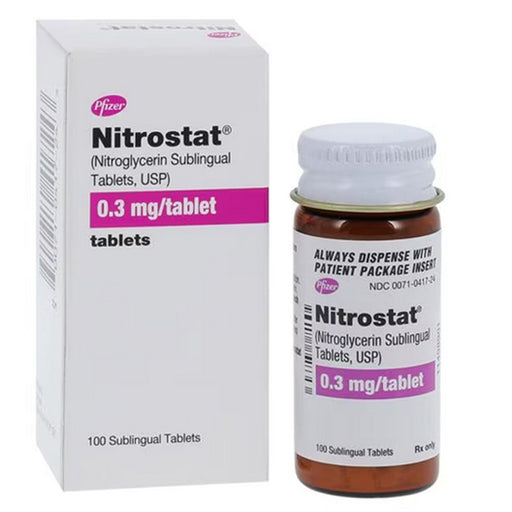
Nitrostat Sublingual Tablets 0.3 mg Nitroglycerin Tablets, 100/bottle (Rx)
24% OFFOriginal price $ 129.95Current price $ 99.00


Nitroglycerin tablets (often sublingual tablets placed under the tongue) are a type of nitrate vasodilator medication. They are most commonly used to treat or prevent chest pain (angina) in people with coronary artery disease. Angina is chest pain that happens when the heart muscle isn’t getting enough oxygen due to narrowed heart arteries. Nitroglycerin helps by relaxing and widening blood vessels, which reduces the heart’s workload and improves blood flow to the heart muscle. This action quickly alleviates the pain of an angina attack by allowing more oxygen-rich blood to reach the heart. (Common brand names for nitroglycerin sublingual tablets include Nitrostat, NitroQuick, or generic “nitroglycerin” in strengths like 0.3 mg, 0.4 mg, and 0.6 mg.)
How to Use Nitroglycerin Tablets
Nitroglycerin sublingual tablets are designed for rapid action and are not swallowed like typical pills. Instead, you place a tablet under your tongue (or in the buccal pouch of your cheek) and let it dissolve completely. The medication is absorbed through the lining of the mouth directly into the bloodstream for fast relief. Do not chew, crush, or swallow these tablets, as that would make them less effective. It’s a good idea to sit down while taking a dose, since nitroglycerin can make you feel lightheaded (more on that in the precautions).
When you experience chest pain, the usual instruction is to take one nitroglycerin tablet at the first sign of an angina attack. Relief typically occurs within 1 to 5 minutes. If after 5 minutes the chest pain is still there (or not significantly better), you can take a second tablet. You may take a third tablet 5 minutes after the second if pain persists – but do not exceed 3 tablets within a 15-minute period. If the pain continues after 3 doses, it could signal a serious problem (possibly a heart attack), and you should seek emergency medical help immediately. Importantly, nitroglycerin tablets can also be used preventively: for example, if you know a certain activity (like exercise or walking in cold weather) usually brings on your angina, your doctor may advise taking a tablet about 5–10 minutes before that activity to help prevent chest pain. Always follow your healthcare provider’s specific instructions on how to use this medication for your condition.
Nitroglycerin Side Effects
Like all medications, nitroglycerin tablets can cause side effects. Because of its vasodilating effect, some of the common side effects include:
- Headache – Often a throbbing headache can occur because the drug widens blood vessels in the head; this is a very frequent side effect when starting nitroglycerin. Headaches from nitroglycerin tend to lessen over time as your body gets used to the medication, but if they are severe or persistent, inform your doctor.
- Dizziness or Lightheadedness – Nitroglycerin can lower your blood pressure, sometimes suddenly, which may make you feel faint or dizzy. This is why it’s recommended to sit down when taking a dose and rise slowly afterward. Avoid driving or hazardous tasks immediately after taking a tablet until you know how it affects you.
- Flushing or Warmth – You might feel warmth or flushing of the face as the blood vessels dilate. This is usually mild and temporary.
- Tingling under the tongue – Some people feel a burning or tingling sensation in their mouth where the tablet dissolves. This can be normal and isn’t a reliable indicator of how well the medicine is working (so don’t worry if you don’t feel it – the nitroglycerin can still be working).
Most side effects of nitroglycerin are short-lived (since each dose’s action is brief). If any side effect feels very intense or concerning, you should contact a healthcare professional for advice.
Nitroglycerin tablets are a fast-acting, lifesaving medicine for angina. They work by quickly dilating blood vessels to reduce chest pain and cardiac stress. Patients typically carry their nitroglycerin with them and use it at the first hint of chest pain or before exertion if prescribed that way. When used correctly – dissolving under the tongue and following the safety guidelines – nitroglycerin can quickly relieve angina and improve comfort and exercise tolerance for people with heart conditions. Always follow your healthcare provider’s directions on using nitroglycerin, and be aware of the precautions (like avoiding certain drug interactions). With proper use, nitroglycerin sublingual tablets are an effective tool for managing episodes of chest pain and can even be critical in preventing a heart attack by prompting you to seek timely medical help if chest pain doesn’t subside.