Skip to content
Year-End Sale is Live Now - Up to 50% off
New users? Get 5% off on your first purchase.
Free US shipping over $100
Year-End Sale is Live Now - Up to 50% off
New users? Get 5% off on your first purchase.
Free US shipping over $100

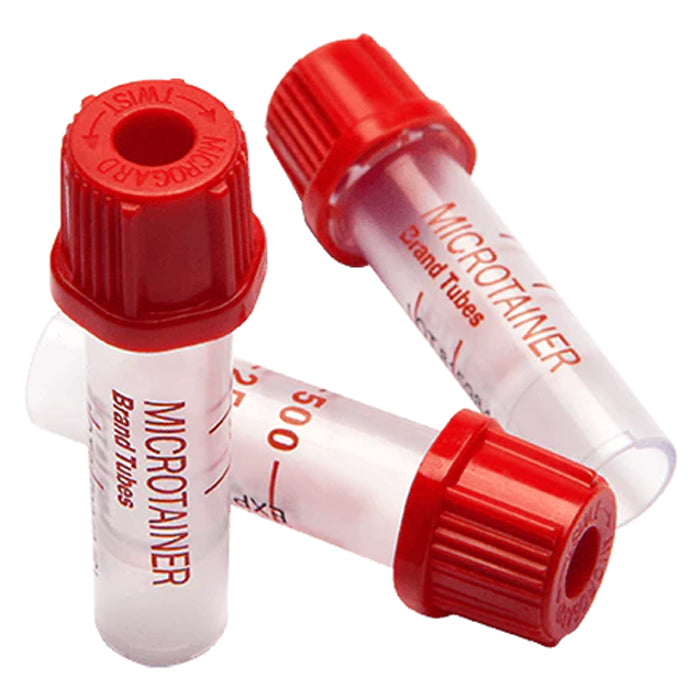
BD 365963 Microtainer Tubes Silicon Coated with Microgard Closure 15.3 x 46mm, 50/box

by BD
Sold out
Original price $ 125.95
Current price $ 89.95
SKU 365963
The BD 365963 Microtainer Tubes Silicon Coated with Microgard Closure is a device that is used to collect and store blood. The tubes are made of silicon and have a Microgard closure to keep the blood from clotting. This allows the blood to be stored for later use.

BD 365963 Microtainer Tubes Silicon Coated with Microgard Closure is a sterile, single-use product that is designed for the collection and transport of blood and other body fluids. The silicon-coated tubes feature a Microgard closure that helps to prevent contamination and leakage. The tubes are also gamma-sterilized and individually packaged for added safety.
BD Microtainer Blood Collection Tubes are used for the collection, storing and transportation of capillary blood specimens. They are intended to ensure quality blood sample collection, promoting ease of use and maximum convenience. A truly wide collection of Microtainer Tubes presented here is sure to cove the testing needs for hematology and chemistry applications. Importantly, the Microtainer Tube with BD Microgard™Closure features a wider diameter with an integrated collector and improved mixing ability. Each tube has a printed lot number, fill lines and expiration date. Extenders are available to help attach patient labels for transport. The variety of Tubes are color coded and match the array of evacuated BD Vacutainer Blood Collection Tubes.


BD 365963 - Silicone Coated, 250-500 μL, Red, 50/Box

BD 365963 Microtainer Tubes Silicon Coated with Microgard Closure 15.3 x 46mm, 50/box
$ 125.95 $ 89.95
FAQs About Phlebotomy Supplies
  • What Supplies Are Needed for Phlebotomy?

    Phlebotomy needles & butterfly sets (multi-sample, straight, winged infusion) Vacutainer tubes & collection vials Tourniquets Alcohol prep pads & antiseptic wipes Sterile gauze pads & bandages Sharps containers Gloves (nitrile or latex-free) Needle holders/adapters Syringes (for specific collections) Blood culture bottles (as needed) Lab labels and requisitions

  • Is a Phlebotomist Higher than a CNA?

    Phlebotomists and CNAs (Certified Nursing Assistants) have different qualifications: Phlebotomists specialize in blood collection and laboratory testing. CNAs provide basic patient care. Neither is “higher,” but a phlebotomist’s work is more specialized in specimen collection.

  • What's the Hardest Part of Phlebotomy?

    Finding veins in challenging patients (elderly, children, dehydrated) Managing patient anxiety or needle phobia Maintaining infection control & handling biohazards

  • What Are the 7 Duties of a Phlebotomist?

    Preparing phlebotomy supplies and verifying test orders Patient identification and consent Blood collection using proper technique Labeling and documenting blood samples Ensuring patient comfort and post-draw care Maintaining infection control and safety Transporting or processing specimens for laboratory testing

  • How Many Patients Do a Phlebotomist Draw in One Hour?

    Experienced phlebotomists may draw 10–20 patients per hour, depending on patient population and collection complexity.

  • What Shoes Should a Phlebotomist Wear?

    Comfortable, closed-toe, non-slip shoes are required for safety and long shifts in clinical or lab settings.

  • What Is the First Thing a Phlebotomist Should Do?

    Verify the patient’s identity and confirm the blood test order before preparing supplies or starting the draw.

  • Can a Phlebotomist Give Shots?

    Phlebotomists generally do not administer shots/vaccinations. Their role is focused on blood collection, but in some states/countries—additional certification may allow limited injections.

  • What Is the Number One Rule in Phlebotomy?

    Accurate patient identification and labeling is the #1 rule. Failure here is the greatest source of medical errors.

  • What Is the Difference Between a Phlebotomist 1 and 2?

    Phlebotomist 1: Entry-level, basic blood draws, routine collections. Phlebotomist 2: Advanced; may draw pediatric, geriatric, or “difficult stick” patients, process special specimens, train others, or manage supplies.

  • Key Features & Benefits

    Full range of phlebotomy supplies from leading brands (BD, Greiner, McKesson) Sterile, single-use, and safety-engineered devices Phlebotomy carts, trays, and specimen transport tools Bulk pricing, clinic packages, and same-day shipping Supports regulatory compliance and lab best practices

Search Any Type of Product, Medication, or Alignment