Skip to content
Year-End Sale is Live Now - Up to 50% off
New users? Get 5% off on your first purchase.
Free US shipping over $100
Year-End Sale is Live Now - Up to 50% off
New users? Get 5% off on your first purchase.
Free US shipping over $100

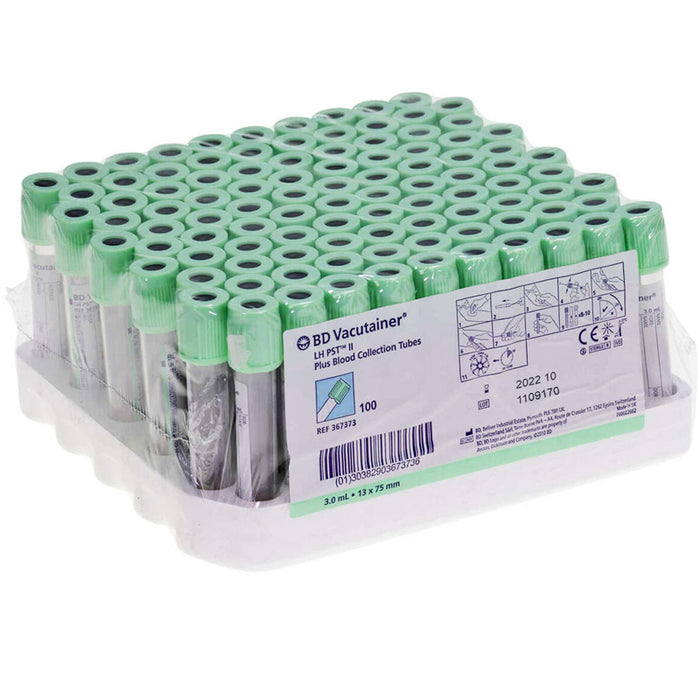
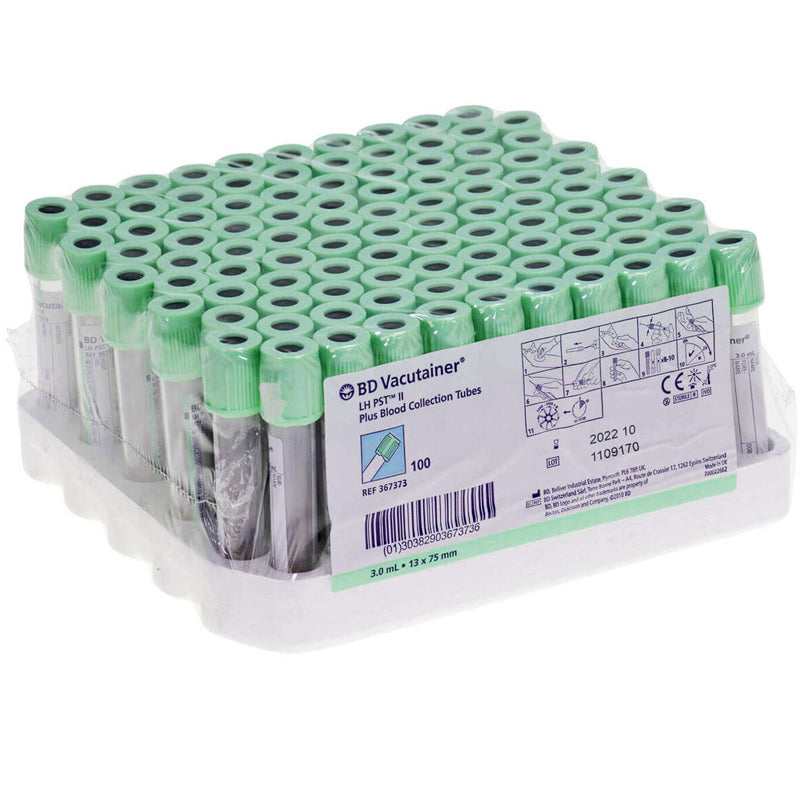
BD Vacutainer PST Blood Collection Tubes 3 mL 13mm x 75mm, 100/box

by BD
Year End Sale 20%
Original price $ 78.95
Current price $ 63.00
SKU 367960

BD 367960 Vacutainer PST Blood Collection Tubes 3 mL 13mm x 75mm, 100/box. BD Vacutainer® PST™ Tubes contain spray-coated lithium heparin and a gel for plasma separation.

BD Vacutainer® PST™ Lithium Heparin Tubes eliminate the need to wait for a clot to form, making it an ideal tube for STAT procedures, as well as for patients receiving anticoagulant therapy. The BD Vacutainer® PST™ Tube still provides the convenience of gel separation with the added advantage of improved turnaround times.

As a safety precaution to those doing the testing, BD has also created the Hemogard closure. It is made of rubber and seals the Vacutainer tightly from inside and with a plastic shield to avoid contact with blood when un-stopped. The shield prevents blood from splattering and from collecting on the edge of the tube or lid. This minimizes risk of exposure to blood borne pathogens protecting the professional doing their job.

Draw Volume: 3 mL

Tube Size: 13x75 mm

Product Features and Benefits

  • Hemogard or Conventional Closures
  • Store in Fridge or Freezer if Desired
  • Great for Diagnostic Testing
  • Resistant to Chemicals
  • Strong and Stable
  • Silicone Coated
  • Glass or Plastic

Product Specifications

  • Manufacturer: Becton Dickinson
  • Brand: BD Vacutainer
  • Color Coding: Green
  • Material: Glass or Plastic
  • Sterile: Yes
  • Tube color: Clear
  • Draw Volume: 3, 5 or 10 mL
BD Vacutainer PST Blood Collection Tubes 3 mL 13mm x 75mm, 100/box
$ 78.95 $ 63.00
FAQs About Phlebotomy Supplies
  • What Supplies Are Needed for Phlebotomy?

    Phlebotomy needles & butterfly sets (multi-sample, straight, winged infusion) Vacutainer tubes & collection vials Tourniquets Alcohol prep pads & antiseptic wipes Sterile gauze pads & bandages Sharps containers Gloves (nitrile or latex-free) Needle holders/adapters Syringes (for specific collections) Blood culture bottles (as needed) Lab labels and requisitions

  • Is a Phlebotomist Higher than a CNA?

    Phlebotomists and CNAs (Certified Nursing Assistants) have different qualifications: Phlebotomists specialize in blood collection and laboratory testing. CNAs provide basic patient care. Neither is “higher,” but a phlebotomist’s work is more specialized in specimen collection.

  • What's the Hardest Part of Phlebotomy?

    Finding veins in challenging patients (elderly, children, dehydrated) Managing patient anxiety or needle phobia Maintaining infection control & handling biohazards

  • What Are the 7 Duties of a Phlebotomist?

    Preparing phlebotomy supplies and verifying test orders Patient identification and consent Blood collection using proper technique Labeling and documenting blood samples Ensuring patient comfort and post-draw care Maintaining infection control and safety Transporting or processing specimens for laboratory testing

  • How Many Patients Do a Phlebotomist Draw in One Hour?

    Experienced phlebotomists may draw 10–20 patients per hour, depending on patient population and collection complexity.

  • What Shoes Should a Phlebotomist Wear?

    Comfortable, closed-toe, non-slip shoes are required for safety and long shifts in clinical or lab settings.

  • What Is the First Thing a Phlebotomist Should Do?

    Verify the patient’s identity and confirm the blood test order before preparing supplies or starting the draw.

  • Can a Phlebotomist Give Shots?

    Phlebotomists generally do not administer shots/vaccinations. Their role is focused on blood collection, but in some states/countries—additional certification may allow limited injections.

  • What Is the Number One Rule in Phlebotomy?

    Accurate patient identification and labeling is the #1 rule. Failure here is the greatest source of medical errors.

  • What Is the Difference Between a Phlebotomist 1 and 2?

    Phlebotomist 1: Entry-level, basic blood draws, routine collections. Phlebotomist 2: Advanced; may draw pediatric, geriatric, or “difficult stick” patients, process special specimens, train others, or manage supplies.

  • Key Features & Benefits

    Full range of phlebotomy supplies from leading brands (BD, Greiner, McKesson) Sterile, single-use, and safety-engineered devices Phlebotomy carts, trays, and specimen transport tools Bulk pricing, clinic packages, and same-day shipping Supports regulatory compliance and lab best practices

Search Any Type of Product, Medication, or Alignment