Skip to content
Year-End Sale is Live Now - Up to 50% off
New users? Get 5% off on your first purchase.
Free US shipping over $100
Year-End Sale is Live Now - Up to 50% off
New users? Get 5% off on your first purchase.
Free US shipping over $100

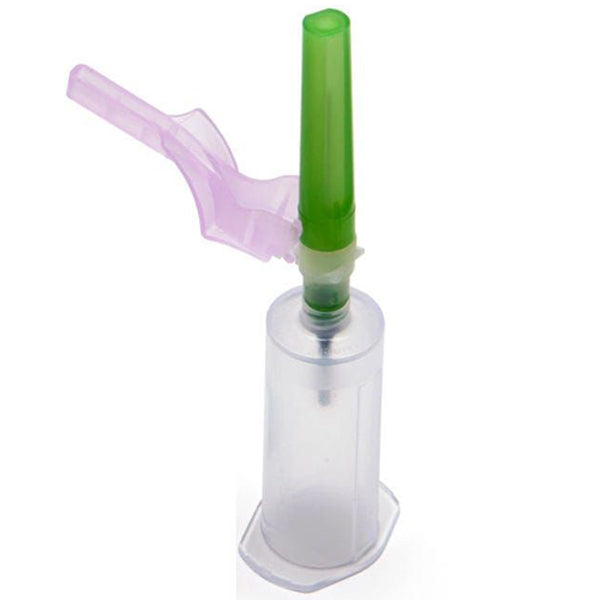
BD Vacutainer Eclipse Blood Collection Needles with Pre-Attached Holder 22 Gauge X 1.25” Thin Wall, 100/case

by BD
Year End Sale 29%
Original price $ 149.95
Current price $ 105.95
SKU 368651

The Vacutainer Eclipse Blood Collection Needles with Pre-Attached Holder are designed to provide a simple and efficient blood collection experience. The needles are attached to a holder that is designed to keep the needles in place, which makes it easier to hold and reduces the risk of accidental needle sticks.

The BD Vacutainer® Eclipse™ Needle with Pre-Attached Holder is a ready-to-use needle that complies with OSHA SHIB 10-15-03 (Disposal of Contaminated Needles and Blood Tube Holders Used for Phlebotomy). It has many features making it the perfect solution for any healthcare setting.

Hassle-free Usage. With one-handed safety activation, the Vacutainer Eclipse Needle with Pre-Attached Holder is easy-to-use and requires minimal change to a medical professional's regular technique. The safety-activation reduces exposure time and requires no hard surface. A "Bevel up" orientation toward the pink safety shield provides easy recognition of bevel position. The needle features a safety shield that protects patients and users against needle stick injury and allows hands to remain behind the needle at all times. This device uses the BD Precision Glide™ Needle Technology to guarantee the highest-quality and sharpness of it.


BD 368651 22G x 1¼", 100/case

BD Vacutainer Eclipse Blood Collection Needles with Pre-Attached Holder 22 Gauge X 1.25” Thin Wall, 100/case
$ 149.95 $ 105.95
FAQs About Phlebotomy Supplies
  • What Supplies Are Needed for Phlebotomy?

    Phlebotomy needles & butterfly sets (multi-sample, straight, winged infusion) Vacutainer tubes & collection vials Tourniquets Alcohol prep pads & antiseptic wipes Sterile gauze pads & bandages Sharps containers Gloves (nitrile or latex-free) Needle holders/adapters Syringes (for specific collections) Blood culture bottles (as needed) Lab labels and requisitions

  • Is a Phlebotomist Higher than a CNA?

    Phlebotomists and CNAs (Certified Nursing Assistants) have different qualifications: Phlebotomists specialize in blood collection and laboratory testing. CNAs provide basic patient care. Neither is “higher,” but a phlebotomist’s work is more specialized in specimen collection.

  • What's the Hardest Part of Phlebotomy?

    Finding veins in challenging patients (elderly, children, dehydrated) Managing patient anxiety or needle phobia Maintaining infection control & handling biohazards

  • What Are the 7 Duties of a Phlebotomist?

    Preparing phlebotomy supplies and verifying test orders Patient identification and consent Blood collection using proper technique Labeling and documenting blood samples Ensuring patient comfort and post-draw care Maintaining infection control and safety Transporting or processing specimens for laboratory testing

  • How Many Patients Do a Phlebotomist Draw in One Hour?

    Experienced phlebotomists may draw 10–20 patients per hour, depending on patient population and collection complexity.

  • What Shoes Should a Phlebotomist Wear?

    Comfortable, closed-toe, non-slip shoes are required for safety and long shifts in clinical or lab settings.

  • What Is the First Thing a Phlebotomist Should Do?

    Verify the patient’s identity and confirm the blood test order before preparing supplies or starting the draw.

  • Can a Phlebotomist Give Shots?

    Phlebotomists generally do not administer shots/vaccinations. Their role is focused on blood collection, but in some states/countries—additional certification may allow limited injections.

  • What Is the Number One Rule in Phlebotomy?

    Accurate patient identification and labeling is the #1 rule. Failure here is the greatest source of medical errors.

  • What Is the Difference Between a Phlebotomist 1 and 2?

    Phlebotomist 1: Entry-level, basic blood draws, routine collections. Phlebotomist 2: Advanced; may draw pediatric, geriatric, or “difficult stick” patients, process special specimens, train others, or manage supplies.

  • Key Features & Benefits

    Full range of phlebotomy supplies from leading brands (BD, Greiner, McKesson) Sterile, single-use, and safety-engineered devices Phlebotomy carts, trays, and specimen transport tools Bulk pricing, clinic packages, and same-day shipping Supports regulatory compliance and lab best practices

Search Any Type of Product, Medication, or Alignment