
Serum Blood Collection Tubes for Serum Tubes by BD
-

 Sale 37%
Serum Separator Tubes by BD Vacutainer 10 mL 16 mm x 100 mm, 100/box
 Original price $ 64.95Current price $ 41.20
 -
 Sale 18%
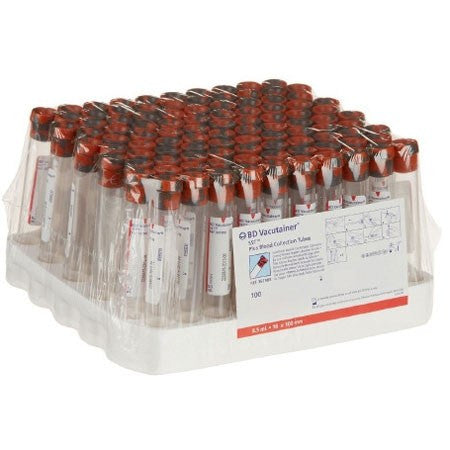
Serum Separator Tube (SST) Blood Collection Tubes, BD Vacutainer with Red Tops, 8.5 mL 16mm x 100 mm, 100/Box
Original price $ 94.95Current price $ 77.80 -

 Sale 21%
BD Vacutainer Rapid Serum Tubes (RST) Blood Collection Tubes 8 mL 13mm x 100mm, 100/box
Original price $ 325.00Current price $ 258.00


Discover our premium Serum Blood Collection Tubes, engineered for accurate, contamination-free blood sample collection and testing. Ideal for clinical laboratories, hospitals, and diagnostic centers, these sterile tubes ensure reliable serum separation for various health diagnostics, including biochemical, serological, immunological, and molecular tests. Enhance your healthcare workflow with our vacuum-sealed, leak-proof serum tubes—essential for routine blood tests, disease screening, and medical research.
Discover our premium Serum Blood Collection Tubes, engineered for accurate, contamination-free blood sample collection and testing. Ideal for clinical laboratories, hospitals, and diagnostic centers, these sterile tubes ensure reliable serum separation for various health diagnostics, including biochemical, serological, immunological, and molecular tests. Enhance your healthcare workflow with our vacuum-sealed, leak-proof serum tubes—essential for routine blood tests, disease screening, and medical research.
- Serum Blood Collection Tubes – Sterile, vacuum-sealed vessels designed for collection and serum separation in clinical laboratory settings
- Primary Applications: Biochemical testing, serological assays, immunological markers, and diagnostic screening across hospitals, diagnostic centers, and clinical laboratories
- Specialized Variants: Serum separator tubes (SST), plain red-top tubes, clot activator tubes, and gray-top additives to meet diverse testing protocols
- Quality Focus: Contamination-free design, leak-proof technology, and consistent gel separator formulation ensure reliable serum separation and test accuracy
- Wholesale Advantage: Bulk pricing, trusted brands (BD Vacutainer), and fast US shipping for institutional and high-volume healthcare buyers
- Licensing Requirement: Products are distributed to qualified healthcare professionals and licensed institutional buyers only
- Support Resources: Technical selection guidance, bulk ordering assistance, and fast turnaround for procurement teams
- Serum Separator Tubes (SST): Gold-top or gel-barrier tubes with clot activator for rapid serum separation; ideal for routine chemistry and serology
- Plain Serum Tubes (Red-Top): Additive-free tubes for maximum purity; used when sample cannot tolerate gel or activators
- Clot Activator Tubes: Specialized formulations (gold-top, red clot activator) for accelerated coagulation and workflow efficiency
- Gray-Top & Additives: Tubes with specialized additive profiles for specific test requirements including glycolysis inhibition
- BD Vacutainer Brand Options: Premium BD Vacutainer serum separator tubes and collection systems for labs requiring trusted brand specifications
- Various Volumes: Multiple draw volumes (3.5mL, 5mL, 10mL sizes) to accommodate different specimen and testing requirements
| Tube Type | Color Cap | Additive | Primary Use Cases | Separation Time |
|---|---|---|---|---|
| Serum Separator Tube (SST) | Gold or marble top | Gel separator + clot activator | Routine chemistry, serology, immunology, biochemical assays | 10–15 minutes |
| Plain Serum Tube | Red top | None (additive-free) | Sensitive immunoassays, protein assays, tests incompatible with gel | 20–30 minutes |
| Clot Activator Tube | Gold or red | Clot activator (silica or thrombin) | Rapid serum separation for high-volume labs | 5–10 minutes |
| Gray-Top Tube | Gray | Glycolysis inhibitor (sodium fluoride or iodoacetate) | Glucose testing, lactic acid assays | Variable |
| Plasma Separation Tube | Green or lavender | Anticoagulant (heparin or EDTA) | Coagulation studies, hematology, specific chemistry panels | 5–10 minutes |
- Routine Clinical Chemistry: Electrolytes, glucose, renal function, liver function tests (LFT)—serum separator tubes provide rapid, reliable serum for automated analyzers
- Serological Testing: Antibody detection, immunoassays, and disease screening; serum tubes prevent hemolysis and contamination that compromise sensitivity
- Hormone & Endocrine Assays: Thyroid function, prolactin, and other hormone measurements requiring pure serum without anticoagulants
- Infectious Disease Diagnostics: HBsAg (hepatitis B), ASO titer, RF (rheumatoid factor), and other serology tests use serum separator tubes as the standard collection vessel
- Blood Banks & Transfusion Services: Compatibility testing and pre-transfusion serology rely on serum tubes for accurate results
- Medical Research & Institutional Studies: Controlled serum collection using standardized tubes ensures data integrity and reproducibility across research populations
- Default Choice for Most Tests: Serum separator tubes (SST) with gold or marble top are the standard for routine clinical chemistry and serology; they balance speed, accuracy, and cost efficiency
- Maximum Purity Needed: Choose plain red-top serum tubes when tests are sensitive to gel interference or when serum alone is required without additives
- High-Volume Workflow: Clot activator tubes accelerate clotting and separation, reducing turnaround time in busy diagnostic centers and hospital labs
- Test-Specific Requirements: Consult established laboratory protocols (CLSI, your institution's procedure manual) for tube selection; different assays may have specific tube requirements. Gray-tube additives are essential for glucose testing; plasma separation tubes are needed for coagulation studies
- Brand & Volume Considerations: BD Vacutainer products are widely trusted and compatible with most automated systems; select draw volumes (3.5mL, 5mL, 10mL) based on testing panel requirements and patient population
- Sample Integrity: Always verify tubes are sterile, vacuum-sealed, and leak-proof before use to prevent contamination and pre-analytical errors
- Wholesale Pricing Structure: Volume discounts available for bulk orders; pricing decreases with increasing order quantities. Contact our sales team for institutional volume quotes.
- Free Shipping: Free US shipping on orders over $100; all orders ship via reliable carriers with tracking for bulk institutional purchases
- Licensing Requirement: Serum blood collection tubes are medical devices intended for use by licensed healthcare professionals and qualified institutional buyers. A valid medical license or institutional buyer status may be required for purchase.
- Bulk Order Support: Our procurement team assists with large orders, custom specifications, and emergency restocking. Call +1 (888) 687-4334 or email sales@mountainside-medical.com for dedicated support.
- Fast Delivery: Standard processing and shipping ensure prompt delivery to clinics, hospitals, diagnostic centers, and emergency responder agencies across the United States
- Account Setup for Institutions: Streamlined ordering for repeat institutional buyers; set up bulk purchase agreements and automated restocking schedules
- 5% First-Purchase Discount: New customers receive 5% off their first order; apply at checkout
Medical Device Disclaimer: Serum blood collection tubes are medical devices intended for use by qualified healthcare professionals and licensed institutional buyers only. These products are not intended for consumer self-use or home testing.
Clinical Use Only: These tubes are designed for blood specimen collection in professional laboratory and clinical settings. Proper training in phlebotomy technique, specimen handling, and pre-analytical procedures is required for accurate results.
Professional Oversight: Mountainside Medical distributes serum blood collection tubes under applicable state and federal medical device regulations. Use of these products must comply with your institution's standard operating procedures (SOPs) and clinical laboratory standards established by CLSI (Clinical Laboratory Standards Institute) and other relevant governing bodies.
Regulatory Status: Not specified in provided data: specific FDA 510(k) status or other regulatory certifications for individual products. Consult product datasheets or contact our team at +1 (888) 687-4334 for regulatory documentation and compliance verification.
Not for Self-Diagnosis: These tubes are specimen collection vessels only. Test interpretation and clinical decision-making must be performed by qualified healthcare professionals. This product is not a substitute for professional medical advice, diagnosis, or treatment.
Storage & Shelf Life: Store tubes in a cool, dry environment per manufacturer recommendations. Check expiration dates before use. Expired or damaged tubes may compromise sample integrity.
-
What is the difference between a serum separator tube and a plain serum tube?
Serum separator tubes (SST) contain a gel barrier and clot activator that accelerate clotting and enable mechanical separation of serum from cellular material during centrifugation. They are faster and more convenient for routine testing. Plain serum tubes (red-top) contain no additives and allow natural clotting; they provide maximum serum purity and are used when tests are sensitive to gel interference. SSTs are standard for most labs; plain tubes are chosen for specific immunoassays or when additive-free serum is required.
-
How long does it take for serum to separate in a serum separator tube?
Serum separator tubes typically achieve separation in 10–15 minutes at room temperature, depending on the specific tube design and additive formulation. Some clot activator tubes may separate in as little as 5–10 minutes. After clotting is complete, samples are centrifuged to mechanically separate serum from the clot. Always follow your laboratory's standard operating procedures and the tube manufacturer's instructions for accurate timing.
-
What tests use serum separator tubes (SST)?
Serum separator tubes are the standard collection vessel for routine clinical chemistry tests including electrolytes, glucose, kidney and liver function tests (LFT), cholesterol panels, and hormone assays. They are also used for serological testing (antibody detection), immunological assays, and most disease screening tests. SSTs are not suitable for tests requiring additive-free serum or specific anticoagulants; consult your institution's tube selection protocol for test-specific requirements.
-
What is the difference between serum and plasma tubes?
Serum tubes allow blood to clot naturally and then separate serum (the clear liquid remaining after clotting). Plasma tubes contain anticoagulants (such as heparin or EDTA) that prevent clotting, preserving plasma instead. Serum is used for chemistry and serology testing; plasma is used for coagulation studies, some hematology tests, and specific chemistry assays where anticoagulation is required. Using the wrong tube type for a test will produce inaccurate results.
-
What does a clot activator do in a blood collection tube?
A clot activator is a substance (typically silica or thrombin) that speeds up the natural coagulation cascade, reducing the time blood takes to clot. Tubes containing clot activators are useful in high-volume labs where rapid sample processing is essential. They promote faster clot formation compared to plain tubes, allowing serum to be separated and analysis to begin sooner. Clot activator tubes come in gold-top and red-top variants.
-
What is the marble top or gold top on serum collection tubes?
The color of a tube's cap indicates its additive content and intended use. Gold-top or marble-top caps on serum separator tubes indicate the presence of a gel separator and clot activator. Gold-top tubes are SSTs designed for rapid serum separation. The colored cap serves as a visual reference for laboratory staff, helping ensure the correct tube is used for each test. Always refer to your institution's tube selection protocol for test-specific requirements.
-
Can I use a serum tube for a plasma test?
No. Using the wrong tube type compromises test results. Serum tubes are designed to allow clotting; plasma tubes contain anticoagulants to prevent clotting. Tests requiring plasma must use plasma collection tubes (typically green-top with heparin or lavender-top with EDTA). Using a serum tube when plasma is required will result in clotted material instead of plasma, making the sample unsuitable for analysis. Always follow your institution's standard tube selection protocol.
-
What is a gray-top blood collection tube used for?
Gray-top tubes contain glycolysis inhibitors (sodium fluoride or iodoacetate) that prevent white blood cells from consuming glucose in the sample. They are specifically used for glucose testing and lactic acid assays where sample integrity is critical. Gray-top additives are not appropriate for general chemistry testing. Gray tubes are color-coded to prevent confusion and ensure proper specimen collection for the intended test.
-
Do serum blood collection tubes require special storage?
Serum blood collection tubes should be stored in a cool, dry environment away from direct sunlight and extreme temperatures. Room temperature storage (18–24°C) is typical. Check expiration dates before use; expired tubes may have compromised vacuum seals or additive degradation, affecting sample quality. For institutional bulk orders, store tubes in designated medical supply areas and maintain inventory rotation to ensure fresh stock.
-
What are Mountainside Medical's bulk ordering options?
Mountainside Medical offers wholesale pricing for institutional bulk purchases with volume-tiered discounts. We support hospitals, diagnostic centers, clinics, and emergency responder agencies with streamlined ordering, fast US shipping (free on orders over $100), and dedicated procurement support. Call +1 (888) 687-4334 or email sales@mountainside-medical.com for bulk quotes, custom specifications, and emergency restocking. New customers receive 5% off their first order.
-
Are BD Vacutainer tubes available at Mountainside Medical?
Yes. We stock BD Vacutainer serum separator tubes and other BD collection products as part of our wholesale inventory. BD Vacutainer is a trusted brand used in labs worldwide and is compatible with most automated laboratory systems. We offer BD products alongside competitive alternatives, allowing you to balance brand preference with cost-effectiveness. Contact our sales team for availability, specifications, and bulk pricing on BD Vacutainer products.
-
Do I need a medical license to purchase serum blood collection tubes?
Serum blood collection tubes are medical devices intended for use by qualified healthcare professionals and licensed institutional buyers. Many states require a valid medical license or institutional buyer status for purchase. Mountainside Medical serves licensed clinics, hospitals, diagnostic centers, EMS teams, and other qualified healthcare providers. Contact us at +1 (888) 687-4334 to verify licensing requirements for your specific institution or practice.
Discover our premium Serum Blood Collection Tubes, engineered for accurate, contamination-free blood sample collection and testing. Ideal for clinical laboratories, hospitals, and diagnostic centers, these sterile tubes ensure reliable serum separation for various health diagnostics, including biochemical, serological, immunological, and molecular tests. Enhance your healthcare workflow with our vacuum-sealed, leak-proof serum tubes—essential for routine blood tests, disease screening, and medical research.
- Serum Blood Collection Tubes – Sterile, vacuum-sealed vessels designed for collection and serum separation in clinical laboratory settings
- Primary Applications: Biochemical testing, serological assays, immunological markers, and diagnostic screening across hospitals, diagnostic centers, and clinical laboratories
- Specialized Variants: Serum separator tubes (SST), plain red-top tubes, clot activator tubes, and gray-top additives to meet diverse testing protocols
- Quality Focus: Contamination-free design, leak-proof technology, and consistent gel separator formulation ensure reliable serum separation and test accuracy
- Wholesale Advantage: Bulk pricing, trusted brands (BD Vacutainer), and fast US shipping for institutional and high-volume healthcare buyers
- Licensing Requirement: Products are distributed to qualified healthcare professionals and licensed institutional buyers only
- Support Resources: Technical selection guidance, bulk ordering assistance, and fast turnaround for procurement teams
- Serum Separator Tubes (SST): Gold-top or gel-barrier tubes with clot activator for rapid serum separation; ideal for routine chemistry and serology
- Plain Serum Tubes (Red-Top): Additive-free tubes for maximum purity; used when sample cannot tolerate gel or activators
- Clot Activator Tubes: Specialized formulations (gold-top, red clot activator) for accelerated coagulation and workflow efficiency
- Gray-Top & Additives: Tubes with specialized additive profiles for specific test requirements including glycolysis inhibition
- BD Vacutainer Brand Options: Premium BD Vacutainer serum separator tubes and collection systems for labs requiring trusted brand specifications
- Various Volumes: Multiple draw volumes (3.5mL, 5mL, 10mL sizes) to accommodate different specimen and testing requirements
| Tube Type | Color Cap | Additive | Primary Use Cases | Separation Time |
|---|---|---|---|---|
| Serum Separator Tube (SST) | Gold or marble top | Gel separator + clot activator | Routine chemistry, serology, immunology, biochemical assays | 10–15 minutes |
| Plain Serum Tube | Red top | None (additive-free) | Sensitive immunoassays, protein assays, tests incompatible with gel | 20–30 minutes |
| Clot Activator Tube | Gold or red | Clot activator (silica or thrombin) | Rapid serum separation for high-volume labs | 5–10 minutes |
| Gray-Top Tube | Gray | Glycolysis inhibitor (sodium fluoride or iodoacetate) | Glucose testing, lactic acid assays | Variable |
| Plasma Separation Tube | Green or lavender | Anticoagulant (heparin or EDTA) | Coagulation studies, hematology, specific chemistry panels | 5–10 minutes |
- Routine Clinical Chemistry: Electrolytes, glucose, renal function, liver function tests (LFT)—serum separator tubes provide rapid, reliable serum for automated analyzers
- Serological Testing: Antibody detection, immunoassays, and disease screening; serum tubes prevent hemolysis and contamination that compromise sensitivity
- Hormone & Endocrine Assays: Thyroid function, prolactin, and other hormone measurements requiring pure serum without anticoagulants
- Infectious Disease Diagnostics: HBsAg (hepatitis B), ASO titer, RF (rheumatoid factor), and other serology tests use serum separator tubes as the standard collection vessel
- Blood Banks & Transfusion Services: Compatibility testing and pre-transfusion serology rely on serum tubes for accurate results
- Medical Research & Institutional Studies: Controlled serum collection using standardized tubes ensures data integrity and reproducibility across research populations
- Default Choice for Most Tests: Serum separator tubes (SST) with gold or marble top are the standard for routine clinical chemistry and serology; they balance speed, accuracy, and cost efficiency
- Maximum Purity Needed: Choose plain red-top serum tubes when tests are sensitive to gel interference or when serum alone is required without additives
- High-Volume Workflow: Clot activator tubes accelerate clotting and separation, reducing turnaround time in busy diagnostic centers and hospital labs
- Test-Specific Requirements: Consult established laboratory protocols (CLSI, your institution's procedure manual) for tube selection; different assays may have specific tube requirements. Gray-tube additives are essential for glucose testing; plasma separation tubes are needed for coagulation studies
- Brand & Volume Considerations: BD Vacutainer products are widely trusted and compatible with most automated systems; select draw volumes (3.5mL, 5mL, 10mL) based on testing panel requirements and patient population
- Sample Integrity: Always verify tubes are sterile, vacuum-sealed, and leak-proof before use to prevent contamination and pre-analytical errors
- Wholesale Pricing Structure: Volume discounts available for bulk orders; pricing decreases with increasing order quantities. Contact our sales team for institutional volume quotes.
- Free Shipping: Free US shipping on orders over $100; all orders ship via reliable carriers with tracking for bulk institutional purchases
- Licensing Requirement: Serum blood collection tubes are medical devices intended for use by licensed healthcare professionals and qualified institutional buyers. A valid medical license or institutional buyer status may be required for purchase.
- Bulk Order Support: Our procurement team assists with large orders, custom specifications, and emergency restocking. Call +1 (888) 687-4334 or email sales@mountainside-medical.com for dedicated support.
- Fast Delivery: Standard processing and shipping ensure prompt delivery to clinics, hospitals, diagnostic centers, and emergency responder agencies across the United States
- Account Setup for Institutions: Streamlined ordering for repeat institutional buyers; set up bulk purchase agreements and automated restocking schedules
- 5% First-Purchase Discount: New customers receive 5% off their first order; apply at checkout
Medical Device Disclaimer: Serum blood collection tubes are medical devices intended for use by qualified healthcare professionals and licensed institutional buyers only. These products are not intended for consumer self-use or home testing.
Clinical Use Only: These tubes are designed for blood specimen collection in professional laboratory and clinical settings. Proper training in phlebotomy technique, specimen handling, and pre-analytical procedures is required for accurate results.
Professional Oversight: Mountainside Medical distributes serum blood collection tubes under applicable state and federal medical device regulations. Use of these products must comply with your institution's standard operating procedures (SOPs) and clinical laboratory standards established by CLSI (Clinical Laboratory Standards Institute) and other relevant governing bodies.
Regulatory Status: Not specified in provided data: specific FDA 510(k) status or other regulatory certifications for individual products. Consult product datasheets or contact our team at +1 (888) 687-4334 for regulatory documentation and compliance verification.
Not for Self-Diagnosis: These tubes are specimen collection vessels only. Test interpretation and clinical decision-making must be performed by qualified healthcare professionals. This product is not a substitute for professional medical advice, diagnosis, or treatment.
Storage & Shelf Life: Store tubes in a cool, dry environment per manufacturer recommendations. Check expiration dates before use. Expired or damaged tubes may compromise sample integrity.
-
What is the difference between a serum separator tube and a plain serum tube?
Serum separator tubes (SST) contain a gel barrier and clot activator that accelerate clotting and enable mechanical separation of serum from cellular material during centrifugation. They are faster and more convenient for routine testing. Plain serum tubes (red-top) contain no additives and allow natural clotting; they provide maximum serum purity and are used when tests are sensitive to gel interference. SSTs are standard for most labs; plain tubes are chosen for specific immunoassays or when additive-free serum is required.
-
How long does it take for serum to separate in a serum separator tube?
Serum separator tubes typically achieve separation in 10–15 minutes at room temperature, depending on the specific tube design and additive formulation. Some clot activator tubes may separate in as little as 5–10 minutes. After clotting is complete, samples are centrifuged to mechanically separate serum from the clot. Always follow your laboratory's standard operating procedures and the tube manufacturer's instructions for accurate timing.
-
What tests use serum separator tubes (SST)?
Serum separator tubes are the standard collection vessel for routine clinical chemistry tests including electrolytes, glucose, kidney and liver function tests (LFT), cholesterol panels, and hormone assays. They are also used for serological testing (antibody detection), immunological assays, and most disease screening tests. SSTs are not suitable for tests requiring additive-free serum or specific anticoagulants; consult your institution's tube selection protocol for test-specific requirements.
-
What is the difference between serum and plasma tubes?
Serum tubes allow blood to clot naturally and then separate serum (the clear liquid remaining after clotting). Plasma tubes contain anticoagulants (such as heparin or EDTA) that prevent clotting, preserving plasma instead. Serum is used for chemistry and serology testing; plasma is used for coagulation studies, some hematology tests, and specific chemistry assays where anticoagulation is required. Using the wrong tube type for a test will produce inaccurate results.
-
What does a clot activator do in a blood collection tube?
A clot activator is a substance (typically silica or thrombin) that speeds up the natural coagulation cascade, reducing the time blood takes to clot. Tubes containing clot activators are useful in high-volume labs where rapid sample processing is essential. They promote faster clot formation compared to plain tubes, allowing serum to be separated and analysis to begin sooner. Clot activator tubes come in gold-top and red-top variants.
-
What is the marble top or gold top on serum collection tubes?
The color of a tube's cap indicates its additive content and intended use. Gold-top or marble-top caps on serum separator tubes indicate the presence of a gel separator and clot activator. Gold-top tubes are SSTs designed for rapid serum separation. The colored cap serves as a visual reference for laboratory staff, helping ensure the correct tube is used for each test. Always refer to your institution's tube selection protocol for test-specific requirements.
-
Can I use a serum tube for a plasma test?
No. Using the wrong tube type compromises test results. Serum tubes are designed to allow clotting; plasma tubes contain anticoagulants to prevent clotting. Tests requiring plasma must use plasma collection tubes (typically green-top with heparin or lavender-top with EDTA). Using a serum tube when plasma is required will result in clotted material instead of plasma, making the sample unsuitable for analysis. Always follow your institution's standard tube selection protocol.
-
What is a gray-top blood collection tube used for?
Gray-top tubes contain glycolysis inhibitors (sodium fluoride or iodoacetate) that prevent white blood cells from consuming glucose in the sample. They are specifically used for glucose testing and lactic acid assays where sample integrity is critical. Gray-top additives are not appropriate for general chemistry testing. Gray tubes are color-coded to prevent confusion and ensure proper specimen collection for the intended test.
-
Do serum blood collection tubes require special storage?
Serum blood collection tubes should be stored in a cool, dry environment away from direct sunlight and extreme temperatures. Room temperature storage (18–24°C) is typical. Check expiration dates before use; expired tubes may have compromised vacuum seals or additive degradation, affecting sample quality. For institutional bulk orders, store tubes in designated medical supply areas and maintain inventory rotation to ensure fresh stock.
-
What are Mountainside Medical's bulk ordering options?
Mountainside Medical offers wholesale pricing for institutional bulk purchases with volume-tiered discounts. We support hospitals, diagnostic centers, clinics, and emergency responder agencies with streamlined ordering, fast US shipping (free on orders over $100), and dedicated procurement support. Call +1 (888) 687-4334 or email sales@mountainside-medical.com for bulk quotes, custom specifications, and emergency restocking. New customers receive 5% off their first order.
-
Are BD Vacutainer tubes available at Mountainside Medical?
Yes. We stock BD Vacutainer serum separator tubes and other BD collection products as part of our wholesale inventory. BD Vacutainer is a trusted brand used in labs worldwide and is compatible with most automated laboratory systems. We offer BD products alongside competitive alternatives, allowing you to balance brand preference with cost-effectiveness. Contact our sales team for availability, specifications, and bulk pricing on BD Vacutainer products.
-
Do I need a medical license to purchase serum blood collection tubes?
Serum blood collection tubes are medical devices intended for use by qualified healthcare professionals and licensed institutional buyers. Many states require a valid medical license or institutional buyer status for purchase. Mountainside Medical serves licensed clinics, hospitals, diagnostic centers, EMS teams, and other qualified healthcare providers. Contact us at +1 (888) 687-4334 to verify licensing requirements for your specific institution or practice.