
Skip to content
Year-End Sale is Live Now - Up to 50% off
New users? Get 5% off on your first purchase.
Free US shipping over $100
Year-End Sale is Live Now - Up to 50% off
New users? Get 5% off on your first purchase.
Free US shipping over $100

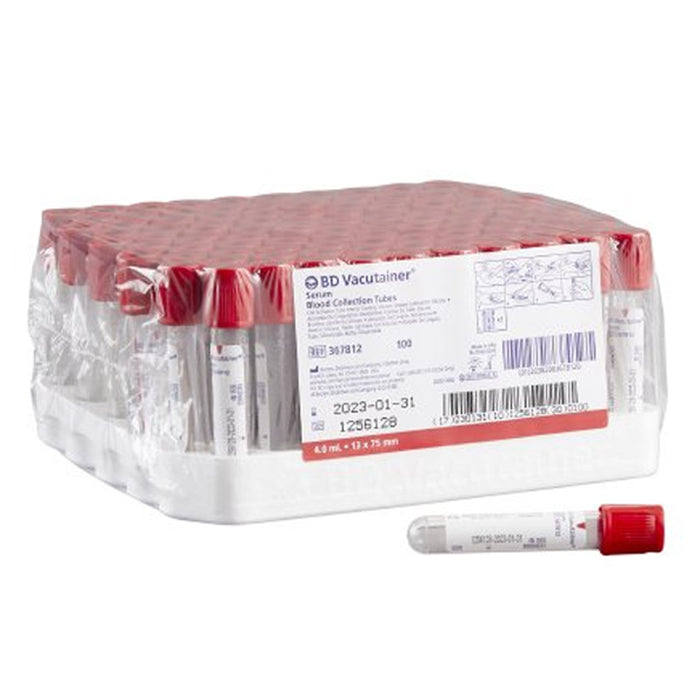
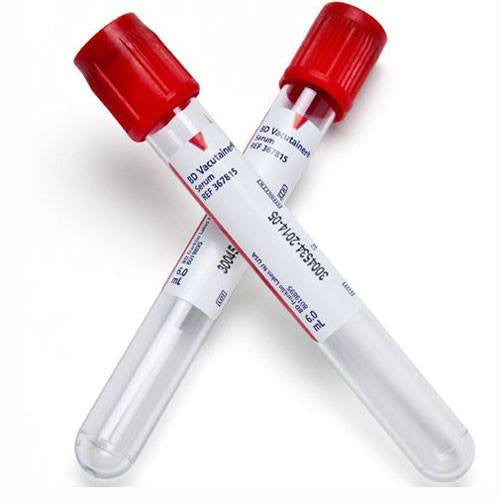
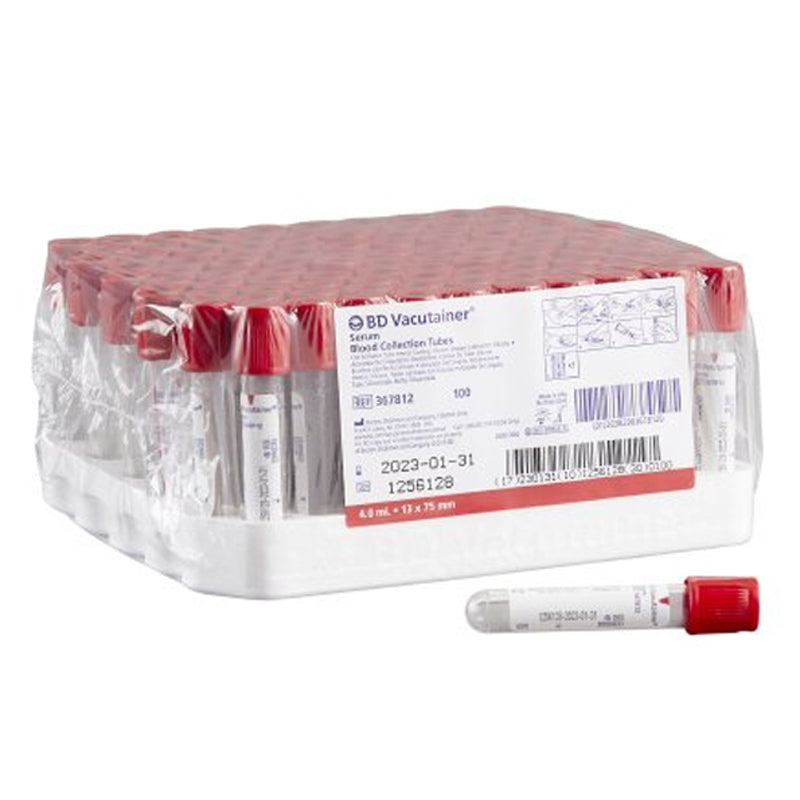
Serum Blood Collection Tubes BD 367812 Vacutainer Plus with Clot Activator 13 X 75mm 4 mL, Red

by BD
Year End Sale 37%
Original price $ 59.95
Current price $ 38.00
SKU 367812

Serum Blood Collection Tubes are used for the collection and handling of blood specimens to be used in various diagnostic tests. Once the blood is drawn, the tubes allow it to clot, enabling the separation of serum from the cellular components. The serum is then used for:

  1. Chemistry Tests: Evaluating metabolic and organ functions (e.g., liver, kidney).
  2. Serology: Identifying antibodies and antigens for immune response and infectious disease assessment.
  3. Endocrinology: Measuring hormone levels and assessing endocrine function.
  4. Toxicology: Detecting and analyzing drugs and toxic substances.

These tubes include a clot activator to speed up the clotting process, optimizing the efficiency and accuracy of subsequent analyses.

BD Vacutainer Plus Serum Blood Collection Tubes are a type of medical device used for collecting and storing blood for diagnostic tests. These Serum Blood Collection Tubes are specifically designed for serum separation and are coated with a clot activator which helps to accelerate the clotting process in the blood sample, resulting in a faster and more efficient separation of serum from the whole blood. The tubes have a size of 13 X 75mm and can hold a volume of 4 mL of blood. They are commonly used in medical settings and laboratories for various types of blood tests and are considered a standard method for collecting serum samples.

BD 367812 BD Vacutainer Plus Blood Collection Tubes, Serum Tube Clot Activator 13 x 100 mm, 5 mL, Red with BD Hemogard Closure, Paper label. Additive: Clot activator and silicone coated interior.

  • Sterile vacuum blood collection tubes for serum determination
  • Spray-coated silica interior
  • With Hemogard™ tube closure, which prevents human contact with blood on the stopper or tube rim

Evacuated Tubes Simplify Blood Collection:

  • Blood is drawn directly from the vein into the evacuated sterile collection tubes
  • Only one venipuncture is needed to draw multiple samples
  • Tubes can be changed while needle and plastic holder remain in place on patient's arm
  • Closures are color coded

Plastic Evacuated Tubes:

  • Made of polyethylene terephthalate (PET)
  • Provide a safer work environment for all personnel by (1) reducing risk of tube breakage during handling; (2) eliminating breakage when tubes are centrifuged at higher speeds; and (3) eliminating breakage or chipping of tube rims when stopper is removed and reinserted
  • In addition to reducing potential injuries, fewer tube breakages result in less workflow interruption and fewer patient redraws, providing smoother day-to-day operation

Hemogard™ Stoppers:

  • Safety shield designed for safer tube handling
  • Rubber stopper is recessed inside the plastic shield, so any drops left by a blood collection needle remain isolated from potential contact
  • Shield is designed to protect lab personnel from direct contact with blood on the stopper or around the outer rim of the tube, as well as from blood splattering upon opening the tube.
Serum Blood Collection Tubes BD 367812 Vacutainer Plus with Clot Activator 13 X 75mm 4 mL, Red
$ 59.95 $ 38.00
FAQs About Serum Blood Collection Tubes
  • What are Serum Blood Collection Tubes used for?

    Serum blood collection tubes are specialized containers used in clinical laboratories and healthcare settings to collect, transport, and process blood samples specifically for tests that require serum.

  • What Is Serum?

    Serum is the clear, straw-colored liquid portion of the blood that remains after clotting has occurred and the blood cells and clotting factors have been removed. It contains water, electrolytes, hormones, antibodies, antigens, and other proteins—but no clotting factors.

  • What Are Serum Blood Collection Tubes?

    These tubes are commonly red-top (no additives) or yellow-top/gold-top (contain a gel separator and sometimes a clot activator). Some tubes have a clot activator to speed up the clotting process; others may have a gel separator that forms a barrier between serum and blood cells after centrifugation.

  • How They Are Used

    Blood is drawn into the tube (often from a vein in the arm). The blood is allowed to clot (takes 15–30 minutes). The tube is centrifuged to separate the serum from the cells and clot. Serum is carefully collected for laboratory analysis.

  • Which Color Tube Is Used for Serum?

    Red Cap/Red-Top Tubes: The classic choice for serum collection. Contains no additives. Gold Top (Yellow/Gold with Gel Separator, SST): Contains a serum separator gel for enhanced serum yield and purity. Plain Tubes: Used for routine serum testing in clinical chemistry. Marble-Top (Tiger Top) Tubes: Sometimes used, featuring a gel separator

  • What Tube to Obtain a Serum Sample?

    To obtain a serum sample, use a red, gold (SST), or plain-top tube. Let the blood clot, then centrifuge to separate the serum for testing.

  • Which Vial Is Used for Serum?

    A plain (red) or gold-top (SST) serum blood collection tube is used to collect serum from a blood sample.

  • Which Tube Color Is Most Commonly Used for Serum Testing?

    The red-top or gold-top (SST) tubes are most commonly used for serum testing in clinical and diagnostic laboratories.

  • Which Tube Would You Use to Draw a Sample for Serum?

    Always use a serum blood collection tube: red-cap (plain), gold-top (SST), or marble-top (tiger).

  • Is a Green Tube Plasma or Serum?

    A green-top tube contains heparin and is used for plasma, NOT serum.

  • Is EDTA Serum or Plasma?

    The EDTA tube (lavender/purple-top) is used for plasma, not serum. EDTA prevents clotting, resulting in plasma after centrifugation.

  • What Is a Plain Serum Tube Used For?

    A plain serum tube (red-top) is used for collecting blood, letting it clot, and obtaining serum for: Blood chemistry analysis Immunology/serology Drug monitoring Hormone assays

  • How Do You Collect Blood Serum?

    Draw blood into a red-top, gold-top SST, or plain tube. Allow blood to clot (usually 10–30 minutes). Centrifuge to separate serum from the clot. Collect serum for laboratory testing.

  • Which Vacutainer Tube Is Used to Collect Serum?

    Use a red-top vacutainer, gold-top SST vacutainer, or plain vacutainer tube for serum collection.

  • What Are the Three Main Veins to Draw Blood?

    Median cubital vein (most common) Cephalic vein Basilic vein

  • Why Choose Our Serum Blood Collection Tubes?

    Sterile, pyrogen-free, leak-proof design Fast serum separation with or without gel No hemolysis, minimal sample rejection Universal compatibility with all phlebotomy and automated analyzers

Search Any Type of Product, Medication, or Alignment