
Click or scroll to zoom
Tap or pinch to zoom
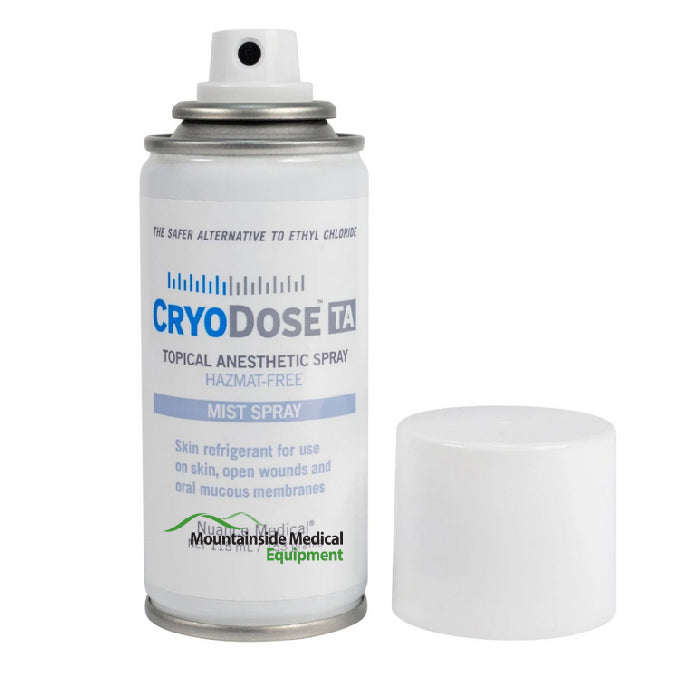

CryoDose TA Topical Anesthetic Mist Spray 35 mL Size
Sold out
Original price
$ 29.95
Current price
$ 22.00
SKU 56331-0006-24
CryoDose TA Topical Anesthetic Mist Spray 35 mL is a revolutionary product that offers unparalleled relief for individuals who experience discomfort and pain during medical procedures, such as injections or minor surgeries. Utilizing cutting-edge technology, this topical anesthetic mist spray effectively numbs the skin, providing fast-acting and long-lasting relief in just a matter of seconds. This innovative product is specifically designed to target the nerve endings on the skin's surface, blocking pain signals and allowing patients to undergo procedures with minimal discomfort. Unlike traditional anesthetics, CryoDose TA Topical Anesthetic Mist Spray does not require any needles, making it an ideal solution for individuals who fear injections. With its compact and portable design, this spray can easily be taken on-the-go, making it a convenient option for medical professionals and patients alike. The use of CryoDose TA Topical Anesthetic Mist Spray not only ensures a pain-free experience for patients but also saves healthcare providers time, resulting in a more efficient and comfortable medical procedure. With its numerous advantages and remarkable effectiveness, CryoDose TA Topical Anesthetic Mist Spray is truly a game-changer in the medical field.
