
Filters
Availability
Price
$
-
$
$0
$835
Vendor
Collection
Tags
- Bag (2)
- Bags (1)
- braun bags (1)
- Dextrose (1)
- doctor-only (12)
- Intravenous (2)
- intravenous injection (1)
- IV (3)
- IV Bag (7)
- iv fluid (1)
- Iv Solution (4)
- Lactated Ringers (1)
- Nacl (1)
- Saline (4)
- Saline Bag (1)
- Saline Bags (1)
- Sod (2)
- Sodium (2)
- Sodium Chloride (9)
- sodium chloride for injection (4)
- sterile water (1)
- BAGS (1)
- Hospira (1)
- Intravenous infusion (1)
- Intravenous Solution (2)
- IV bag (2)
- IV Solution (2)
- IV Therapy (1)
- NACL (2)
- normal saline (6)
- Saline Solution (2)
- Sodium Chloride 0.9 (4)
- Electrolyte Replacement (2)
- fluid resuscitation (1)
- hydration solution (1)
- IV fluids (1)
- IV infusion (1)
- nacl (2)
- Normal Saline IV Bags (1)
- pediatric IV fluids (1)
- Sodium Chloride Injection (2)
- sodium chloride IV (1)
- Sodium Chloride IV Bags (1)
- 5 Dextrose (1)
- Dextrose 5% (1)
- Dextrose 5% and 0.9% Sodium Chloride (1)
- dextrose with sodium chloride (1)
- Sugar Water (1)
- Aesthetic Supplies MedSpa Supplies & Cosmetic Surgery Supplies (2)
- Chloride Ions (1)
- Electrolytes (2)
- Isotonic Solution (1)
- IV Electrolytes (2)
- Sodium Chloride 0.9% (3)
- Sodium Chloride 0.9% IV Bag (1)
- IV Saline Bags (1)
- IV Solutioon Bags (1)
- NACL Bags (1)
- 250 mL (1)
- IV Bag Solution (1)
- Replenishing Fluid (1)
- 0.45% Sodium Chloride (1)
- Baxter (1)
- Clinical Rehydration Solutions (1)
- Fluid and Electrolyte Balance (1)
- Hydration Therapy (1)
- Hypotonic Solution (1)
- Sodium Chloride 0.45% (1)
- Sterile IV Bags (1)
- 0.9% NaCl (1)
- additive bag saline (1)
- B Braun saline bag (1)
- DEHP-free IV solution (1)
- Dehydration (1)
- fluid replacement therapy (3)
- hospital IV fluid (1)
- hydration IV solution (1)
- isotonic saline (1)
- IV Bag Sodium Chloride (1)
- IV flush bag (1)
- parenteral fluid (1)
- Partial Additive Bag (1)
- Partial Additive Bag Container (1)
- PVC-free IV bag (1)
- saline IV bag (1)
- Severe Dehydration (1)
- sterile saline solution (1)
- alpha-adrenergic agonist (2)
- increase in blood pressure (2)
- Low blood pressure (2)
- Norepinephrine (2)
- Norepinephrine Bitartrate (2)
- norepinephrine IV (1)
- Septic Shock (2)
- traumatic injuries (2)
- Treat Low Blood Pressure (2)
- Treat Shock (2)
- Treatment of severe hypotension (2)
- vasoconstriction (2)
- Vasopressor (1)
Sodium Chloride IV Bags
Sodium Chloride IV (Saline) Solutions
Sodium chloride (NaCl) IV bags are sterile, single-use parenteral fluids of NaCl in water for injection, used to replenish fluids and electrolytes. The most common strength is 0.9% NaCl (0.9 g/100 mL), known as “Normal Saline.” This isotonic solution contains 154 mEq/L of sodium and chloride (osmolarity ≈308 mOsm/L). Other strengths include 0.45% NaCl (half‐normal saline, 77 mEq/L Na and Cl) and 0.225% NaCl (¼‐normal, ~38.5 mEq/L each) for maintenance or dehydration with lower sodium needs. Hypertonic saline bags (e.g. 3% NaCl, 513 mEq/L Na/Cl) exist for specialized use.
NaCl bags contain no preservatives (no bacteriostats) and are for single-dose use; any unused portion must be discarded. The bag is typically made of non-PVC, non-DEHP plastic. Storage is at room temperature (≈20–25 °C), protected from freezing.
Administration & IV Sets
Saline bags are administered intravenously via a standard IV infusion set. The bag has two ports: one for the IV tubing connection and one for adding medications. Use a sterile, closed IV administration set (gravity or infusion pump). The manufacturer’s label emphasizes using sterile equipment and a dedicated line, and warns against connecting bags in series (to avoid air embolism). If a vented (air-vent) infusion set is used, keep the vent closed to prevent air entry. Do not pressurize the flexible bag (risk of rupture). Depending on patient size and needed flow, either a macrodrip (10–20 drops/mL) or microdrip (60 gtt/mL) set can be used; microdrip is often chosen for pediatrics or precise low rates.
Indications and Use
NaCl IV fluids serve as crystalloids for fluid resuscitation and maintenance. 0.9% NS is commonly used to expand intravascular volume and correct dehydration or shock (e.g. hemorrhage, sepsis, diabetic ketoacidosis) because it is isotonic and contributes both water and NaCl 0.45% NS is hypotonic and may be used when free water is needed (e.g. maintenance fluids, hypernatremia correction) or when less sodium is desired. 0.225% NS is rarely used alone (often combined with dextrose). Hypertonic saline (3% NaCl) is reserved for critical care, such as symptomatic hyponatremia with cerebral edema – it contains 513 mEq/L Na/Cl and high osmolarity.
Typical dosages: Fluid volume and rate depend on clinical need. In adults, maintenance fluids often total ~2–3 L per day (roughly 30–50 mL/kg/day). For example, the Holliday–Segar formula yields ~2.0–2.5 L/24h for an average adult. In fluid resuscitation (bolus), a common regimen is 500–1000 mL of 0.9% NS given rapidly (over 15–30 minutes) for hypotension or shock; in pediatrics, guidelines recommend ~20 mL/kg boluses of isotonic saline over <10 minutes. (Subsequent doses may be repeated based on response.) 0.45% NS might be given at maintenance rates (~1–2 mL/kg/h) when only modest sodium is needed. Ultimately, infusion rates and volumes must be tailored to patient weight, status, and laboratory values.
Side Effects and Precautions
Volume overload: Excessive saline infusion can cause hypervolemia. Symptoms include peripheral edema, pulmonary edema, hypertension, or congestive heart failure exacerbation. Patients with heart failure, renal impairment, or edema are at high risk – use saline cautiously in these settings.
Electrolyte disturbances: Large or rapid infusions of 0.9% NS can lead to hypernatremia and hyperchloremic acidosis. Conversely, hypotonic saline (0.45% or 0.225%) given with high free water intake can cause dilutional hyponatremia, especially in patients with SIADH or children. Hyponatremia can be serious (headache, seizures, brain edema). Monitor serum sodium, chloride and acid–base if infusions are large or prolonged.
Local reactions: Saline is generally well tolerated. However, IV sites may show pain, erythema, or phlebitis on prolonged infusion. Infiltration (fluid in surrounding tissue) causes local swelling and discomfort; use secure IV access.
Allergic/infusion reactions (rare): Although saline has no antigens, some patients may report flushing, rash, or fever during infusion. Hypotension, chills or anaphylactoid signs have been reported; if severe reaction occurs, stop infusion and treat supportively.
Other: Because saline bags contain no preservatives, they support microbial growth once opened. Always use aseptic technique. Dispose of any leftover fluid after use. Store and handle as recommended (20–25 °C, do not freeze).
Monitoring and Safety
For prolonged or large-volume IV saline therapy, monitor fluid balance and electrolytes regularly. Watch for signs of overload (weight gain, edema, crackles) or electrolyte shifts (serum sodium, renal function tests). Many guidelines now favor isotonic fluids to reduce hyponatremia risk. In pediatrics especially, use isotonic saline for resuscitation and maintenance.
In summary, 0.9% NS is a fundamental IV fluid for resuscitation and rehydration; 0.45% NS (and other dilutions) are used for maintenance or specific electrolyte needs. It is delivered via a standard IV infusion set (macro- or microdrip) with sterile technique. Clinicians should adjust rates based on patient weight and condition, using boluses for acute deficits and controlled rates for maintenance. The main risks are volume/electrolyte overload and infusion-site reactions, so monitoring and appropriate infusion equipment (vent-closed, dedicated line) are essential.
-
 Sale
$ 8.10
Sale
$ 8.10IV Bags, IV Fluid Solution for Intravenous & Infusion IV Therapy (Rx)
614 reviewsIV Bags (Intravenous) IV Fluid Solutions Intravenous (IV) fluids are sterile solutions given directly into a vein to replace water, electrolytes, a...
View full details🔒 Medical License Required -
 Sale 13%
Original price $ 14.95Current price $ 12.95
Sale 13%
Original price $ 14.95Current price $ 12.95IV Bag Sodium Chloride 0.9% IV Solution Saline 1000 mL Bag (EACH) (Rx)
173 reviewsSodium Chloride for Injection is a iv bags used as a iv solution. It is also made with clearly labeled graduation marks and has a rigid saddle with...
View full details🔒 Medical License Required -
 Sale
$ 10.95
Sale
$ 10.95IV Bags Sodium Chloride 0.9% Saline Solution by B Braun (Rx)
38 reviewsSodium Chloride 0.9% IV Solution, also known as Normal Saline, is an isotonic, sterile solution used for intravenous fluid therapy, rehydration, el...
View full details🔒 Medical License Required -
 Sale
$ 185.00
Sale
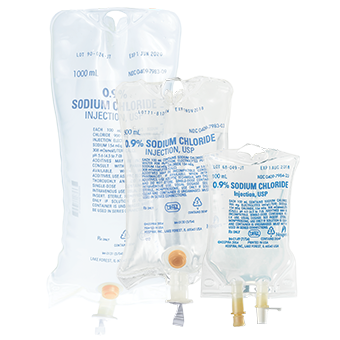
$ 185.00IV Bag Sodium Chloride 0.9% IV Bags by ICU Medical (Rx)
44 reviewsSodium Chloride 0.9% IV Solution is a sterile, nonpyrogenic, isotonic solution for intravenous administration. Each milliliter (mL) of solution con...
View full details🔒 Medical License Required -
 Sold out
Original price $ 18.90Current price $ 12.40
Sold out
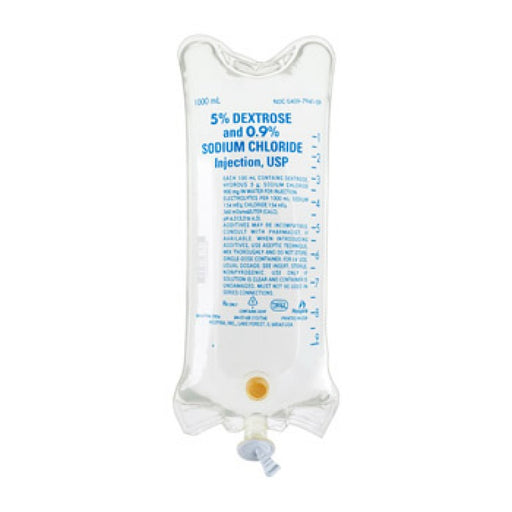
Original price $ 18.90Current price $ 12.40IV Bag Dextrose 5% and 0.9% Sodium Chloride IV Solution, 1000 mL Bag (Rx)
31 reviewsICU Medical 5% Dextrose and 0.9% Sodium Chloride injection, USP solutions are sterile and nonpyrogenic. They are large volume parenteral solutions ...
View full details -
 Sale 30%
Original price $ 9.95Current price $ 6.95
Sale 30%
Original price $ 9.95Current price $ 6.95IV Bags, Sodium Chloride 0.9% Intravenous Saline Solution 100 mL Baxter (Rx)
No reviewsSodium Chloride 0.9% IV Bag Solution by Baxter IV Systems, a vital resource for healthcare professionals. Designed for various intravenous needs, t...
View full details🔒 Medical License Required -
 Sale 28%
Low Stock
Original price $ 8.97Current price $ 6.50
Sale 28%
Low Stock
Original price $ 8.97Current price $ 6.50IV Bags, Sodium Chloride 0.9% IV Solution Bags for Injection 100 mL bag
No reviewsSodium Chloride 0.9% IV Solution Bags for Injection 100 mL bag by ICU Medical are a type of sterile, nonpyrogenic solution used for intravenous (IV...
View full details🔒 Medical License Required -
 Sale 28%
Original price $ 299.95Current price $ 215.00
Sale 28%
Original price $ 299.95Current price $ 215.00IV Bags, Sodium Chloride 0.9% Intravenous Solution 250 mL (28/Case) (RX)
No reviewsElevate patient care with Sodium Chloride 0.9% IV Bag Solution by Nextgen Pharmaceuticals. This premium saline solution, packaged in a 250 mL bag, ...
View full details🔒 Medical License Required -
 Sale 21%
Original price $ 285.95Current price $ 225.00
Sale 21%
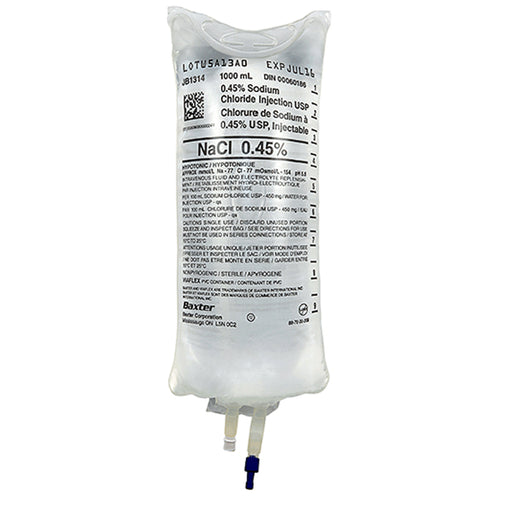
Original price $ 285.95Current price $ 225.00IV Bags, Sodium Chloride 0.45% Normal Saline IV Bags 1000 mL, Baxter 14/Case (Rx)
No reviewsPremier Hydration Solution: Sodium Chloride 0.45% Normal Saline IV Bags Experience enhanced patient hydration with Sodium Chloride 0.45% Normal Sal...
View full details🔒 Medical License Required -
 Sale 33%
Low Stock
Original price $ 379.95Current price $ 255.00
Sale 33%
Low Stock
Original price $ 379.95Current price $ 255.00Sodium Chloride 0.9% IV Bag 100/150mL Partial Additive Bag Container by B Braun, PVC & DEHP Free 64/Case
No reviews#1 Hospital-Preferred IV Saline Solution – Sterile, Additive-Free, Patient-Safe, and Eco-Friendly Experience the gold-standard in IV hydration and ...
View full details🔒 Medical License Required -
 Sale 33%
Original price $ 1,250.95Current price $ 835.00
Sale 33%
Original price $ 1,250.95Current price $ 835.00IV Bags Norepinephrine in 0.9% Sodium Chloride 8 mg/250 mL (32 mcg/mL) 10/Case (RX)
No reviewsElevate standards of care in your hospital or acute care facility with Norepinephrine in 0.9% Sodium Chloride IV Bags, 8 mg/250 mL (32 mcg/mL), 10/...
View full details🔒 Medical License Required -
 Sale 21%
Original price $ 750.00Current price $ 589.00
Sale 21%
Original price $ 750.00Current price $ 589.00IV Bags Norepinephrine in 0.9% Sodium Chloride 4 mg/250 mL (16 mcg/mL) 10/Case (RX)
No reviewsRestore and stabilize your patients’ blood pressure with Norepinephrine in 0.9% Sodium Chloride IV Bags (4 mg/250 mL, 16 mcg/mL) 10/Case. Specially...
View full details🔒 Medical License Required


People Also Searched For
Sodium Chloride IV Bags to doctor-only
Sodium Chloride IV Bags to Iv Bags
Sodium Chloride IV Bags to IV Bag
Sodium Chloride IV Bags to Sodium Chloride
Sodium Chloride IV Bags to Sodium Chloride 0.9
Sodium Chloride IV Bags to Iv Solution
Sodium Chloride IV Bags to normal saline
Sodium Chloride IV Bags to Nacl
IV Bags, IV Sets and Injection Medication Vials
IV Bags, IV Sets, IV Start Kits
Sodium Chloride IV (Saline) Solutions
Sodium chloride (NaCl) IV bags are sterile, single-use parenteral fluids of NaCl in water for injection, used to replenish fluids and electrolytes. The most common strength is 0.9% NaCl (0.9 g/100 mL), known as “Normal Saline.” This isotonic solution contains 154 mEq/L of sodium and chloride (osmolarity ≈308 mOsm/L). Other strengths include 0.45% NaCl (half‐normal saline, 77 mEq/L Na and Cl) and 0.225% NaCl (¼‐normal, ~38.5 mEq/L each) for maintenance or dehydration with lower sodium needs. Hypertonic saline bags (e.g. 3% NaCl, 513 mEq/L Na/Cl) exist for specialized use.
NaCl bags contain no preservatives (no bacteriostats) and are for single-dose use; any unused portion must be discarded. The bag is typically made of non-PVC, non-DEHP plastic. Storage is at room temperature (≈20–25 °C), protected from freezing.
Administration & IV Sets
Saline bags are administered intravenously via a standard IV infusion set. The bag has two ports: one for the IV tubing connection and one for adding medications. Use a sterile, closed IV administration set (gravity or infusion pump). The manufacturer’s label emphasizes using sterile equipment and a dedicated line, and warns against connecting bags in series (to avoid air embolism). If a vented (air-vent) infusion set is used, keep the vent closed to prevent air entry. Do not pressurize the flexible bag (risk of rupture). Depending on patient size and needed flow, either a macrodrip (10–20 drops/mL) or microdrip (60 gtt/mL) set can be used; microdrip is often chosen for pediatrics or precise low rates.
Indications and Use
NaCl IV fluids serve as crystalloids for fluid resuscitation and maintenance. 0.9% NS is commonly used to expand intravascular volume and correct dehydration or shock (e.g. hemorrhage, sepsis, diabetic ketoacidosis) because it is isotonic and contributes both water and NaCl 0.45% NS is hypotonic and may be used when free water is needed (e.g. maintenance fluids, hypernatremia correction) or when less sodium is desired. 0.225% NS is rarely used alone (often combined with dextrose). Hypertonic saline (3% NaCl) is reserved for critical care, such as symptomatic hyponatremia with cerebral edema – it contains 513 mEq/L Na/Cl and high osmolarity.
Typical dosages: Fluid volume and rate depend on clinical need. In adults, maintenance fluids often total ~2–3 L per day (roughly 30–50 mL/kg/day). For example, the Holliday–Segar formula yields ~2.0–2.5 L/24h for an average adult. In fluid resuscitation (bolus), a common regimen is 500–1000 mL of 0.9% NS given rapidly (over 15–30 minutes) for hypotension or shock; in pediatrics, guidelines recommend ~20 mL/kg boluses of isotonic saline over <10 minutes. (Subsequent doses may be repeated based on response.) 0.45% NS might be given at maintenance rates (~1–2 mL/kg/h) when only modest sodium is needed. Ultimately, infusion rates and volumes must be tailored to patient weight, status, and laboratory values.
Side Effects and Precautions
Volume overload: Excessive saline infusion can cause hypervolemia. Symptoms include peripheral edema, pulmonary edema, hypertension, or congestive heart failure exacerbation. Patients with heart failure, renal impairment, or edema are at high risk – use saline cautiously in these settings.
Electrolyte disturbances: Large or rapid infusions of 0.9% NS can lead to hypernatremia and hyperchloremic acidosis. Conversely, hypotonic saline (0.45% or 0.225%) given with high free water intake can cause dilutional hyponatremia, especially in patients with SIADH or children. Hyponatremia can be serious (headache, seizures, brain edema). Monitor serum sodium, chloride and acid–base if infusions are large or prolonged.
Local reactions: Saline is generally well tolerated. However, IV sites may show pain, erythema, or phlebitis on prolonged infusion. Infiltration (fluid in surrounding tissue) causes local swelling and discomfort; use secure IV access.
Allergic/infusion reactions (rare): Although saline has no antigens, some patients may report flushing, rash, or fever during infusion. Hypotension, chills or anaphylactoid signs have been reported; if severe reaction occurs, stop infusion and treat supportively.
Other: Because saline bags contain no preservatives, they support microbial growth once opened. Always use aseptic technique. Dispose of any leftover fluid after use. Store and handle as recommended (20–25 °C, do not freeze).
Monitoring and Safety
For prolonged or large-volume IV saline therapy, monitor fluid balance and electrolytes regularly. Watch for signs of overload (weight gain, edema, crackles) or electrolyte shifts (serum sodium, renal function tests). Many guidelines now favor isotonic fluids to reduce hyponatremia risk. In pediatrics especially, use isotonic saline for resuscitation and maintenance.
In summary, 0.9% NS is a fundamental IV fluid for resuscitation and rehydration; 0.45% NS (and other dilutions) are used for maintenance or specific electrolyte needs. It is delivered via a standard IV infusion set (macro- or microdrip) with sterile technique. Clinicians should adjust rates based on patient weight and condition, using boluses for acute deficits and controlled rates for maintenance. The main risks are volume/electrolyte overload and infusion-site reactions, so monitoring and appropriate infusion equipment (vent-closed, dedicated line) are essential.
FAQs About Sodium Chloride IV Bags
-
What is a sodium chloride IV bag used for?
A sodium chloride IV bag, also known as normal saline IV, is used to provide hydration, restore electrolyte balance, correct low sodium levels, and serve as a delivery medium for other medications. It's widely utilized in hospitals for treating dehydration, supporting patients before/during/after surgery, and managing medical emergencies.
-
Is sodium chloride IV safe during pregnancy?
Yes, sodium chloride 0.9% IV bags are commonly considered safe during pregnancy. They are frequently used in obstetric and maternity care to manage fluid loss or dehydration and maintain electrolyte balance in expecting mothers.
-
What is sodium chloride 0.9% 100mL bag for?
The 0.9% sodium chloride 100mL IV bag is ideal for short-term fluid replacement, medication dilution, and rapid correction of minor dehydration or sodium imbalance in adults and children.
-
What are the side effects of 0.9% sodium chloride IV bag?
While side effects are rare, potential risks include fluid overload, high blood pressure, swelling (edema), or injection site reactions. Always follow medical directions and monitor closely, especially in patients with kidney or heart problems.
-
Why would a patient need sodium chloride?
Patients need sodium chloride IV to quickly restore fluids in cases of dehydration, vomiting, diarrhea, burns, blood loss, or surgery, and to support electrolyte balance for proper cell and organ function.
-
Why would you be put on a sodium chloride drip?
A sodium chloride drip provides continuous hydration and electrolyte replenishment in patients unable to take fluids orally, those with significant fluid loss, or before/after major surgery.
-
Is sodium chloride the same as saline?
Yes, 0.9% sodium chloride solution is known as normal saline. It contains 0.9 grams of sodium chloride per 100mL, matching the body’s natural fluid composition.
-
Which IV fluid is best for pregnancy?
Normal saline (0.9% sodium chloride) and lactated Ringer’s solution are widely regarded as safe IV fluids during pregnancy for treating dehydration or fluid loss.