

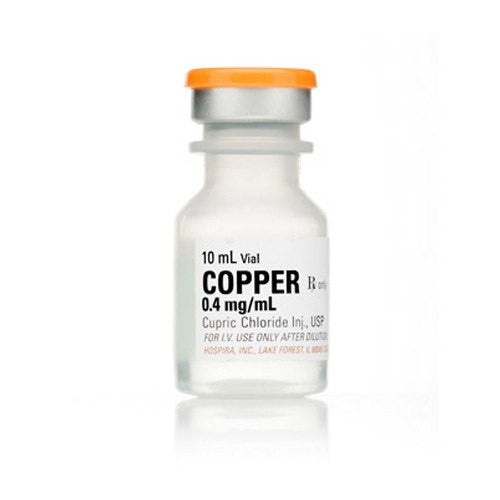

Copper (Cupric Chloride) for Injection 10 mL, 25/Tray by Pfizer (Rx)
How to Order:
You will receive instructions on how to create an account along with Rx Ordering Details.
(Note: Acceptable licenses must have Prescriptive Authority in the license issuing state.)
Copper (Cupric Chloride) for Injection is used to treat or prevent copper deficiency in patients who cannot get enough copper through diet alone, often due to malabsorption issues or specific medical conditions like Menkes disease or short bowel syndrome. As an essential trace element, copper is vital for various bodily functions, including iron metabolism, nervous system function, and connective tissue formation. This intravenous preparation helps maintain proper levels of copper, ensuring normal physiological activities and preventing symptoms associated with deficiency.
*** Ships in 2-3 Business Days, Vendor Direct For Best Possible Dating ***
Copper (Cupric Chloride) for Injection is an injectable form of copper used primarily as a trace element supplement in total parenteral nutrition (TPN) to prevent and treat copper deficiency in patients who are unable to receive adequate nutrition orally. This injectable supplementation is crucial for maintaining physiological functions that require copper as a vital component. The product is provided by Pfizer Injectables and is typically packaged in a tray containing 25 vials, each with a 10 mL volume.
Details and Features
Active Ingredient: Cupric Chloride
Volume: 10 mL per vial
Packaging: 25 vials per tray
Intended Use: As a supplement in TPN for patients needing controlled amounts of copper
Administration: Intravenous injection, generally as part of a TPN regimen
Manufacturer: Pfizer Injectables
Mechanism of Action
Copper plays a critical role as a cofactor for various enzymatic reactions essential for biological functions such as iron metabolism, connective tissue formation, energy production, and neurotransmitter synthesis. When administered intravenously, copper is absorbed and utilized by the body's cells to facilitate these enzymatic processes. It is integrated into several key enzymes that contribute to antioxidant defense, including superoxide dismutase, which mitigates oxidative damage to cellular components.
Warnings
- Overuse Risk: Excessive copper can lead to toxicity symptoms, including liver damage; thus, careful dosing is essential.
- Impaired Metabolism: Use cautiously in patients with Wilson's disease or hepatic impairment, where copper metabolism is already compromised.
- Allergic Reactions: Although rare, there is a potential for hypersensitivity reactions.
- Interaction with Other Trace Elements: Administered in conjunction with TPN, which might require adjustments of other trace elements to maintain balance.
Side Effects
Common Side Effects:
- Mild site irritation at the injection point
- Fluctuations in trace mineral balance
Serious Side Effects:
- Hepatotoxicity (liver damage) with prolonged excessive usage or in those with impaired copper metabolism
- Gastrointestinal disturbances like nausea, vomiting, or abdominal discomfort
- Neurological symptoms in cases of copper excess, including headache or dizziness
Administration and Monitoring
The administration of Copper (Cupric Chloride) for Injection should be conducted by healthcare professionals experienced in TPN formulations and administration. It's crucial to carefully calculate the dosage based on individual patient needs to prevent toxicity. Routine monitoring of copper levels and liver function tests are recommended during treatment to ensure optimal therapeutic outcomes and to adjust dosages as necessary based on laboratory results and clinical status.
