Skip to content
Year-End Sale is Live Now - Up to 50% off
New users? Get 5% off on your first purchase.
Free US shipping over $100
Year-End Sale is Live Now - Up to 50% off
New users? Get 5% off on your first purchase.
Free US shipping over $100

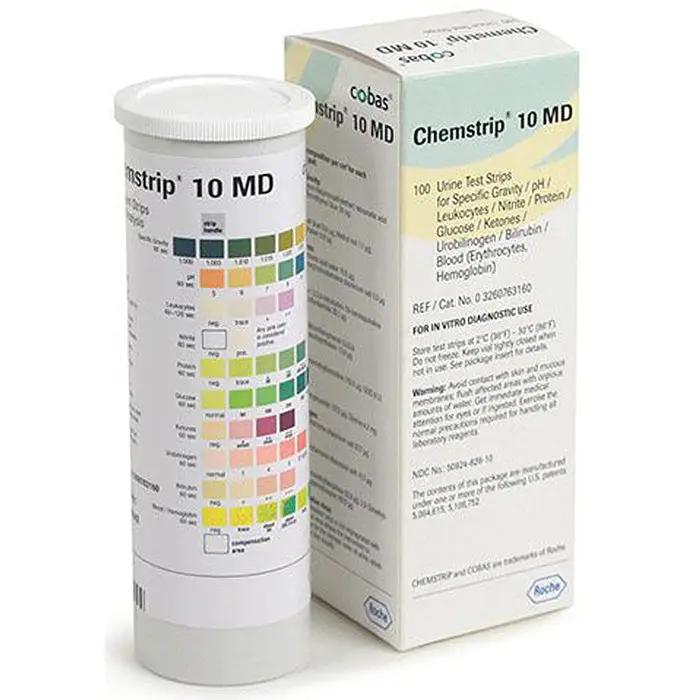
Chemstrip 10 MD Urine Test Strips, 100/vial

by Roche
Year End Sale 1%
Original price $ 85.95
Current price $ 85.00
SKU Roche03260763160
Roche Chemstrip 10 MD Urine Test Strips work by detecting the presence of glucose, ketones, blood, and protein in urine. The test strip is inserted into the urine stream, and the results are available within seconds. The strip is then discarded, and the results are read on the Chemstrip 10 MD Urine Test Strip Reader. The Roche Chemstrip 10 MD Urine Test Strips are a fast, easy, and accurate way to test for glucose, ketones, blood, and protein in urine.

Chemstrip 10 MD Urine Test Strips are used to test for the presence of drugs in urine. The test strip is dipped into a urine sample and the result is read by comparing it to a color chart.

Chemstrip products arrive from the manufacture with only 12 to 14 months dating. 

Chemstrip 10 MD Urine Test Strips are used by healthcare providers to quickly assess urine for metabolic diseases, renal insufficiency, and urinary tract infections. A Chemstrip 10 MD Urine Test Strip is applied to a urine sample and the results are read visually – meaning clinicians can quickly and accurately make a determination of the presence of key biomarkers in a patient’s urine. The Chemstrip 10 MD Urine Test Strips' measurement for biomarkers to indicate disease or infection more precisely than dipstick-based testing, which makes it an extremely important tool to helping diagnose patients’ medical conditions. The Chemstrip 10 MD Urine Test Strips' fast results, combined with its precision and accuracy, make it an ideal choice for clinicians seeking a reliable urine analysis solution.

Instructions on How to Use Chemstrip 10 MD Urine Test Strips
1. Begin by washing your hands with soap and warm water.
2. Gather the Chemstrip 10 MD Urine Test Strip, cup to collect urine, and timer or watch.
3. Ask the patient to collect a sample of fresh urine.
4. Dip the strip into the urine sample for 15 seconds.
5. Gently tap the strip against the side of the cup to allow the excess urine to drain.
6. Lay the strip on a clean, flat surface to allow it to dry.
7. Wait at least one minute before reading the results.
8. Compare the color block on the strip to the one on the accompanying color chart.
9. Record the results on the patient’s chart.
10. Dispose of the strip in a plastic or paper bag and wash your hands again with soap and warm water.


Brand: Chemstrip Urine Test Strips
Product Number: 417145

Chemstrip 10 MD Urine Test Strips, 100/vial
$ 85.95 $ 85.00
FAQs About Urine Test Strips
  • Urine Test Strips

    Urine test strips, also known as urinalysis dipsticks, are simple diagnostic tools used to quickly screen and analyze the contents of urine. These small, plastic strips have multiple pads or reagent areas, each of which reacts with specific substances in the urine to change color. They are widely used in clinics, hospitals, laboratories, and sometimes at home for routine medical checkups, disease screening, and monitoring.

  • What Do Urine Test Strips Detect?

    Urine test strips can provide information on a variety of substances and properties, including: Glucose: To check for diabetes or high blood sugar. Protein (albumin): To screen for kidney disease. Blood (hematuria): Indicates infections, kidney stones, or trauma. Leukocytes: Suggests urinary tract infection (UTI). Nitrites: Also a marker for UTI (produced by certain bacteria). Ketones: Monitors diabetes, starvation, or metabolic disorders. pH: Measures urine acidity. Specific gravity: Assesses urine concentration (hydration status). Bilirubin and urobilinogen: Assesses liver function and hemolysis. Ascorbic acid (Vitamin C): May interfere with certain results.

  • How are Urine Test Strips Used?

    Collect a fresh urine sample in a clean container. Dip the test strip briefly into the urine. Remove excess liquid by shaking off or blotting the strip. Wait for the specified time (usually 30—120 seconds). Compare the color change on each pad to the reference chart provided with the strip to interpret the results.

  • Common Uses of Urine Test Strips

    Routine health exams: As a quick check for underlying issues. Diabetes management: Monitoring glucose and ketones. Kidney health screening. Diagnosing urinary tract infections (UTI). Pregnancy monitoring: For protein and glucose, among other markers. Drug screening (some specialized strips).

  • What are Urine Test Strip Limitations?

    Not a substitute for comprehensive laboratory analysis. Can give false positives or negatives if not used correctly or if urine is contaminated. Results should always be interpreted by a healthcare provider, especially if abnormal.

  • How Accurate Are Home Urine Test Strips?

    Home urine test strips are highly accurate for general screening (e.g., glucose, ketones, nitrites, protein, pH). They offer over 90% sensitivity and specificity for most parameters when used correctly. For a formal diagnosis or confirmation, consult with your healthcare provider and consider laboratory urinalysis.

  • What Is the Most Accurate Urine Test Strip?

    Multistix and Siemens urinalysis strips are widely regarded for medical-grade accuracy. Choose test strips labeled “CLIA-waived” or “FDA-cleared” for clinical reliability.

  • How Do You Read Urine Test Strips?

    Dip the strip in a fresh urine sample for 1–2 seconds. Remove and gently tap off excess urine. Wait 30–60 seconds (see each pad’s timing guide). Compare the color changes on the pads to the chart on the bottle/container. Record your results and consult healthcare professionals as needed.

  • What Should Never Be Detected in Urine?

    A healthy urine test should never detect: Blood (hematuria) Protein (proteinuria) Glucose (glucosuria) Ketones Nitrites Leukocytes If detected, see a healthcare provider for further testing.

  • What to Avoid Before a Urine Test?

    Avoid intense physical activity and vitamin C supplements 24 hours before testing. Do not eat beets, blackberries, or rhubarb (can color urine red). Avoid diuretics (unless prescribed). Don’t overhydrate—excess water dilutes results.

  • Do I Need a Prescription for Urinalysis Strips?

    No prescription is required. Urine test strips are available over-the-counter for home monitoring and routine health checks.

  • How Long Before a Urine Test Should I Drink Water?

    Avoid drinking large amounts of water 1–2 hours before testing to ensure your sample is not too diluted. Use the first morning urine for the most concentrated, accurate results.

  • What Color Is a Good Urine Test?

    Healthy urine: Pale yellow to amber Abnormal results may appear pink (blood), green, very dark (bilirubin), or cloudy (infection). Urine test strip pads—refer to the color chart; a “negative” or normal value is usually the reference color.

  • What Is a Positive Urine Strip Result?

    A “positive” result indicates an abnormal finding such as glucose, protein, ketones, blood, nitrites, or leukocytes in your urine. Positive results require medical evaluation.

  • What Illness Can Be Detected in Urine?

    Urine test strips help detect and monitor: Urinary tract infections (UTIs) Kidney disease Diabetes mellitus and ketoacidosis Liver disease Hematuria (blood in urine) Dehydration or electrolyte disorders

  • What Color Is Urine When Your Kidneys Are Failing?

    Dark brown, tea-colored, or red urine may signal kidney failure. Test strips may show protein, blood, or abnormal pH. Contact your doctor if you notice these changes.

  • Key Features & Benefits

    Rapid 60-Second Home Results Multi-Parameter (up to 10-in-1) Urinalysis High Sensitivity & Specificity Medical-Grade for Home & Clinical Use Easy Color-Coded Chart for safe, clear interpretation No Prescription Needed

Search Any Type of Product, Medication, or Alignment