Skip to content
Year-End Sale is Live Now - Up to 50% off
New users? Get 5% off on your first purchase.
Free US shipping over $100
Year-End Sale is Live Now - Up to 50% off
New users? Get 5% off on your first purchase.
Free US shipping over $100

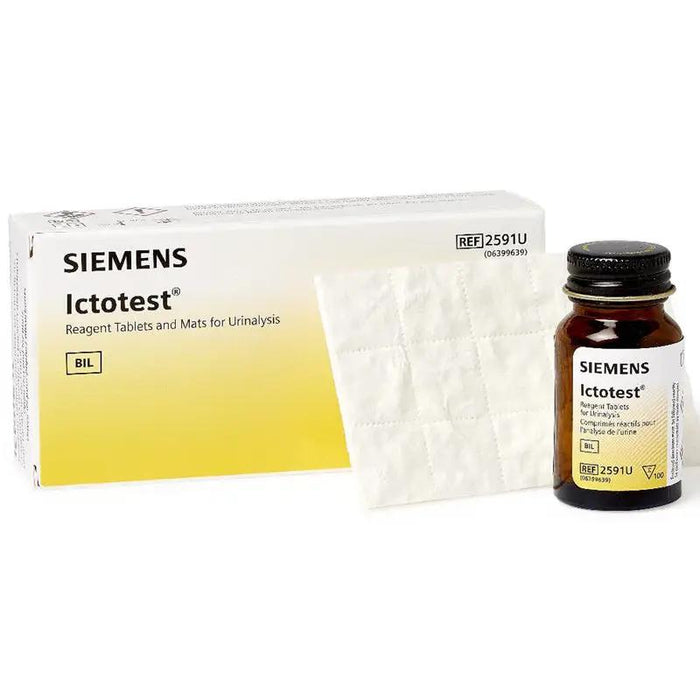
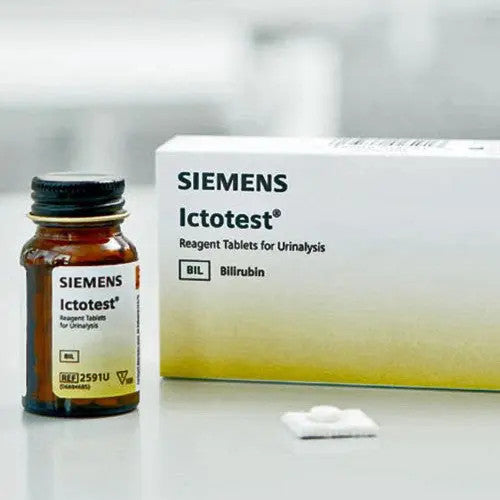
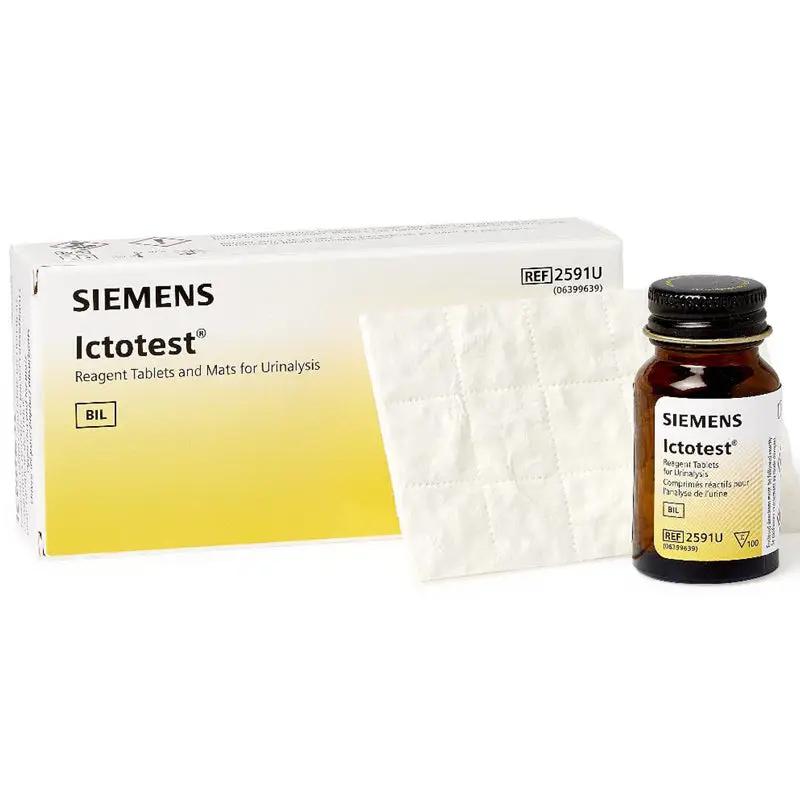
Ictotest Bilirubin Reagent Tablets and Mats for Urinalysis, 100/box

$ 68.00
SKU Bayer2591

Ictotest Reagent tablets and Mats for Urinalysis used to test for presence Bilirubin in urine. Testing for bilirubin is an important finding in the evaluation of liver function. Ictotest tablets are for in vitro diagnostic use by medical professionals.

Chemical principles of the procedure: The reaction is based on the coupling of a unique solid diazonium salt with bilirubin in an acid medium to give the blue or purple reaction.

The Ictotest tablets, based on the diazotization reaction, are utilized as a confirmatory assay for the presence of urinary bilirubin when a frontline test (i.e. urine strip or another semi-quantitative method) has provided a positive bilirubin result. The Ictotest reagent tablets can be used to rule-out the presence of interfering substances that may cause a false positive result..

  1. Place a square of the absorbent test mat supplied onto a paper towel. Using either side of the test mat will produce expected results. Please 10 drops of urine onto the center of the test mat.
  2. Shake one Ictotest Reagent Tablet into the the bottle cap and transfer the tablet to the center of the moistened mat. Do not handle tablet with your fingers. Recap the bottle promptly.
  3. Place one drop of distilled water onto the tablet. Wait 5 seconds, then place a second drop of distilled water onto the tablet so that the distilled water runs off the tablet onto the mat.
  4. Observe the color of the mat around and under the tablet at 60 seconds.

Directions

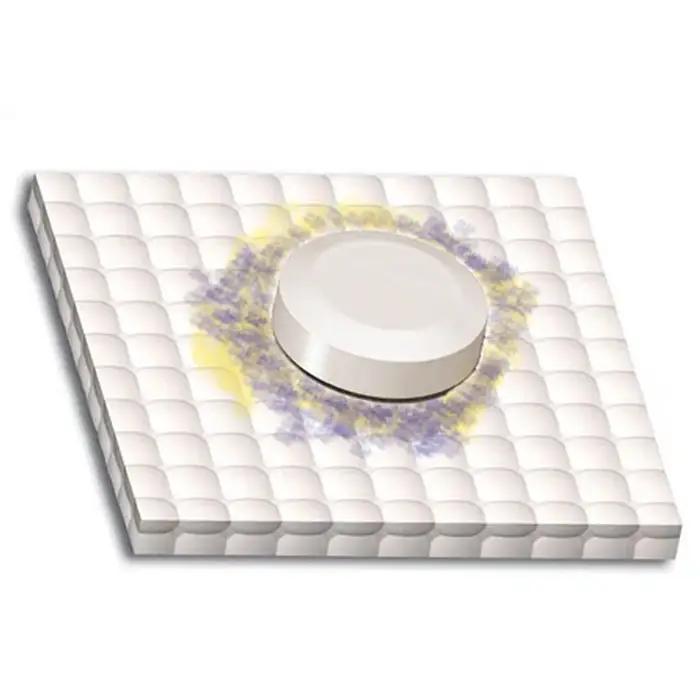
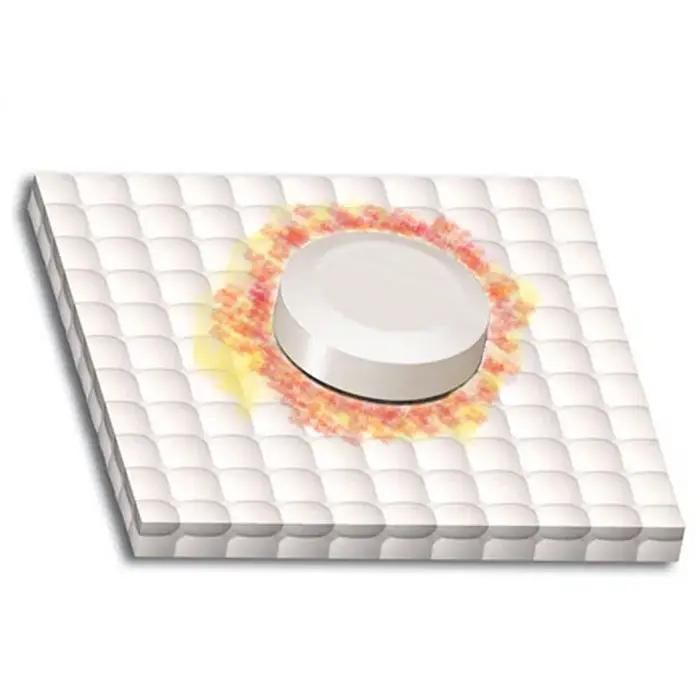
RESULTS: Results with Ictotest Reagent Tablets are negative if no blue or purple color develops on the mat within 60 seconds. If a blue or purple color develops on the mat or under the tablet within 60 seconds, the result is positive. Pink or red color should be ignored.


POSITIVE RESULT: The presence of a blue or purple color on the mat indicates that bilirubin is present. The illustration to the left shows typical positive results. The color gradient shows a sample range of color for a positive result.
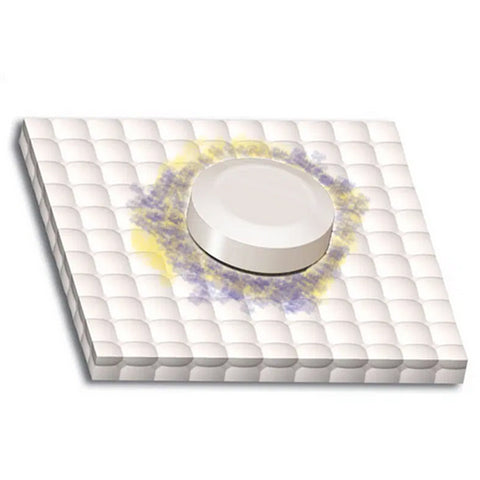
Ictotest tablet Positive Results Diagram

NEGATIVE RESULTS: The absence of blue or purple color on the mat indicates that no bilirubin is present. A slight pink or red color should be ignored. The illustration to the left shows typical negative results. The color gradient shows a sample range of color for a negative result.

Ictotest tablet Negative Results Diagram

Ictotest Bilirubin Reagent Tablets and Mats for Urinalysis, 100/box
$ 68.00
FAQs About Urine Test Strips
  • Urine Test Strips

    Urine test strips, also known as urinalysis dipsticks, are simple diagnostic tools used to quickly screen and analyze the contents of urine. These small, plastic strips have multiple pads or reagent areas, each of which reacts with specific substances in the urine to change color. They are widely used in clinics, hospitals, laboratories, and sometimes at home for routine medical checkups, disease screening, and monitoring.

  • What Do Urine Test Strips Detect?

    Urine test strips can provide information on a variety of substances and properties, including: Glucose: To check for diabetes or high blood sugar. Protein (albumin): To screen for kidney disease. Blood (hematuria): Indicates infections, kidney stones, or trauma. Leukocytes: Suggests urinary tract infection (UTI). Nitrites: Also a marker for UTI (produced by certain bacteria). Ketones: Monitors diabetes, starvation, or metabolic disorders. pH: Measures urine acidity. Specific gravity: Assesses urine concentration (hydration status). Bilirubin and urobilinogen: Assesses liver function and hemolysis. Ascorbic acid (Vitamin C): May interfere with certain results.

  • How are Urine Test Strips Used?

    Collect a fresh urine sample in a clean container. Dip the test strip briefly into the urine. Remove excess liquid by shaking off or blotting the strip. Wait for the specified time (usually 30—120 seconds). Compare the color change on each pad to the reference chart provided with the strip to interpret the results.

  • Common Uses of Urine Test Strips

    Routine health exams: As a quick check for underlying issues. Diabetes management: Monitoring glucose and ketones. Kidney health screening. Diagnosing urinary tract infections (UTI). Pregnancy monitoring: For protein and glucose, among other markers. Drug screening (some specialized strips).

  • What are Urine Test Strip Limitations?

    Not a substitute for comprehensive laboratory analysis. Can give false positives or negatives if not used correctly or if urine is contaminated. Results should always be interpreted by a healthcare provider, especially if abnormal.

  • How Accurate Are Home Urine Test Strips?

    Home urine test strips are highly accurate for general screening (e.g., glucose, ketones, nitrites, protein, pH). They offer over 90% sensitivity and specificity for most parameters when used correctly. For a formal diagnosis or confirmation, consult with your healthcare provider and consider laboratory urinalysis.

  • What Is the Most Accurate Urine Test Strip?

    Multistix and Siemens urinalysis strips are widely regarded for medical-grade accuracy. Choose test strips labeled “CLIA-waived” or “FDA-cleared” for clinical reliability.

  • How Do You Read Urine Test Strips?

    Dip the strip in a fresh urine sample for 1–2 seconds. Remove and gently tap off excess urine. Wait 30–60 seconds (see each pad’s timing guide). Compare the color changes on the pads to the chart on the bottle/container. Record your results and consult healthcare professionals as needed.

  • What Should Never Be Detected in Urine?

    A healthy urine test should never detect: Blood (hematuria) Protein (proteinuria) Glucose (glucosuria) Ketones Nitrites Leukocytes If detected, see a healthcare provider for further testing.

  • What to Avoid Before a Urine Test?

    Avoid intense physical activity and vitamin C supplements 24 hours before testing. Do not eat beets, blackberries, or rhubarb (can color urine red). Avoid diuretics (unless prescribed). Don’t overhydrate—excess water dilutes results.

  • Do I Need a Prescription for Urinalysis Strips?

    No prescription is required. Urine test strips are available over-the-counter for home monitoring and routine health checks.

  • How Long Before a Urine Test Should I Drink Water?

    Avoid drinking large amounts of water 1–2 hours before testing to ensure your sample is not too diluted. Use the first morning urine for the most concentrated, accurate results.

  • What Color Is a Good Urine Test?

    Healthy urine: Pale yellow to amber Abnormal results may appear pink (blood), green, very dark (bilirubin), or cloudy (infection). Urine test strip pads—refer to the color chart; a “negative” or normal value is usually the reference color.

  • What Is a Positive Urine Strip Result?

    A “positive” result indicates an abnormal finding such as glucose, protein, ketones, blood, nitrites, or leukocytes in your urine. Positive results require medical evaluation.

  • What Illness Can Be Detected in Urine?

    Urine test strips help detect and monitor: Urinary tract infections (UTIs) Kidney disease Diabetes mellitus and ketoacidosis Liver disease Hematuria (blood in urine) Dehydration or electrolyte disorders

  • What Color Is Urine When Your Kidneys Are Failing?

    Dark brown, tea-colored, or red urine may signal kidney failure. Test strips may show protein, blood, or abnormal pH. Contact your doctor if you notice these changes.

  • Key Features & Benefits

    Rapid 60-Second Home Results Multi-Parameter (up to 10-in-1) Urinalysis High Sensitivity & Specificity Medical-Grade for Home & Clinical Use Easy Color-Coded Chart for safe, clear interpretation No Prescription Needed

Search Any Type of Product, Medication, or Alignment