
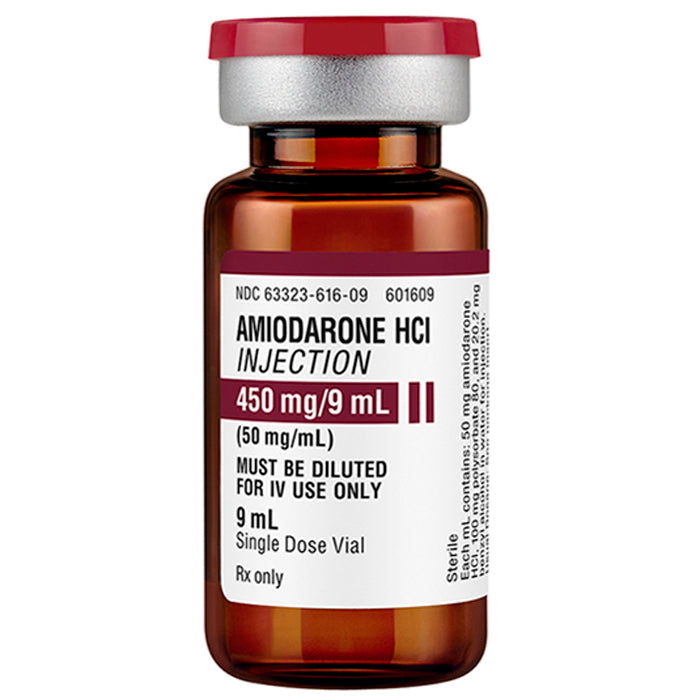

Amiodarone Injection IV For Arrhythmia 50 mg/mL Vial 9 mL by Fresenius (Rx)
How to Order:
You will receive instructions on how to create an account along with Rx Ordering Details.
(Note: Acceptable licenses must have Prescriptive Authority in the license issuing state.)
Advanced Cardiac Life Support (ACLS) & Critical Arrhythmia Management
Amiodarone Injection IV 50 mg/mL, 9 mL Vial by Fresenius is the hospital and emergency room standard for rapid control of life-threatening ventricular arrhythmias, cardiac arrest, and refractory ventricular fibrillation (VF) and pulseless ventricular tachycardia (VT). This high-potency, sterile injectable antiarrhythmic is trusted in code carts, emergency departments, intensive care units, and advanced cardiac life support protocols worldwide to restore and stabilize normal heart rhythm when every second counts.
Key Features & Top Clinical Benefits
- Rapid-Acting IV Antiarrhythmic: Delivers 450 mg total (9 mL at 50 mg/mL) per vial for immediate IV administration in critical emergencies.
- Hospital, ICU, and EMS Essential: First-line treatment for ventricular fibrillation, pulseless VT, unstable arrhythmias, and advanced cardiac life support scenarios.
- Guideline-Recommended for Cardiac Arrest: A core ACLS medication for refractory arrhythmias unresponsive to defibrillation and epinephrine.
- Versatile & Reliable Dosing: Suitable for both IV bolus and continuous infusion—precise, titratable management based on clinical needs.
- Sterile, Tamper-Evident Vial: Ensures swift, safe delivery during high-stress code emergencies.
- Manufactured by Fresenius: Renowned for world-class, consistent, high-quality critical care and hospital pharmaceuticals.
Indications & Use Cases
- Cardiac arrest (ventricular fibrillation/pulseless VT)
- Life-threatening ventricular arrhythmias
- Supraventricular arrhythmias (when other therapies fail)
- Emergency rhythm stabilization for unstable patients
- Advanced cardiac life support medication (ACLS Protocol)
Why Choose Amiodarone Injection by Fresenius?
- Immediate access for code blue & crash carts
- Consistent, accurate dosing for both bolus and infusion
- Trusted in hospitals, ambulances, ICUs, and cath labs
- Compatible with all standard IV setups
- Backed by extensive clinical experience and global ACLS protocols
Top Searched Terms for Amiodarone Injection
- Amiodarone injection IV 50 mg/mL
- IV amiodarone for ventricular arrhythmia
- Hospital antiarrhythmic injection
- ACLS cardiac arrest drug
- Ventricular tachycardia emergency treatment
- Ventricular fibrillation IV medication
- Cardiac code cart amiodarone
- Emergency antiarrhythmic injection hospital
- 9 mL amiodarone vial Fresenius
- Crash cart critical care drug
- Amiodarone ACLS protocol
- ICU arrhythmia management injection
- Cardiac arrest advanced medication
- Best hospital medication for refractory VT/VF
Directions for Use
- Route: For intravenous use only.
-
Dosing:
- Cardiac arrest (VF/pulseless VT): Initial bolus 300 mg IV/IO push (6 mL), may give additional 150 mg (3 mL) if needed.
- Arrhythmia stabilization: Infuse as per current ACLS or hospital protocol.
- See full prescribing information and institution guidelines for continuous infusion rates and titration.
Possible Side Effects
Common:
- Hypotension (low blood pressure)
- Bradycardia
- Nausea
- Local site reactions
Serious (Seek Immediate Help):
- Heart block or worsening arrhythmias
- Pulmonary toxicity (rare with IV, more with chronic use)
- Liver enzyme elevation
- Severe allergic reaction
Patients must be continuously monitored after administration. Always treat in a hospital or monitored emergency setting.
Precautions
- For use by trained healthcare professionals only
- Monitor ECG, blood pressure, and respiratory status continuously during and after administration
- Adjust dose for liver or respiratory impairment
- May interact with other cardiac drugs (consult pharmacy/physician)
- Not for chronic outpatient use
Trust Amiodarone Injection IV 50 mg/mL, 9 mL Vial by Fresenius for life-saving rhythm control in cardiac arrest, ventricular arrhythmias, and all critical emergency scenarios—essential for every hospital, EMS, ICU, and crash cart!
