Skip to content

Added to your cart:

Cart subtotal

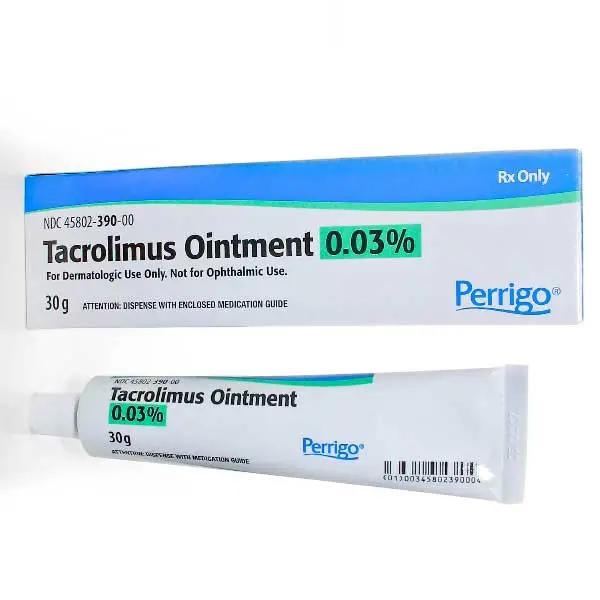
Tacrolimus Ointment 0.03% Topical Eczema & Vitiligo Relief (Rx)

SKU 45802-0390-00
Sale 28%
Original price $ 159.95
Current price $ 115.00
In stock
Non-Returnable
*Mountainside Medical does not fill personal prescriptions Medical Professional License Required to Unlock Account

How to Order:

Send an email request to: sales@mountainside-medical.com

You will receive instructions on how to create an account along with Rx Ordering Details.

(Note: Acceptable licenses must have Prescriptive Authority in the license issuing state.)
Fast Delivery
Fast Delivery
24/7 Support
24/7 Support
No Returns
No Returns
Hospital Grade
Hospital Grade
Free Shipping on orders above $100
Payment Secure transaction
Packaging Ships in product packaging
Service-Disabled Veteran-Owned Small Business
Located in Adirondack Mountains in NY
Family Owned Business 2002
Sale 28%
Original price $ 159.95
Current price $ 115.00
Free Shipping on orders above $100
Payment Secure transaction
Packaging Ships in product packaging
Tacrolimus Ointment 0.03% Topical Eczema & Vitiligo Relief (Rx)
$ 159.95 $ 115.00
🔒 Medical License Required
Description

Tacrolimus Ointment 0.03% (Protopic)

Tacrolimus ointment 0.03% is a prescription topical medication (brand name Protopic among others) used to treat eczema (atopic dermatitis). It contains tacrolimus monohydrate (0.3 mg/g) and works as a non-steroidal calcineurin inhibitor: it binds FKBP-12 in skin immune cells and blocks calcineurin, preventing T-cell activation and release of pro-inflammatory cytokines (IL-2, IL-4, IL-5, TNF-α, etc.). By suppressing the local immune response, tacrolimus reduces skin inflammation, redness and itching. Unlike topical steroids, tacrolimus does not thin the skin, making it useful on sensitive areas (face, eyelids, skin folds)

Tacrolimus ointment is indicated for moderate-to-severe atopic dermatitis in patients (including children 2 years and older) who have not responded adequately to or cannot tolerate conventional therapies like topical corticosteroids. It can be used both for acute flare-ups and as maintenance to prevent flares. For example, in Europe the official product information for Protopic 0.03% states it is indicated in “adults, adolescents and children from the age of 2 years” for treatment of moderate-to-severe atopic dermatitis when conventional treatment is inadequate. It may also be applied regularly (intermittently) to prolong flare-free periods in patients prone to frequent relapses.

Other uses: Besides eczema, tacrolimus ointment has been used off-label for various inflammatory skin conditions, especially in areas where corticosteroids are problematic. For example, it is sometimes applied for vitiligo, lichen planus, seborrheic dermatitis or discoid lupus on the face and other sensitive sites. However, such uses are not formally approved and should be guided by a dermatologist.

Dosage and administration

  • Strengths: Tacrolimus ointment comes in two strengths: 0.03% and 0.1%. The 0.03% ointment (0.3 mg/g) is the lower-strength preparation and is used for children (2–15 years) or mild-to-moderate cases. The 0.1% ointment is typically used for older teens and adults with more severe disease.
  • Application: Apply a thin layer of ointment to all affected skin areas. Use clean hands and apply gently without rubbing hard. Avoid covering the treated skin with airtight dressings (patients should not use occlusive bandages or wrap the treated area under plastic unless explicitly directed by a doctor).
  • Frequency: Initially, tacrolimus is usually applied twice daily. In children (2+ years) the recommended regimen is tacrolimus 0.03% ointment twice daily for up to 3 weeks, then reduced to once daily until the eczema clears. In adults, one common approach is to start with 0.1% twice daily until control, then switch to 0.03% or reduce frequency for maintenance. Once skin lesions are “almost clear,” treatment can often be stopped or applied intermittently – signs of recurrence can then be treated by restarting twice-daily application.
  • Duration: Treatment should be used short-term or intermittently, not continuously long-term. Doctors recommend using the lowest effective strength, frequency and duration. For example, once eczema is cleared, use tacrolimus only during flares, or a few times weekly to maintain remission. If there is no improvement after about 2 weeks, the treatment plan should be reassessed.

Always follow the prescribing information and your healthcare provider’s instructions for dose and duration. Patients should wash hands before and after applying (unless hands are being treated). Keep the ointment out of eyes, nose and mouth – if accidental contact occurs, gently wipe it off.

Side effects

Common side effects are mostly local skin reactions at the application site. In clinical studies, about half of patients experienced some irritation. These include:

  • Burning, stinging or itching: Very common (≥1/10 patients). A transient burning or prickling sensation is often felt for a few minutes after application. Usually this is mild-to-moderate and subsides within a week as the skin adjusts.
  • Redness (erythema): Common, may accompany the itching/burning on treated areas.
  • Warmth, pain or tingling: Also reported commonly at the site of application.
  • Skin rash or acne-like spots: Folliculitis (inflamed hair follicles) and acne can occur, as tacrolimus may alter local immunity in hair follicles.
  • Infections: Because tacrolimus suppresses local immune response, there is an increased risk of skin infections. Eczema herpeticum (widespread herpes simplex infection) and other viral infections (e.g. cold sores, varicella) are more likely on treated skin. Bacterial skin infections can also occur more easily. Patients should clear any active skin infection (bacterial, viral or fungal) before starting tacrolimus.
  • Alcohol intolerance: Some people report flushing or stinging in the face after drinking alcohol while using tacrolimus ointment.
  • Other: Headache, fever or flu-like symptoms have been reported but are uncommon.

If severe local reactions (e.g. excessive burning, blisters, severe redness) occur, patients should contact their doctor. Lymph node swelling (lymphadenopathy) was seen in a small number of patients (around 0.8%); for persistent swelling the cause should be evaluated.

Precautions and warnings

  • Sunlight (UV exposure): Minimize sun exposure on treated areas. Avoid tanning beds, PUVA or UVB therapy while using tacrolimus. Patients should apply broad-spectrum sunscreen (and/or wear protective clothing) on non-affected skin to reduce UV exposure.
  • Skin cancer risk: Animal studies with tacrolimus plus UV light showed some increased skin cancer risk, and systemic calcineurin inhibitors (like oral tacrolimus) are known to raise lymphoma risk. Although long-term human data have not confirmed a cancer risk with topical tacrolimus, precautions are advised. Do not apply tacrolimus to skin lesions that look suspicious for malignancy or pre-cancer. The prescribing information recommends using the lowest effective strength for shortest time and monitoring for any unusual skin changes. Recent large studies have not found a clear link between topical tacrolimus use and lymphoma or skin cancers, but vigilance continues.
  • Infections and immunosuppression: Do not use tacrolimus ointment on actively infected skin (e.g. impetigo, herpetic infections) until the infection is treated. Patients with weakened immune systems (e.g. HIV, cancer chemotherapy) should generally avoid it, as should anyone taking systemic immunosuppressants. Tacrolimus ointment is contraindicated if the patient has known hypersensitivity to tacrolimus or to any macrolide antibiotics (they share similar structures).
  • Very large areas or long-term use: Caution if applying to extensive skin areas for prolonged periods, especially in children. Although systemic absorption is minimal (see below), widespread or occluded application could raise blood levels. For this reason, doctors usually limit the treated surface area and duration, and monitor patients accordingly.
  • Dermatologic conditions to avoid: Certain rare skin diseases with poor barrier function (e.g. Netherton syndrome, lamellar ichthyosis) can increase systemic absorption; tacrolimus is not recommended in those cases.
  • Pregnancy and breastfeeding: There are no adequate studies in pregnant women. Animal studies suggest possible risks at systemic doses. The ointment should be used in pregnancy only if clearly needed. Tacrolimus does appear in breast milk; breastfeeding is generally not recommended during treatment.
  • Pediatrics: Ages 2 and up are allowed (for 0.03% strength). Safety in children under 2 years has not been established, so tacrolimus ointment should not be used in infants under 2.

Systemic absorption: Very little tacrolimus is absorbed into the bloodstream when used on intact skin. In clinical studies, most patients had blood tacrolimus levels <2 ng/mL (often undetectable) even after weeks of treatment. Because of this, systemic side effects and drug interactions are uncommon. However, patients should still inform doctors of all medications they take, especially strong CYP3A4 inhibitors (like ketoconazole or erythromycin), if treating large areas or with broken skin.

Off-label and miscellaneous uses

  • Vitiligo: Tacrolimus ointment is sometimes used on facial vitiligo to help repigmentation, often combined with phototherapy.
  • Other psoriasis/dermatoses: In conditions like oral lichen planus, discoid lupus or seborrheic dermatitis of the face, tacrolimus may be used as a steroid-sparing agent because it avoids steroid side effects (skin thinning, glaucoma risk on eyelids).
  • Comparison to alternatives: Another TCI (topical calcineurin inhibitor) is pimecrolimus cream (Elidel), which is usually weaker and used for mild eczema (licensed from 3 months old). Tacrolimus is more potent. Since these are non-steroidal, they are often chosen for skin sites where steroids are undesirable long-term.

Summary

  • Tacrolimus 0.03% ointment is a non-steroid topical immunomodulator for moderate-to-severe eczema, especially in children (≥2 years) and on sensitive skin areas.
  • It is applied sparingly to affected skin, typically twice daily initially, then tapered. The lowest effective dose and duration should be used.
  • Common local reactions include burning, itching or redness at the application site. Systemic effects are rare due to minimal absorption.
  • Important warnings: avoid sunlight/UV, do not use on active infections or suspicious lesions, and use caution in pregnancy or immunosuppression.
  • Although labeled with a theoretical lymphoma/cancer warning, recent evidence has not shown a proven increase in cancer risk from topical use. Nonetheless, prudence (using minimal needed) is recommended.

Disclaimer: This information is a general overview and not personal medical advice. Always follow your doctor’s instructions and discuss any concerns or side effects with your healthcare provider.

Description

Tacrolimus Ointment 0.03% (Protopic)

Tacrolimus ointment 0.03% is a prescription topical medication (brand name Protopic among others) used to treat eczema (atopic dermatitis). It contains tacrolimus monohydrate (0.3 mg/g) and works as a non-steroidal calcineurin inhibitor: it binds FKBP-12 in skin immune cells and blocks calcineurin, preventing T-cell activation and release of pro-inflammatory cytokines (IL-2, IL-4, IL-5, TNF-α, etc.). By suppressing the local immune response, tacrolimus reduces skin inflammation, redness and itching. Unlike topical steroids, tacrolimus does not thin the skin, making it useful on sensitive areas (face, eyelids, skin folds)

Tacrolimus ointment is indicated for moderate-to-severe atopic dermatitis in patients (including children 2 years and older) who have not responded adequately to or cannot tolerate conventional therapies like topical corticosteroids. It can be used both for acute flare-ups and as maintenance to prevent flares. For example, in Europe the official product information for Protopic 0.03% states it is indicated in “adults, adolescents and children from the age of 2 years” for treatment of moderate-to-severe atopic dermatitis when conventional treatment is inadequate. It may also be applied regularly (intermittently) to prolong flare-free periods in patients prone to frequent relapses.

Other uses: Besides eczema, tacrolimus ointment has been used off-label for various inflammatory skin conditions, especially in areas where corticosteroids are problematic. For example, it is sometimes applied for vitiligo, lichen planus, seborrheic dermatitis or discoid lupus on the face and other sensitive sites. However, such uses are not formally approved and should be guided by a dermatologist.

Dosage and administration

  • Strengths: Tacrolimus ointment comes in two strengths: 0.03% and 0.1%. The 0.03% ointment (0.3 mg/g) is the lower-strength preparation and is used for children (2–15 years) or mild-to-moderate cases. The 0.1% ointment is typically used for older teens and adults with more severe disease.
  • Application: Apply a thin layer of ointment to all affected skin areas. Use clean hands and apply gently without rubbing hard. Avoid covering the treated skin with airtight dressings (patients should not use occlusive bandages or wrap the treated area under plastic unless explicitly directed by a doctor).
  • Frequency: Initially, tacrolimus is usually applied twice daily. In children (2+ years) the recommended regimen is tacrolimus 0.03% ointment twice daily for up to 3 weeks, then reduced to once daily until the eczema clears. In adults, one common approach is to start with 0.1% twice daily until control, then switch to 0.03% or reduce frequency for maintenance. Once skin lesions are “almost clear,” treatment can often be stopped or applied intermittently – signs of recurrence can then be treated by restarting twice-daily application.
  • Duration: Treatment should be used short-term or intermittently, not continuously long-term. Doctors recommend using the lowest effective strength, frequency and duration. For example, once eczema is cleared, use tacrolimus only during flares, or a few times weekly to maintain remission. If there is no improvement after about 2 weeks, the treatment plan should be reassessed.

Always follow the prescribing information and your healthcare provider’s instructions for dose and duration. Patients should wash hands before and after applying (unless hands are being treated). Keep the ointment out of eyes, nose and mouth – if accidental contact occurs, gently wipe it off.

Side effects

Common side effects are mostly local skin reactions at the application site. In clinical studies, about half of patients experienced some irritation. These include:

  • Burning, stinging or itching: Very common (≥1/10 patients). A transient burning or prickling sensation is often felt for a few minutes after application. Usually this is mild-to-moderate and subsides within a week as the skin adjusts.
  • Redness (erythema): Common, may accompany the itching/burning on treated areas.
  • Warmth, pain or tingling: Also reported commonly at the site of application.
  • Skin rash or acne-like spots: Folliculitis (inflamed hair follicles) and acne can occur, as tacrolimus may alter local immunity in hair follicles.
  • Infections: Because tacrolimus suppresses local immune response, there is an increased risk of skin infections. Eczema herpeticum (widespread herpes simplex infection) and other viral infections (e.g. cold sores, varicella) are more likely on treated skin. Bacterial skin infections can also occur more easily. Patients should clear any active skin infection (bacterial, viral or fungal) before starting tacrolimus.
  • Alcohol intolerance: Some people report flushing or stinging in the face after drinking alcohol while using tacrolimus ointment.
  • Other: Headache, fever or flu-like symptoms have been reported but are uncommon.

If severe local reactions (e.g. excessive burning, blisters, severe redness) occur, patients should contact their doctor. Lymph node swelling (lymphadenopathy) was seen in a small number of patients (around 0.8%); for persistent swelling the cause should be evaluated.

Precautions and warnings

  • Sunlight (UV exposure): Minimize sun exposure on treated areas. Avoid tanning beds, PUVA or UVB therapy while using tacrolimus. Patients should apply broad-spectrum sunscreen (and/or wear protective clothing) on non-affected skin to reduce UV exposure.
  • Skin cancer risk: Animal studies with tacrolimus plus UV light showed some increased skin cancer risk, and systemic calcineurin inhibitors (like oral tacrolimus) are known to raise lymphoma risk. Although long-term human data have not confirmed a cancer risk with topical tacrolimus, precautions are advised. Do not apply tacrolimus to skin lesions that look suspicious for malignancy or pre-cancer. The prescribing information recommends using the lowest effective strength for shortest time and monitoring for any unusual skin changes. Recent large studies have not found a clear link between topical tacrolimus use and lymphoma or skin cancers, but vigilance continues.
  • Infections and immunosuppression: Do not use tacrolimus ointment on actively infected skin (e.g. impetigo, herpetic infections) until the infection is treated. Patients with weakened immune systems (e.g. HIV, cancer chemotherapy) should generally avoid it, as should anyone taking systemic immunosuppressants. Tacrolimus ointment is contraindicated if the patient has known hypersensitivity to tacrolimus or to any macrolide antibiotics (they share similar structures).
  • Very large areas or long-term use: Caution if applying to extensive skin areas for prolonged periods, especially in children. Although systemic absorption is minimal (see below), widespread or occluded application could raise blood levels. For this reason, doctors usually limit the treated surface area and duration, and monitor patients accordingly.
  • Dermatologic conditions to avoid: Certain rare skin diseases with poor barrier function (e.g. Netherton syndrome, lamellar ichthyosis) can increase systemic absorption; tacrolimus is not recommended in those cases.
  • Pregnancy and breastfeeding: There are no adequate studies in pregnant women. Animal studies suggest possible risks at systemic doses. The ointment should be used in pregnancy only if clearly needed. Tacrolimus does appear in breast milk; breastfeeding is generally not recommended during treatment.
  • Pediatrics: Ages 2 and up are allowed (for 0.03% strength). Safety in children under 2 years has not been established, so tacrolimus ointment should not be used in infants under 2.

Systemic absorption: Very little tacrolimus is absorbed into the bloodstream when used on intact skin. In clinical studies, most patients had blood tacrolimus levels <2 ng/mL (often undetectable) even after weeks of treatment. Because of this, systemic side effects and drug interactions are uncommon. However, patients should still inform doctors of all medications they take, especially strong CYP3A4 inhibitors (like ketoconazole or erythromycin), if treating large areas or with broken skin.

Off-label and miscellaneous uses

  • Vitiligo: Tacrolimus ointment is sometimes used on facial vitiligo to help repigmentation, often combined with phototherapy.
  • Other psoriasis/dermatoses: In conditions like oral lichen planus, discoid lupus or seborrheic dermatitis of the face, tacrolimus may be used as a steroid-sparing agent because it avoids steroid side effects (skin thinning, glaucoma risk on eyelids).
  • Comparison to alternatives: Another TCI (topical calcineurin inhibitor) is pimecrolimus cream (Elidel), which is usually weaker and used for mild eczema (licensed from 3 months old). Tacrolimus is more potent. Since these are non-steroidal, they are often chosen for skin sites where steroids are undesirable long-term.

Summary

  • Tacrolimus 0.03% ointment is a non-steroid topical immunomodulator for moderate-to-severe eczema, especially in children (≥2 years) and on sensitive skin areas.
  • It is applied sparingly to affected skin, typically twice daily initially, then tapered. The lowest effective dose and duration should be used.
  • Common local reactions include burning, itching or redness at the application site. Systemic effects are rare due to minimal absorption.
  • Important warnings: avoid sunlight/UV, do not use on active infections or suspicious lesions, and use caution in pregnancy or immunosuppression.
  • Although labeled with a theoretical lymphoma/cancer warning, recent evidence has not shown a proven increase in cancer risk from topical use. Nonetheless, prudence (using minimal needed) is recommended.

Disclaimer: This information is a general overview and not personal medical advice. Always follow your doctor’s instructions and discuss any concerns or side effects with your healthcare provider.
Get Notified When Back in Stock