Skip to content
New users? Get 5% off on your first purchase.
Free US shipping over $100
New users? Get 5% off on your first purchase.
Free US shipping over $100

Added to your cart:

Cart subtotal

Filters

Price
$
-
$
$0 $1199
Collection

Adrenalin Epinephrine Injections

Adrenalin (Epinephrine) Injection

The Life-Saving Solution for Anaphylaxis, Cardiac Arrest & Emergency Medicine

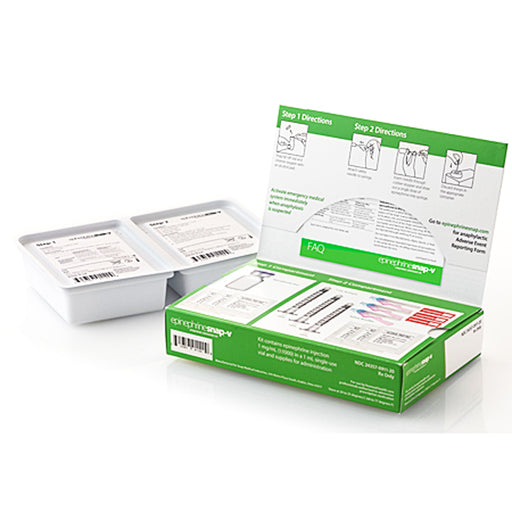
Adrenalin (Epinephrine) Injection is a fast-acting, hospital-grade, prescription medication that delivers immediate, life-saving results in emergencies such as severe allergic reactions (anaphylaxis), cardiac arrest, severe asthma attacks, and shock. Widely trusted by hospitals, ambulances, first responders, and clinics worldwide, Epinephrine Injection is the gold standard for emergency intervention—offering powerful heart stimulation, airway support, and rapid reversal of life-threatening symptoms. Available in convenient ampules, vials, and auto-injectors, Adrenalin is a must-have in every crash cart, first-aid kit, and emergency medical supply.

Information

  • Generic Name: Epinephrine Injection, USP (Adrenalin)
  • Administration: Intramuscular (IM), Intravenous (IV), Subcutaneous (SC)
  • Formulation: Sterile, preservative-free injection
  • Prescription Status: Rx only, emergency/medical use
  • Common Brand Names: Listed below

Purpose

Adrenalin (Epinephrine) Injection is formulated exclusively for medical emergencies, serving as the first-line agent for rapid reversal of anaphylactic shock, sudden cardiac arrest, acute asthma exacerbations, and shock states. It works instantly to open airways, increase heart rate, boost blood pressure, and halt the progression of severe allergic reactions.

Uses

  • Anaphylaxis/Severe Allergic Reaction: Immediate, critical response to food allergy, insect sting, drug reaction, or other life-threatening allergens.
  • Cardiac Arrest/Resuscitation: Standard drug in CPR protocols for restoring heart rhythm during sudden cardiac arrest.
  • Severe Asthma Attack: Powerful bronchodilator effect in status asthmaticus and acute asthma emergencies.
  • Septic or Hypovolemic Shock: Temporary blood pressure support in intensive care settings.
  • Croup (Pediatric): Nebulized epinephrine for reducing airway swelling (hospital-directed use).
  • Adjunct in Local Anesthesia: Prolongs effect and reduces bleeding in certain surgical and dental procedures.

Types & Formulations

  • Epinephrine Auto-Injector (EpiPen®/generic): Pre-measured, easy-to-use for community and personal emergency kits.
  • IV/IM/SC Vials and Ampules: Used in hospitals, ambulances, and crash carts for multiple administration routes.
  • Pre-filled Syringes: For instant access in emergency or field situations.
  • Nebulized Solution: For airway emergencies in pediatric care.

Popular Brands

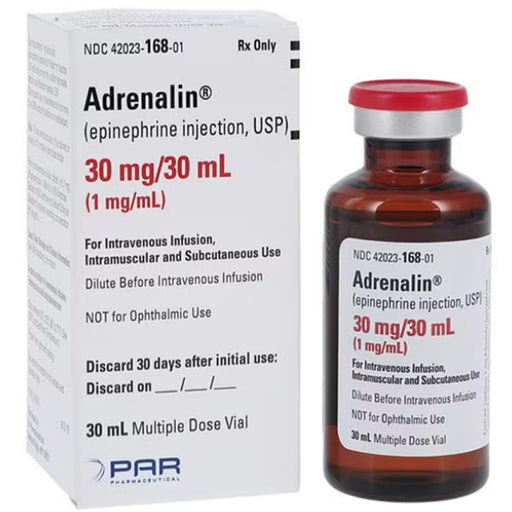
  • Adrenalin® (Par Pharmaceutical / Endo International)
  • EpiPen® Auto-Injector (Viatris/Mylan)
  • AUVI-Q® (Kaleo)
  • Adrenaclick®
  • Generic Epinephrine Injections (Hospira/Pfizer, Sandoz, Teva, Fresenius Kabi, Akorn)

Strengths

  • 1 mg/mL (1:1000) – Standard for intramuscular and subcutaneous anaphylaxis treatment.
  • 0.1 mg/mL (1:10,000) – Standard for intravenous administration during advanced cardiac life support (ACLS).
  • Auto-injector: Most commonly 0.3 mg (adult) and 0.15 mg (pediatric) per device

Sizes & Packaging

  • 1 mL ampules, vials, or pre-filled syringes (single-use)
  • 10 mL multi-dose vials (hospital supply)
  • Auto-injectors: Packaged in single or twin packs
  • Nebulizer solution: 1 mL vials (hospital use)

Precautions

  • Administer Only as Indicated: Epinephrine is a potent medication—use only in medical emergencies as prescribed.
  • Monitor for Side Effects: Possible palpitations, anxiety, tremors, high blood pressure, or arrhythmias; patients with heart disease require extra caution.
  • Correct Dosing: Overdose or repeated doses can be dangerous; follow dosing guidelines for adults or children.
  • Storage: Protect from light and at recommended room temperature; do not use if solution changes color or is cloudy.
  • Patient Training: Auto-injector users must receive proper training for self-administration and emergency response.
  • Allergy Awareness: Ensure patients are not allergic to any component of the formulation.

Why Choose Adrenalin Epinephrine Injection?

Epinephrine Injection is the #1 essential, globally trusted emergency medication for anaphylaxis, sudden cardiac arrest, and life-threatening allergic reactions. Hospitals, emergency responders, and allergy professionals choose Adrenalin for its instant, proven results, versatile delivery formats, and top-tier safety profile.

Order Adrenalin (Epinephrine) Injection today from licensed medical suppliers for reliable, rapid-response life-saving emergency care!

Adrenalin (Epinephrine) Injection

The Life-Saving Solution for Anaphylaxis, Cardiac Arrest & Emergency Medicine

Adrenalin (Epinephrine) Injection is a fast-acting, hospital-grade, prescription medication that delivers immediate, life-saving results in emergencies such as severe allergic reactions (anaphylaxis), cardiac arrest, severe asthma attacks, and shock. Widely trusted by hospitals, ambulances, first responders, and clinics worldwide, Epinephrine Injection is the gold standard for emergency intervention—offering powerful heart stimulation, airway support, and rapid reversal of life-threatening symptoms. Available in convenient ampules, vials, and auto-injectors, Adrenalin is a must-have in every crash cart, first-aid kit, and emergency medical supply.

Information

  • Generic Name: Epinephrine Injection, USP (Adrenalin)
  • Administration: Intramuscular (IM), Intravenous (IV), Subcutaneous (SC)
  • Formulation: Sterile, preservative-free injection
  • Prescription Status: Rx only, emergency/medical use
  • Common Brand Names: Listed below

Purpose

Adrenalin (Epinephrine) Injection is formulated exclusively for medical emergencies, serving as the first-line agent for rapid reversal of anaphylactic shock, sudden cardiac arrest, acute asthma exacerbations, and shock states. It works instantly to open airways, increase heart rate, boost blood pressure, and halt the progression of severe allergic reactions.

Uses

  • Anaphylaxis/Severe Allergic Reaction: Immediate, critical response to food allergy, insect sting, drug reaction, or other life-threatening allergens.
  • Cardiac Arrest/Resuscitation: Standard drug in CPR protocols for restoring heart rhythm during sudden cardiac arrest.
  • Severe Asthma Attack: Powerful bronchodilator effect in status asthmaticus and acute asthma emergencies.
  • Septic or Hypovolemic Shock: Temporary blood pressure support in intensive care settings.
  • Croup (Pediatric): Nebulized epinephrine for reducing airway swelling (hospital-directed use).
  • Adjunct in Local Anesthesia: Prolongs effect and reduces bleeding in certain surgical and dental procedures.

Types & Formulations

  • Epinephrine Auto-Injector (EpiPen®/generic): Pre-measured, easy-to-use for community and personal emergency kits.
  • IV/IM/SC Vials and Ampules: Used in hospitals, ambulances, and crash carts for multiple administration routes.
  • Pre-filled Syringes: For instant access in emergency or field situations.
  • Nebulized Solution: For airway emergencies in pediatric care.

Popular Brands

  • Adrenalin® (Par Pharmaceutical / Endo International)
  • EpiPen® Auto-Injector (Viatris/Mylan)
  • AUVI-Q® (Kaleo)
  • Adrenaclick®
  • Generic Epinephrine Injections (Hospira/Pfizer, Sandoz, Teva, Fresenius Kabi, Akorn)

Strengths

  • 1 mg/mL (1:1000) – Standard for intramuscular and subcutaneous anaphylaxis treatment.
  • 0.1 mg/mL (1:10,000) – Standard for intravenous administration during advanced cardiac life support (ACLS).
  • Auto-injector: Most commonly 0.3 mg (adult) and 0.15 mg (pediatric) per device

Sizes & Packaging

  • 1 mL ampules, vials, or pre-filled syringes (single-use)
  • 10 mL multi-dose vials (hospital supply)
  • Auto-injectors: Packaged in single or twin packs
  • Nebulizer solution: 1 mL vials (hospital use)

Precautions

  • Administer Only as Indicated: Epinephrine is a potent medication—use only in medical emergencies as prescribed.
  • Monitor for Side Effects: Possible palpitations, anxiety, tremors, high blood pressure, or arrhythmias; patients with heart disease require extra caution.
  • Correct Dosing: Overdose or repeated doses can be dangerous; follow dosing guidelines for adults or children.
  • Storage: Protect from light and at recommended room temperature; do not use if solution changes color or is cloudy.
  • Patient Training: Auto-injector users must receive proper training for self-administration and emergency response.
  • Allergy Awareness: Ensure patients are not allergic to any component of the formulation.

Why Choose Adrenalin Epinephrine Injection?

Epinephrine Injection is the #1 essential, globally trusted emergency medication for anaphylaxis, sudden cardiac arrest, and life-threatening allergic reactions. Hospitals, emergency responders, and allergy professionals choose Adrenalin for its instant, proven results, versatile delivery formats, and top-tier safety profile.

Order Adrenalin (Epinephrine) Injection today from licensed medical suppliers for reliable, rapid-response life-saving emergency care!
FAQs for Adrenalin Epinephrine Injections

  • What is Adrenaline Epinephrine Injection Used For?

    Adrenaline (also known as epinephrine) injections are a lifesaving medication used to treat severe allergic reactions (anaphylaxis), sudden asthma attacks, and cardiac arrest. Epinephrine works fast to open the airways, restore normal breathing, increase blood pressure, and reduce swelling and hives. Adrenaline injections are an essential emergency treatment for food allergies, insect stings, drug reactions, and other causes of anaphylactic shock.

  • Is Adrenaline and Epinephrine Injection the Same Thing?

    Yes! Epinephrine and adrenaline are two names for the same hormone and medication. In the United States, the term "epinephrine injection" is commonly used, but "adrenaline" is widely known internationally. Both refer to the same powerful emergency medication used for the treatment of life-threatening allergic reactions and shock.

  • What Are the Side Effects of the Epinephrine Injection?

    Common side effects of adrenaline (epinephrine) injections include: Rapid heartbeat (tachycardia) Nervousness or anxiety Dizziness Headache Tremors Sweating Paleness Serious but rare side effects include arrhythmias, high blood pressure, and chest pain. Always seek immediate medical attention after using epinephrine.

  • What Happens After an Adrenaline Injection?

    After injection, epinephrine rapidly reverses severe allergic symptoms, such as throat swelling, difficulty breathing, and low blood pressure. Most users feel immediate improvement within minutes. However, emergency medical follow-up is still required, as symptoms can return or rebound (biphasic anaphylaxis).

  • How Long Does an Adrenaline Injection Last?

    The effects of adrenaline injection begin within minutes and last 10 to 20 minutes, but symptoms may return. That’s why medical supervision is crucial after every use. Second doses may be required if allergic symptoms do not improve or if they come back.

  • Why Do People Need Adrenaline Injections?

    People with severe allergies (like those to peanuts, shellfish, latex, bee stings, or certain medications) carry an adrenaline autoinjector (like EpiPen) as a critical safety measure. This is the ONLY effective first-line treatment for anaphylactic shock and can be life-saving if used promptly.

  • When Is an Adrenaline Shot Needed?

    Give an adrenaline (epinephrine) injection at the FIRST SIGN of a severe allergic reaction, including: Difficulty breathing or swallowing Swelling of lips, throat, or tongue Hives breaking out rapidly Sudden drop in blood pressure (feeling faint or weak) Do not wait—early injection saves lives!

  • Can Adrenaline Wake Someone Up?

    Adrenaline is used in medical emergencies, such as cardiac arrest, to stimulate the heart and restore breathing, but it is not generally used to "wake up" someone from sleep. In emergencies, it can revive someone in anaphylactic shock or cardiac arrest through its potent stimulation of the heart and respiratory system.

  • How Much Does Adrenaline Injection Cost?

    The cost of adrenaline (epinephrine) injections varies based on brand (ex: EpiPen, Adrenaclick), insurance coverage, and location. Prices range from $100–$700 per injector without insurance; generic epinephrine autoinjectors are often more affordable. Check with local pharmacies or healthcare providers for exact pricing.

  • Where Do You Inject an Adrenaline Shot?

    Adrenaline (epinephrine) should be injected into the outer thigh (vastus lateralis muscle). Most autoinjectors are designed for easy use through clothing. NEVER inject into veins, buttocks, or other body parts.

  • Why Buy Your Adrenaline (Epinephrine) Injection Here?

    Safe, Genuine Products: Sourced from reputable pharmacies Fast Shipping & Affordable Prices Easy-to-Use Autoinjector Options Trusted by Doctors Worldwide Critical for Allergy Sufferers! Don’t wait for an emergency—order now and be prepared. Always consult your healthcare provider for personal medical advice and training in emergency epinephrine use. If you suspect anaphylaxis USE immediately and seek emergency help!

Adrenaline (Epinephrine) Injections: Rapid Emergency Allergy & Anaphylaxis Treatment

What is Adrenaline Epinephrine Injection Used For?

Adrenaline (also known as epinephrine) injections are a lifesaving medication used to treat severe allergic reactions (anaphylaxis), sudden asthma attacks, and cardiac arrest. Epinephrine works fast to open the airways, restore normal breathing, increase blood pressure, and reduce swelling and hives. Adrenaline injections are an essential emergency treatment for food allergies, insect stings, drug reactions, and other causes of anaphylactic shock.

Get Notified When Back in Stock