 Skip to content


Filters
- Allergies (1)
- Anti-Inflammatory (1)
- anti-inflammatory drug (1)
- Anti-Inflammatory Injection (2)
- Arthritis pain (1)
- arthritis pain relief (1)
- Asthma (2)
- Asthma Medication (2)
- Asthma Treatment (2)
- cort (1)
- Corticosteroid (2)
- Corticosteroid Medication (3)
- Corticosteroids (2)
- Dex (1)
- dexamethasone (3)
- Dexamethasone Sodium (2)
- doctor-only (3)
- Immune (1)
- Inflammation (1)
- Joint Pain (1)
- Pain Relief (1)
- Pain Relief Medicine (1)
- Phosphate (1)
- Reduce inflammation (1)
- Reduces Inflammation (1)
- Relieve Joint Pain (1)
- Rheumatoid Arthritis (1)
- Sodium phosphate (2)
- Swelling (1)
- Treat Asthma (1)
- Treat Inflammation (1)
- Allergic Reaction (1)
- Allergic Reaction Treatment (1)
- allergic reactions (1)
- Dexamethasone Intensol (1)
- Dexamethasone Intensol Drops (1)
- Dexamethasone Solution (1)
- Hikma (1)
- Oral Solution (1)
- Treat Allergic Reactions (1)
- Corticosteroid Injection (1)
- Dexamethasone 20 mg (1)
- Dexamethasone Sodium Phosphate Injection (1)
- Dexamethasone vials (1)
- injectable steroids (1)
- Multiple Dose (1)
- Multiple Dose Vial (1)
- Multiple Dose Vials (1)
- prescription drug (1)
- prescription injection (1)
- Steroid injection (1)
Filters
- Allergies (1)
- Anti-Inflammatory (1)
- anti-inflammatory drug (1)
- Anti-Inflammatory Injection (2)
- Arthritis pain (1)
- arthritis pain relief (1)
- Asthma (2)
- Asthma Medication (2)
- Asthma Treatment (2)
- cort (1)
- Corticosteroid (2)
- Corticosteroid Medication (3)
- Corticosteroids (2)
- Dex (1)
- dexamethasone (3)
- Dexamethasone Sodium (2)
- doctor-only (3)
- Immune (1)
- Inflammation (1)
- Joint Pain (1)
- Pain Relief (1)
- Pain Relief Medicine (1)
- Phosphate (1)
- Reduce inflammation (1)
- Reduces Inflammation (1)
- Relieve Joint Pain (1)
- Rheumatoid Arthritis (1)
- Sodium phosphate (2)
- Swelling (1)
- Treat Asthma (1)
- Treat Inflammation (1)
- Allergic Reaction (1)
- Allergic Reaction Treatment (1)
- allergic reactions (1)
- Dexamethasone Intensol (1)
- Dexamethasone Intensol Drops (1)
- Dexamethasone Solution (1)
- Hikma (1)
- Oral Solution (1)
- Treat Allergic Reactions (1)
- Corticosteroid Injection (1)
- Dexamethasone 20 mg (1)
- Dexamethasone Sodium Phosphate Injection (1)
- Dexamethasone vials (1)
- injectable steroids (1)
- Multiple Dose (1)
- Multiple Dose Vial (1)
- Multiple Dose Vials (1)
- prescription drug (1)
- prescription injection (1)
- Steroid injection (1)
Dexamethasone Injection for Corticosteroid Medication
-

 Sale 13%
Dexamethasone Injection 20 mg Per 5 mL Multiple-Dose Vials 5 mL x 10/Pack (RX)
Original price $ 45.00Current price $ 39.004 reviews🔒 Medical License Required -
 Sale 29%
Dexamethasone Intensol Oral Solution (Concentrated) 30 mL Bottle 1 mg/mL (Rx)
Original price $ 69.50Current price $ 49.50🔒 Medical License Required -
 Sale 29%
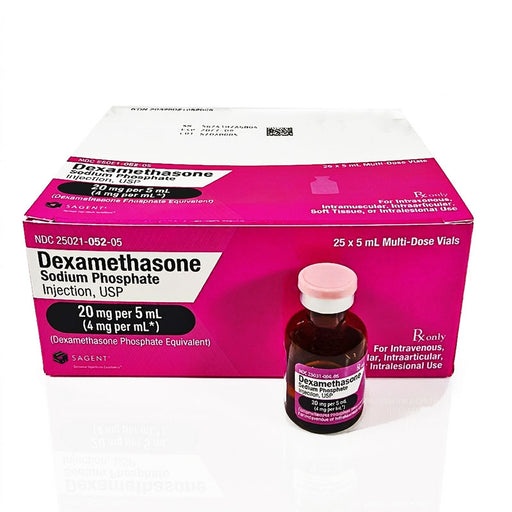
Dexamethasone Injection (Sodium Phosphate) 20 mg/5 mL Multiple-Dose Vials 5 mL x 25/Box (RX)
Original price $ 69.95Current price $ 49.95🔒 Medical License Required


Dexamethasone Injection
Dexamethasone injection is a potent synthetic corticosteroid (glucocorticoid) medication given by injection to reduce inflammation and modulate the immune system. It mimics the body’s natural adrenal hormone (cortisol) and is used to provide a rapid anti‐inflammatory effect. In practice, it is often supplied as a water-soluble salt (dexamethasone sodium phosphate) for intramuscular (IM) or intravenous (IV) use. (For example, an official drug insert notes “Dexamethasone Sodium Phosphate Injection… produces a rapid response even when injected intramuscularly”). Dexamethasone injections are prescription‐only and usually administered by healthcare professionals.
- Drug class: A glucocorticoid corticosteroid. It belongs to the same class as cortisol.
- Mechanism: It works by binding steroid receptors and altering gene transcription to “decrease inflammation and slow down an overactive immune system”. In other words, it stores away inflammatory chemicals and reduces swelling, redness and immune activity.
- Form: Typically comes as a powdered vial or ready solution for injection. (The sodium phosphate ester form is water‐soluble for quick effect). It can be given deep into muscle or directly into a vein.
- Brand names: Often sold under brand names like Decadron (among others) and also available generically.
Common Uses/Indications
Dexamethasone injection is used in severe or acute conditions where fast, strong anti-inflammatory action is needed. These include many allergic, inflammatory, and endocrine disorders:
- Severe allergies and anaphylaxis: Used for life‐threatening allergic reactions (hives, swelling, breathing difficulty) to reduce immune response.
- Asthma and respiratory inflammation: To treat acute asthma flare-ups or other serious lung inflammation by suppressing airway swelling.
- Arthritis and joint inflammation: For intense flares of rheumatoid arthritis, psoriatic arthritis or gout when oral treatment is inadequate.
- Inflammatory bowel and skin diseases: Conditions like ulcerative colitis, Crohn’s disease, severe eczema or dermatitis, where it calms gut or skin inflammation.
- Blood and organ disorders: Used in certain blood cancers (like leukemia, lymphoma) and to manage transplant rejection by suppressing the immune attack. It can also reduce cerebral edema (brain swelling) or inflammation around tumors.
- Edema (fluid retention): To treat significant swelling from various causes (e.g. kidney disease, cerebral edema).
- Endocrine/Adrenal support: In adrenal insufficiency (Addison’s disease) or septic shock, it replaces cortisol and stabilizes blood pressure. It is given as part of shock protocols in critical care.
- Other uses: Occasionally used for severe chemotherapy side effects (e.g. antiemesis), to alleviate nausea/vomiting from cancer treatment, or to prevent organ transplant rejection..
For example, MedlinePlus notes that dexamethasone “is used to treat severe allergic reactions” and a range of conditions involving the blood, skin, eyes, thyroid, kidneys, lungs and nervous system. The Cleveland Clinic similarly states it “treats many conditions such as asthma, allergic reactions, arthritis, inflammatory bowel diseases, [and] adrenal … disorders” by damping down inflammation and immune activity.
Administration of the Injection
Dexamethasone injection is given by a healthcare provider (doctor, nurse, or trained patient). It comes as a sterile powder or solution:
- Preparation: Powdered dexamethasone (sodium phosphate) is mixed with a sterile diluent just before use. The resulting solution can be injected.
- Routes: It can be given intramuscularly (IM) or intravenously (IV), depending on the situation. IV doses are common in emergencies (e.g. anaphylaxis or shock) for rapid blood levels, whereas IM injections may be used for less acute settings.
- Setting: Often administered in a hospital, clinic, or emergency room. In some cases (for slower taper or recurring therapy) a patient may learn self-injection technique to use at home under medical guidance.
- Dosage: Dose and schedule vary widely by condition (from single large doses to multiple days of therapy). Doctors carefully adjust the dose based on the patient’s condition and response.
After administration, dexamethasone acts quickly. Because of its potency and long half-life, even a single injection can have effects lasting a day or longer. (The physician will determine how long to continue and how to taper off to avoid withdrawal.)
Additional Information
- Prescription status: Only available by prescription due to its potency. It is not an over-the-counter drug.
- Handling: As a potent steroid, it must be used under supervision. Doses are usually tapered gradually to avoid adrenal insufficiency.
- Side effects: (Though not asked, note that like all steroids it can cause various side effects if used long-term or in high doses.) Common effects include increased blood sugar, fluid retention, mood changes, and others.