
Filters
- DiFlucan (5)
- doctor-only (6)
- Fluconazole (6)
- Fluconazole 200 mg (3)
- Fluconazole OS (4)
- Fluconazole Tabs (5)
- Fungal Infection (6)
- Fungal Meningitis (4)
- Oral Suspension (4)
- treat fungal infections (5)
- Treat Fungal Meningitis (4)
- Vaginal candidiasis (5)
- Candida (1)
- Fluconazole Tablets (1)
- Fungal Infections (3)
- Fungal Infections Treatment (3)
- Serious Fungal Infections (3)
- Systemic infections (1)
- Thrush (1)
- antifungal therapy (1)
- Best medicine for thrush (1)
- Bloodstream fungal infectio (1)
- Bloodstream fungal infection (1)
- Candida infection pills (1)
- Candida infections (1)
- Cryptococcal meningitis (1)
- Esophageal candidiasis (1)
- Fluconazole for oral candidiasis (1)
- Fungal skin (1)
- Fungal Skin Infections (1)
- Oral Antifungal (2)
- Oral thrush (2)
- oropharyngeal candidiasis (1)
- yeast infection treatment (1)
- alternative to Diflucan (1)
- Antifungal Medication (1)
- Antifungal Medications (1)
- antifungal pills (1)
- Antifungal Treatment (1)
- Azole antifungal drug (1)
- Best antifungal tablets (1)
- Candida treatment (1)
- Candidiasis (1)
- Candidiasis treatment (1)
- esophageal (1)
- Fungal nail infection pills (1)
- High dose antifungal (1)
- HIV antifungal therapy (1)
- meningitis medicine (1)
- Systemic antifungal (1)
- Treat urinary tract infections (1)
- Treats oral (1)
- Vaginal yeast infection cure (1)
- Yeast infection treatment (1)
Filters
- DiFlucan (5)
- doctor-only (6)
- Fluconazole (6)
- Fluconazole 200 mg (3)
- Fluconazole OS (4)
- Fluconazole Tabs (5)
- Fungal Infection (6)
- Fungal Meningitis (4)
- Oral Suspension (4)
- treat fungal infections (5)
- Treat Fungal Meningitis (4)
- Vaginal candidiasis (5)
- Candida (1)
- Fluconazole Tablets (1)
- Fungal Infections (3)
- Fungal Infections Treatment (3)
- Serious Fungal Infections (3)
- Systemic infections (1)
- Thrush (1)
- antifungal therapy (1)
- Best medicine for thrush (1)
- Bloodstream fungal infectio (1)
- Bloodstream fungal infection (1)
- Candida infection pills (1)
- Candida infections (1)
- Cryptococcal meningitis (1)
- Esophageal candidiasis (1)
- Fluconazole for oral candidiasis (1)
- Fungal skin (1)
- Fungal Skin Infections (1)
- Oral Antifungal (2)
- Oral thrush (2)
- oropharyngeal candidiasis (1)
- yeast infection treatment (1)
- alternative to Diflucan (1)
- Antifungal Medication (1)
- Antifungal Medications (1)
- antifungal pills (1)
- Antifungal Treatment (1)
- Azole antifungal drug (1)
- Best antifungal tablets (1)
- Candida treatment (1)
- Candidiasis (1)
- Candidiasis treatment (1)
- esophageal (1)
- Fungal nail infection pills (1)
- High dose antifungal (1)
- HIV antifungal therapy (1)
- meningitis medicine (1)
- Systemic antifungal (1)
- Treat urinary tract infections (1)
- Treats oral (1)
- Vaginal yeast infection cure (1)
- Yeast infection treatment (1)
Oral Antifungal Medications for Fungal Infection
-

 Sale 23%
Fluconazole 200 mg Tablets by Glenmark Pharma 30 Count (Rx)
Original price $ 129.00Current price $ 99.80🔒 Medical License Required -

 Sale 65%
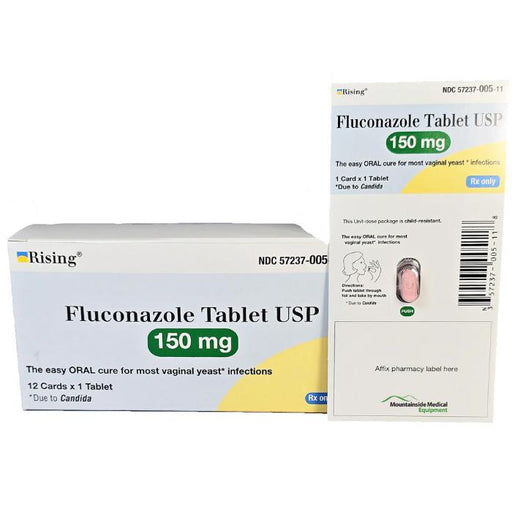
Fluconazole 150 mg Tablet, 1 Tablet per Card x 12 Cards per Box (Rx)
Original price $ 39.95Current price $ 13.951 review🔒 Medical License Required -

 Sale 19%
Fluconazole Tablets 100 mg by Glenmark Pharma 30 Count (RX)
Original price $ 85.00Current price $ 69.00🔒 Medical License Required -
 Sale 28%
Fluconazole Tablets 50 mg by Glenmark Pharma 30 Count (RX)
Original price $ 54.50Current price $ 39.00🔒 Medical License Required -

 Sale 28%
Fluconazole Tablets 200 mg USP by Ani Pahrma 30 Count (RX)
Original price $ 54.95Current price $ 39.75🔒 Medical License Required -
 Sale 28%
Fluconazole Tablets 200 mg by Rising Pharmaceuticals 30/Bottle (RX)
Original price $ 54.00Current price $ 39.00🔒 Medical License Required


People Also Searched For
Oral antifungal medications are prescription drugs taken by mouth to treat fungal infections. They work from the inside out, meaning the medication is absorbed into the bloodstream and delivered throughout the body. Doctors typically prescribe oral antifungals for more serious, extensive, or stubborn fungal infections – those that can’t be adequately treated with topical creams or ointments. For instance, a simple athlete’s foot might be handled with a cream, but a severe toenail fungus often needs an oral drug to clear it. Oral antifungals are also used for fungal infections inside the body (like certain lung or bloodstream infections) where topical treatments wouldn’t reach. In short, these medications are a “stronger” systemic approach to fighting fungi, reserved for when we need to ensure the medicine reaches all infected areas via the bloodstream.
Oral Antifungal Medications Types and Uses
There are several oral antifungal medications, each with specific uses. Common examples include:
- Fluconazole (Diflucan): A widely used oral antifungal in the azole class. It’s especially effective against Candida yeast infections, such as vaginal yeast infections, oral thrush (fungal infection in the mouth), and certain forms of fungal meningitis. Fluconazole is often given as a single-dose pill for vaginal yeast infections or a short course for thrush. It’s a go-to oral antifungal because it’s generally well-tolerated and treats a range of Candida infections.
- Terbinafine (Lamisil): This drug is particularly known for treating fungal nail infections (onychomycosis) and stubborn skin infections like ringworm, athlete’s foot, or jock itch when topical treatments didn’t work. Terbinafine is an allylamine antifungal that comes as a once-daily tablet. Nail infections require prolonged treatment with terbinafine (often 6 to 12 weeks). because the medicine needs time to penetrate the nail bed and allow a healthy nail to grow out.
- Itraconazole (Sporanox): An azole antifungal with a broad spectrum. It’s used for deep or systemic fungal infections such as histoplasmosis or blastomycosis (which can affect lungs and other organs). It’s also another option for nail fungus or persistent skin infections if terbinafine isn’t suitable. Itraconazole capsules should be taken with food (and something acidic like orange juice helps absorption). Doctors sometimes prescribe itraconazole in “pulse” doses (e.g., one week per month) especially for nail infections.
- Griseofulvin: An older antifungal antibiotic taken orally, mainly effective against dermatophyte fungi – the kind that cause ringworm of the skin/scalp and athlete’s foot. It’s not effective against yeast (Candida) or other fungi. Griseofulvin is usually reserved for infections like tinea capitis (fungal scalp infection in children) or nail infections when other medications can’t be used. Treatment with griseofulvin can be long (several weeks to months) until the infected tissue (skin or nail) is fully replaced by healthy growth. Patients are often advised to take it with a fatty meal to improve absorption.
- Ketoconazole: An azole antifungal that was once used often, but now oral ketoconazole is used sparingly due to safety concerns. It can treat serious systemic fungal infections, but it has a higher risk of liver toxicity and adrenal gland effects. Nowadays, doctors typically use ketoconazole orally only if no other options are available. (Ketoconazole is still commonly used as a shampoo or cream for localized infections like dandruff or skin fungus, but those are topical uses.)
- Nystatin: An antifungal that comes in oral form (usually as a liquid or lozenge) but interestingly, nystatin isn’t absorbed into the bloodstream when swallowed. That means it’s great for treating local yeast infections in the mouth and throat (oral thrush) or intestinal Candida overgrowth, but it won’t work for deep systemic infections. You typically “swish and swallow” nystatin liquid to coat the mouth and throat. Because it stays in the gut, it doesn’t cause systemic side effects; however, it’s not useful for infections outside the digestive tract.
- Others for Serious Infections: There are newer or more potent oral antifungals used for specific severe infections. Voriconazole (Vfend), for example, is used to treat invasive aspergillosis (a serious lung infection) and other life-threatening fungal infections. Posaconazole (Noxafil) is another, used for invasive infections and often as prophylaxis (prevention) in high-risk patients. These are typically reserved for use under close medical supervision, often in immunocompromised patients, and may start as IV treatment in the hospital followed by oral continuation at home. They tend to have more complex side effect profiles and drug interaction considerations, so they’re used when absolutely necessary.
Bottom line: For everyday fungal issues like athlete’s foot or a vaginal yeast infection, doctors might first try topical treatments. But for nail infections, widespread skin infections, or any internal fungal infection, oral antifungal pills are usually the appropriate therapy. They ensure that the medication reaches the fungus wherever it is in the body. Many of these oral drugs have equivalent topical forms (for example, clotrimazole is a common cream, and also comes as a troche lozenge for oral thrush, though not a swallowed pill). The choice of which oral antifungal to use depends on the type of fungus, the site of infection, patient-specific factors (like other medications, liver function, etc.), and sometimes cost or insurance coverage.