 Skip to content












Filters
- anticoagulant (1)
- Atrial fibrillation (1)
- blood clots (3)
- Blood clotting (1)
- blood thinner injection (1)
- Break up Blood Clots (3)
- cardiac surgery (1)
- Deep Vein Thrombosis (1)
- dialysis anticoagulant (1)
- doctor-only (3)
- Heparin (3)
- Heparin 10000 unit (1)
- Heparin Sodium (3)
- Heparin-Induced Thrombocytopenia (1)
- hospital anticoagulant (1)
- intravenous Lines (1)
- IV heparin (1)
- Prevent Blood Clots (3)
- Prevention of clotting (1)
- pulmonary embolism (1)
- pulmonary embolism treatment (1)
- Sodium Heparin (1)
- subcutaneous heparin (1)
- Surgical procedures (1)
- treatment of venous thrombosis (1)
- Blood Transfusions (1)
- Hemodialysis (1)
Filters
- anticoagulant (1)
- Atrial fibrillation (1)
- blood clots (3)
- Blood clotting (1)
- blood thinner injection (1)
- Break up Blood Clots (3)
- cardiac surgery (1)
- Deep Vein Thrombosis (1)
- dialysis anticoagulant (1)
- doctor-only (3)
- Heparin (3)
- Heparin 10000 unit (1)
- Heparin Sodium (3)
- Heparin-Induced Thrombocytopenia (1)
- hospital anticoagulant (1)
- intravenous Lines (1)
- IV heparin (1)
- Prevent Blood Clots (3)
- Prevention of clotting (1)
- pulmonary embolism (1)
- pulmonary embolism treatment (1)
- Sodium Heparin (1)
- subcutaneous heparin (1)
- Surgical procedures (1)
- treatment of venous thrombosis (1)
- Blood Transfusions (1)
- Hemodialysis (1)
Heparin Sodium Injections & Heparin IV Flush Solutions by Pfizer Injectables
-

 Sale 27%
Heparin Sodium Injection 10,000 USP Multiple-Dose Vials 10 mL x 25/Pack (RX)
 Original price $ 259.00Current price $ 189.002 reviews🔒 Medical License Required
 -
 Sale 25%
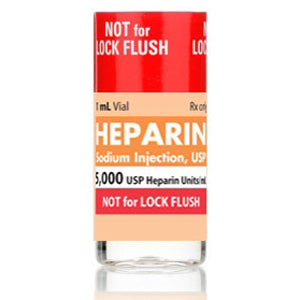
Heparin Sodium Injection 5000 Units Per 1 mL Single-Dose Vials 1 mL x 25/Pack (RX)
Original price $ 79.95Current price $ 59.95🔒 Medical License Required -

 Sale 21%
Heparin Sodium Injection 30000 Units Per 30 mL Multiple-Dose Vials 30 mL x 25/Pack (RX)
Original price $ 999.95Current price $ 789.00🔒 Medical License Required


Heparin sodium injection is a powerful anticoagulant (“blood thinner”) medication given by needle to prevent or treat blood clots. Heparin is a natural complex of sugar molecules (glycosaminoglycans) derived from animal sources (usually porcine intestine), standardized in units of activity. It cannot be taken by mouth (it would be broken down in the gut), so it is administered by injection – either intravenously (IV) or subcutaneously (under the skin). In clinical use, heparin injections rapidly reduce blood clotting ability to prevent new clots and keep existing clots from getting larger.
This injectable anticoagulant works immediately and is often used in hospitals or clinics for high-risk patients. For example, heparin injections are commonly given to bedridden or post-surgery patients to prevent deep vein thrombosis (DVT) and pulmonary embolism. Heparin is also used during certain medical procedures (like open-heart surgery, kidney dialysis, or blood transfusions) to stop the machine or process from causing clots. In short, heparin injections are life-saving treatments whenever rapidly thinning the blood is needed to prevent dangerous clots, but they require careful medical supervision because of bleeding risks.
Heparin sodium injection is an essential injectable anticoagulant used in many clinical situations to prevent or manage dangerous blood clots. Because it acts quickly and powerfully, it must be given carefully (by injection) and monitored closely. Always follow healthcare guidance when using heparin, and report any signs of bleeding or unusual symptoms immediately.