 Skip to content



Filters
- Antibiotics (2)
- Bacterial Infections (2)
- doctor-only (2)
- Endocarditis (2)
- Glycopeptide Antibiotic (2)
- Methicillin-Resistant Staphylococcus Aureus (2)
- pneumonia (2)
- Resistant Strains (2)
- Septicemia (2)
- Treat bacterial infections (2)
- Treat Pneumonia (2)
- Treatment of bacterial infections (2)
- Vancomycin Hydrochloride (2)
- Cell Wall Synthesis (1)
- Gram-positive bacteria (1)
- MRSA (1)
- Skin Infections (1)
- Treat skin infections (1)
Filters
- Antibiotics (2)
- Bacterial Infections (2)
- doctor-only (2)
- Endocarditis (2)
- Glycopeptide Antibiotic (2)
- Methicillin-Resistant Staphylococcus Aureus (2)
- pneumonia (2)
- Resistant Strains (2)
- Septicemia (2)
- Treat bacterial infections (2)
- Treat Pneumonia (2)
- Treatment of bacterial infections (2)
- Vancomycin Hydrochloride (2)
- Cell Wall Synthesis (1)
- Gram-positive bacteria (1)
- MRSA (1)
- Skin Infections (1)
- Treat skin infections (1)
Vancomycin Injection for Septicemia
-
 Sale 25%
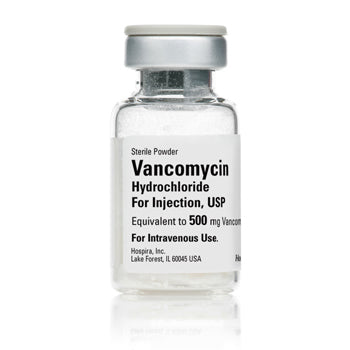
Vancomycin Injection 500 mg Vials 10/Box by Pfizer (Rx)
 Original price $ 199.95Current price $ 149.00🔒 Medical License Required
 -

 Sale 20%
Vancomycin Injection 1 Gram ADD-Vantage Vials, 10/Box by Pfizer (Rx)
Original price $ 225.00Current price $ 179.95🔒 Medical License Required


Vancomycin Injection (Vancomycin Hydrochloride, IV)
Vancomycin is a glycopeptide antibiotic supplied for intravenous injection/infusion. It is indicated for serious Gram-positive infections – especially methicillin-resistant Staphylococcus aureus (MRSA) – when susceptible to vancomycin. Common uses include bacteremia/sepsis, infective endocarditis, pneumonia, osteomyelitis, and complicated skin/soft-tissue infections caused by Staphylococcus, Streptococcus, and other susceptible organisms. (Vancomycin oral formulations exist for C. difficile colitis, but the injection form is for systemic IV use only.)
- Formulation: Vancomycin Injection typically comes either as a sterile powder (500 mg or 1 g per vial) that must be reconstituted, or as ready-to-use IV infusion bags. For example, single-dose IV bags are available containing 500 mg in 100 mL, 1 g in 200 mL, up to 2 g in 400 mL of diluent. Vials contain vancomycin HCl powder and are reconstituted with sterile water before dilution. The final infusion solutions are generally isotonic (often in 5% dextrose) and must be administered within recommended concentrations.
- Indications: Vancomycin Injection is reserved for proven or strongly suspected serious infections caused by Gram-positive bacteria. This includes: Staphylococcal infections (e.g. MRSA septicemia, endocarditis, skin/soft-tissue infections) and certain Streptococcal or Enterococcal infections (often endocarditis, usually in combination with an aminoglycoside). It is often used in penicillin-allergic patients or when first-line beta-lactams fail. The label notes vancomycin should be used only when the infecting organism is known or strongly suspected to be susceptible (to reduce resistance).
Dosage and Administration
- Route: Intravenous infusion only. Vancomycin is irritating to tissue – giving it by any route other than IV infusion is contraindicated. Do not administer orally or intramuscularly. (IM injections are extremely painful and can cause severe tissue damage and necrosis.) To avoid IV site irritation, use a large vein or central line if possible.
- Infusion Rate: Administer each dose by slow IV infusion. Recommended: infuse over at least 60 minutes (or longer) for doses of 1 g or less. Some guidelines suggest not exceeding 10 mg/minute (e.g. 1 g over 100 minutes) to minimize infusion-related reactions. Rapid bolus or overly concentrated infusions must be avoided to prevent “Red Man Syndrome” (a histamine-mediated reaction). If a reaction occurs (flushing, itching, hypotension), stop the infusion until symptoms resolve.
- Adult Dosage: Typical total daily dose is ~2 grams/day in divided doses. For example, 500 mg every 6 hours or 1 g every 12 hours. The initial total daily dose should be at least 15–20 mg/kg of body weight.
- Pediatric Dosage: In children (≥1 month old), the dose is weight-based. The usual regimen is 10–15 mg/kg per dose every 6–8 hours. (Neonates and infants under 1 month have specific dosing schedules per age and weight.) Maximum total daily dose is typically 60–80 mg/kg or 2 g/day, whichever is less. Children require the same slow infusion precautions as adults.
- Renal Impairment: Because vancomycin is cleared by the kidneys, dosage and frequency should be adjusted in renal insufficiency. Trough serum vancomycin levels are often monitored in prolonged therapy to avoid toxicity. (Consult full prescribing information or a pharmacist for specific renal dosing.)
- Preparation: Reconstitute vials with sterile water (usually to 50–100 mg/mL), then dilute in compatible IV fluid (e.g. D5W or NS). The final concentration should generally not exceed 5–10 mg/mL except in fluid-restricted patients. Prefilled bags are already diluted. Use aseptic technique; do not mix vancomycin with IV blood products or other drugs in the same line.
Side Effects and Precautions
- Infusion-Related Reactions: The most characteristic reaction is “Red Man Syndrome”: flushing, rash (especially of the upper body), and hypotension due to histamine release when vancomycin is infused too quickly. This is not a true allergy, and is prevented by slowing the infusion rate. Other infusion reactions may include fever, chills, and, rarely, anaphylactoid signs (wheezing, shock). To lessen risk, always infuse vancomycin over ≥60 minutes and premedicate with antihistamines if needed in patients with prior reactions.
- Nephrotoxicity: Vancomycin can cause acute kidney injury (interstitial nephritis or tubular necrosis) especially at high levels or with concurrent nephrotoxins. Renal function (serum creatinine, BUN) should be monitored during therapy. Avoid other nephrotoxic drugs (e.g. aminoglycosides, NSAIDs) when possible. If renal function declines, adjust dose interval or dose.
- Ototoxicity: High levels of vancomycin can damage the inner ear. Hearing impairment (tinnitus, hearing loss) has been reported. This risk is higher with pre-existing hearing loss, high trough concentrations, prolonged therapy, or concurrent ototoxic drugs (e.g. gentamicin, loop diuretics). Monitor for tinnitus or vertigo, particularly in patients on high doses or prolonged courses.
- Injection Site Reactions: Phlebitis/thrombophlebitis is common with IV administration. Rotating infusion sites helps. Vancomycin is very irritating; extravasation or IM injection causes severe pain, inflammation, and tissue necrosis. Use a secure IV access and stop infusion if leakage occurs.
- Hypersensitivity: Anaphylaxis to vancomycin is rare but possible. Infusion may cause urticaria or SJS/TEN rash. If signs of severe hypersensitivity (rash, difficulty breathing, swelling) occur, discontinue immediately. Vancomycin is contraindicated in patients with known hypersensitivity.
- Other: Reductions in blood cell counts (neutropenia, eosinophilia, thrombocytopenia) may occur, especially with long courses. Clostridioides difficile colitis can result from any broad antibiotic use; evaluate if diarrhea develops.
- Drug Interactions: Concomitant use of other ototoxic/nephrotoxic drugs (aminoglycosides, amphotericin B, cisplatin, etc.) increases toxicity risk. Concurrent intravenous anesthetics can exacerbate “red man” reactions. Avoid potent vasodilators or PDE-5 inhibitors with vancomycin as hypotension could worsen.
Pregnancy, Lactation and Special Populations
- Pregnancy: This formulation of vancomycin contains polyethylene glycol 400 and N-acetyl-alanine excipients, which caused fetal malformations in animal studies. The label carries a warning to avoid use in the first and second trimesters if possible. Vancomycin itself does not cross the placenta well, but caution is still advised. Consultation with OB/GYN is recommended.
- Lactation: Vancomycin is excreted in breast milk; caution nursing.
- Pediatrics: Use as above for children ≥1 month old. Neonates (<1 month) have special dosing regimens.
- Resistance: To prevent resistance, vancomycin should only be used for proven or strongly suspected susceptible infections. It has no activity against Gram-negative organisms.
Storage and Handling
Vancomycin injection should be stored at controlled room temperature (typically 20–25 °C). Do not freeze. Chemically, it is stable as prepared solutions for a limited time (check product label for “how supplied/storage”). Use only sterile technique when preparing. Discard any unused portion (the drug is single-use and not preservative-containing). Protect the solution from light if required by container instructions.
Vancomycin injection (vancomycin HCl) is a potent IV antibiotic for serious Gram-positive infections (notably MRSA). It must be given by slow IV infusion using properly reconstituted/diluted sterile solution. Standard adult dosing is about 2 g/day (divided doses) with pediatric doses ~10–15 mg/kg every 6–8 hours. Key precautions include infusing over ≥60 minutes to avoid “red man” reactions, monitoring renal function and drug levels, and adjusting for kidney impairment. Phlebitis and tissue necrosis can occur if infused improperly. Used properly, vancomycin injection is a vital therapy for life-threatening staphylococcal and related infections.