Skip to content

Added to your cart:

Cart subtotal

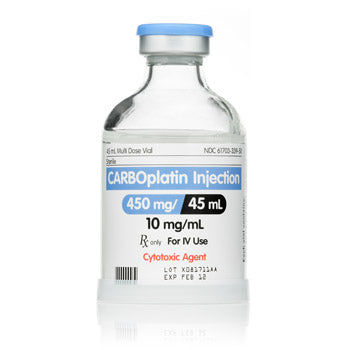
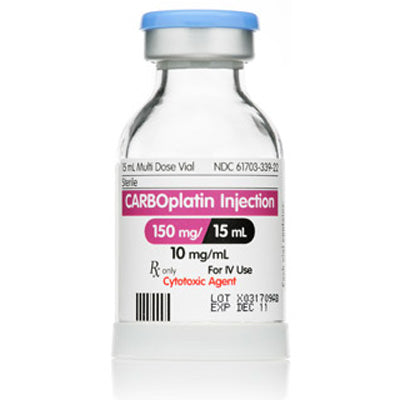
Carboplatin Injection 450 mg / 45 mL Multi-dose Vial 45 mL, Preservative Free (RX)

SKU 61703-0339-50
Sold out
Original price $ 189.95
Current price $ 129.00
Out of stock
Non-Returnable
Fast Delivery
Fast Delivery
24/7 Support
24/7 Support
No Returns
No Returns
Hospital Grade
Hospital Grade
Free Shipping on orders above $100
Payment Secure transaction
Packaging Ships in product packaging
Service-Disabled Veteran-Owned Small Business
Located in Adirondack Mountains in NY
Family Owned Business 2002
Sold out
Original price $ 189.95
Current price $ 129.00
Free Shipping on orders above $100
Payment Secure transaction
Packaging Ships in product packaging
Carboplatin Injection 450 mg / 45 mL Multi-dose Vial 45 mL, Preservative Free (RX)
$ 189.95 $ 129.00
Description

Carboplatin Injection 450 mg/45 mL (Multi-dose vial, Preservative-Free)

Carboplatin injection is a platinum-based chemotherapy (antineoplastic) drug. It is supplied as a sterile, preservative-free aqueous solution (10 mg carboplatin per mL) in a multi-dose vial. Each 45 mL vial contains 450 mg of carboplatin and 10 mg mannitol per mL (mannitol is an inert stabilizer). The solution is colorless to pale yellow and is formulated for intravenous use (no preservatives are added).

Uses:

Carboplatin is primarily used to treat ovarian cancer. It is indicated for the first-line (initial) treatment of advanced ovarian carcinoma in established combination with other chemotherapeutic agents (for example, carboplatin plus cyclophosphamide). It is also indicated for palliative treatment of recurrent ovarian cancer in patients who have received prior chemotherapy (including those who relapsed after cisplatin therapy). (In practice, carboplatin is often given with other agents such as paclitaxel in gynecologic cancers.) Physicians may also use carboplatin off-label for other tumors (e.g. lung, head and neck, etc.), but the main approved use is ovarian carcinoma.

How to Use:

Carboplatin injection is given by slow intravenous infusion under healthcare supervision. The drug is typically infused over at least 15 minutes (often longer). Treatment cycles are usually repeated every 3–4 weeks, as determined by patient response and blood counts. The dose is personalized based on body surface area and kidney function, often calculated by the Calvert formula: dose (mg) = AUC × (GFR + 25), where AUC is the target area-under-curve. Carboplatin solution is typically further diluted in IV fluid (for example, 5% dextrose or normal saline) for infusion. Since no preservative is present, the prepared solution should be used within 8 hours of dilution and any unused portion discarded. (Unlike cisplatin, routine hydration or forced diuresis is generally not required during carboplatin administration 

Carboplatin vs Cisplatin

  • Mechanism: Both carboplatin and cisplatin are platinum(II) coordination compounds that form DNA cross-links and inhibit DNA synthesis in cancer cells. Carboplatin is a derivative of cisplatin with similar action but different side-effect profiles.

  • Efficacy: In ovarian cancer trials, carboplatin (with cyclophosphamide) achieved survival outcomes equivalent to cisplatin combinations. This means carboplatin is generally as effective as cisplatin for that indication.

  • Toxicity differences: Carboplatin causes less kidney (nephro-) and nerve (neuro-) toxicity than cisplatin. Cisplatin is highly nephrotoxic and emetogenic (causes severe nausea/vomiting), whereas carboplatin has milder kidney effects and is better tolerated (causing less nausea). Conversely, carboplatin produces more bone marrow suppression (especially thrombocytopenia) than cisplatin. For example, treatment with carboplatin often requires careful monitoring of blood counts and may cause significant anemia or bleeding risk, while cisplatin causes these effects to a lesser extent. Carboplatin’s peripheral neuropathy and hearing effects are also generally milder than those of cisplatin.

Side Effects

  • Hematologic: The most common toxic effect is bone marrow suppression. Carboplatin frequently causes anemia, leukopenia, and thrombocytopenia. This can lead to fatigue, infection or bleeding; blood counts must be checked before each cycle. (In fact, myelosuppression is dose-limiting with carboplatin.)

  • Gastrointestinal: Nausea and vomiting are fairly common (though typically less severe than with cisplatin). Diarrhea and loss of appetite (anorexia) may also occur.

  • Neurologic: Peripheral neuropathy (tingling, numbness or burning in the hands and feet) can occur. Notably, the incidence of serious neuropathy is relatively low, but risk increases with cumulative doses or prior cisplatin use.

  • Hair and General: Temporary hair loss (alopecia) is possible. Other common effects include fatigue and general weakness.

  • Hypersensitivity: Allergic (hypersensitivity) reactions can occur, sometimes acutely during infusion. Symptoms range from mild rash to severe anaphylaxis (hives, difficulty breathing, swelling of face/lips). Monitoring during infusion is important.

  • Renal/Ototoxicity: Although less than with cisplatin, carboplatin can still affect kidneys and hearing. Mild kidney function changes are common (↑ BUN/creatinine in some patients) and ~25% incidence of nephrotoxicity has been reported. Hearing impairment (tinnitus or hearing loss) occurs in a minority of patients (e.g. ~15%). Electrolyte disturbances (↓Mg, ↓K) may also occur.

  • Other: Carboplatin may also cause elevated liver enzymes, fever, and local injection-site reactions. Patients are usually given antiemetic and other supportive medications to manage side effects.

Always follow the prescribing information and your medical team’s instructions. This summary is not exhaustive; patients should consult their oncologist or pharmacist for personalized advice on carboplatin therapy.

Brand: Pfizer Hospira
Size: 450mg / 45 mL
NDC: 61703-0339-50
UPC: 361703-339508

Buy Carboplatin for Injection 450mg / 45 mL online at Mountainside Medical Equipment.

Description

Carboplatin Injection 450 mg/45 mL (Multi-dose vial, Preservative-Free)

Carboplatin injection is a platinum-based chemotherapy (antineoplastic) drug. It is supplied as a sterile, preservative-free aqueous solution (10 mg carboplatin per mL) in a multi-dose vial. Each 45 mL vial contains 450 mg of carboplatin and 10 mg mannitol per mL (mannitol is an inert stabilizer). The solution is colorless to pale yellow and is formulated for intravenous use (no preservatives are added).

Uses:

Carboplatin is primarily used to treat ovarian cancer. It is indicated for the first-line (initial) treatment of advanced ovarian carcinoma in established combination with other chemotherapeutic agents (for example, carboplatin plus cyclophosphamide). It is also indicated for palliative treatment of recurrent ovarian cancer in patients who have received prior chemotherapy (including those who relapsed after cisplatin therapy). (In practice, carboplatin is often given with other agents such as paclitaxel in gynecologic cancers.) Physicians may also use carboplatin off-label for other tumors (e.g. lung, head and neck, etc.), but the main approved use is ovarian carcinoma.

How to Use:

Carboplatin injection is given by slow intravenous infusion under healthcare supervision. The drug is typically infused over at least 15 minutes (often longer). Treatment cycles are usually repeated every 3–4 weeks, as determined by patient response and blood counts. The dose is personalized based on body surface area and kidney function, often calculated by the Calvert formula: dose (mg) = AUC × (GFR + 25), where AUC is the target area-under-curve. Carboplatin solution is typically further diluted in IV fluid (for example, 5% dextrose or normal saline) for infusion. Since no preservative is present, the prepared solution should be used within 8 hours of dilution and any unused portion discarded. (Unlike cisplatin, routine hydration or forced diuresis is generally not required during carboplatin administration 

Carboplatin vs Cisplatin

  • Mechanism: Both carboplatin and cisplatin are platinum(II) coordination compounds that form DNA cross-links and inhibit DNA synthesis in cancer cells. Carboplatin is a derivative of cisplatin with similar action but different side-effect profiles.

  • Efficacy: In ovarian cancer trials, carboplatin (with cyclophosphamide) achieved survival outcomes equivalent to cisplatin combinations. This means carboplatin is generally as effective as cisplatin for that indication.

  • Toxicity differences: Carboplatin causes less kidney (nephro-) and nerve (neuro-) toxicity than cisplatin. Cisplatin is highly nephrotoxic and emetogenic (causes severe nausea/vomiting), whereas carboplatin has milder kidney effects and is better tolerated (causing less nausea). Conversely, carboplatin produces more bone marrow suppression (especially thrombocytopenia) than cisplatin. For example, treatment with carboplatin often requires careful monitoring of blood counts and may cause significant anemia or bleeding risk, while cisplatin causes these effects to a lesser extent. Carboplatin’s peripheral neuropathy and hearing effects are also generally milder than those of cisplatin.

Side Effects

  • Hematologic: The most common toxic effect is bone marrow suppression. Carboplatin frequently causes anemia, leukopenia, and thrombocytopenia. This can lead to fatigue, infection or bleeding; blood counts must be checked before each cycle. (In fact, myelosuppression is dose-limiting with carboplatin.)

  • Gastrointestinal: Nausea and vomiting are fairly common (though typically less severe than with cisplatin). Diarrhea and loss of appetite (anorexia) may also occur.

  • Neurologic: Peripheral neuropathy (tingling, numbness or burning in the hands and feet) can occur. Notably, the incidence of serious neuropathy is relatively low, but risk increases with cumulative doses or prior cisplatin use.

  • Hair and General: Temporary hair loss (alopecia) is possible. Other common effects include fatigue and general weakness.

  • Hypersensitivity: Allergic (hypersensitivity) reactions can occur, sometimes acutely during infusion. Symptoms range from mild rash to severe anaphylaxis (hives, difficulty breathing, swelling of face/lips). Monitoring during infusion is important.

  • Renal/Ototoxicity: Although less than with cisplatin, carboplatin can still affect kidneys and hearing. Mild kidney function changes are common (↑ BUN/creatinine in some patients) and ~25% incidence of nephrotoxicity has been reported. Hearing impairment (tinnitus or hearing loss) occurs in a minority of patients (e.g. ~15%). Electrolyte disturbances (↓Mg, ↓K) may also occur.

  • Other: Carboplatin may also cause elevated liver enzymes, fever, and local injection-site reactions. Patients are usually given antiemetic and other supportive medications to manage side effects.

Always follow the prescribing information and your medical team’s instructions. This summary is not exhaustive; patients should consult their oncologist or pharmacist for personalized advice on carboplatin therapy.

Brand: Pfizer Hospira
Size: 450mg / 45 mL
NDC: 61703-0339-50
UPC: 361703-339508

Buy Carboplatin for Injection 450mg / 45 mL online at Mountainside Medical Equipment.

Get Notified When Back in Stock