


Calcium Chloride Injection by International Medication Systems
-
 Sale 34%
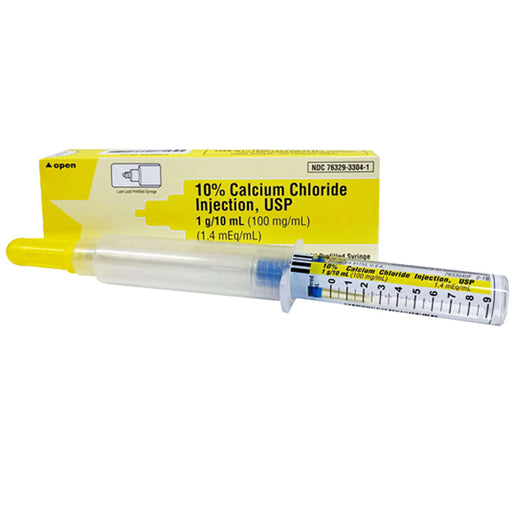
Calcium Chloride Prefilled Syringe 10%, 1 gram/10mL (100mg/mL) (Rx)
Original price $ 29.95Current price $ 19.85

Calcium Chloride Injection
Calcium chloride injection is a sterile, concentrated solution of calcium chloride (CaCl₂) given intravenously as a rapid source of calcium. It typically comes as a 10% solution (10 mL ampules), where each 10 mL contains roughly 270–300 mg of elemental calcium. Because of its high calcium content, calcium chloride injection delivers about three times more calcium per volume than the same strength of calcium gluconate. This makes it a very potent calcium supplement, used only in acute or emergency settings. (By contrast, routine calcium supplementation is usually done with oral calcium or the less concentrated calcium gluconate injection.)
Calcium Chloride Injection (IV) is a powerful, fast-acting hospital-grade medication used for critical electrolyte replacement, life-threatening hypocalcemia, cardiac resuscitation, acute hyperkalemia, calcium channel blocker overdose, and magnesium toxicity. Trusted by hospitals, emergency rooms, ICU teams, and paramedics worldwide, Calcium Chloride Injection delivers immediate and reliable results during severe medical emergencies. Available in sterile glass vials and pre-filled syringes, this injectable solution is a must-have for crash carts, advanced cardiac life support (ACLS) protocols, and critical care settings.
Purpose
Calcium Chloride Injection is formulated to rapidly restore critical calcium levels, stabilize cardiac function, and counteract life-threatening disturbances in emergency care. This injection provides essential support in acute cardiovascular events, toxicology, and severe metabolic imbalances.
Calcium Chloride Injection Uses
- Acute Hypocalcemia: Fast correction of symptomatic, severe calcium deficiency.
- Cardiac Resuscitation: First-line intervention for ventricular fibrillation, asystole, and electromechanical dissociation (EMD) during advanced cardiac life support (ACLS).
- Hyperkalemia: Efficient reversal of the cardiac toxic effects of life-threatening hyperkalemia.
- Calcium Channel Blocker Overdose: Emergency antidote for accidental or intentional overdose of cardiac medications such as verapamil, diltiazem, or amlodipine.
- Magnesium Toxicity: Antagonizes severe hypermagnesemia (e.g., magnesium sulfate overdose).
- Blood Transfusion Reactions: Prevents hypocalcemia secondary to rapid citrate transfusions in critical care.
- Electrolyte Imbalance: Essential intervention in intensive care units for immediate calcium replenishment.
Calcium chloride injection is used in situations that require a rapid increase in blood calcium or protection of the heart from electrolyte disturbances. Typical indications include:
- Severe hypocalcemia: In acute, life-threatening low blood calcium (for example after extensive blood transfusion, sudden hypoparathyroidism, or post-thyroidectomy tetany), IV calcium chloride can quickly raise serum calcium levels. It is favored when immediate correction is needed (telated as “acute and severe” hypocalcemia).
- Hyperkalemia emergencies: When blood potassium is dangerously high (especially >6.5 mmol/L) or if ECG changes appear (peaked T waves, widened QRS, arrhythmias), calcium chloride is given to stabilize the heart’s conduction system. The injected calcium antagonizes the cardiotoxic effects of potassium and reduces the risk of fatal arrhythmias.
- Magnesium overdose (hypermagnesemia): In cases of excessive magnesium (such as from IV magnesium sulfate therapy in eclampsia or poisoning), calcium chloride counteracts magnesium’s effects on the muscles and heart. It can reverse respiratory depression and cardiac slowing caused by too much magnesium.
- Other critical uses: It may also be used (often as part of advanced life support) to treat calcium channel blocker overdose or severe citrate toxicity during massive transfusion, since it increases extracellular calcium available to the heart and muscles.
Types & Formulations
- IV Calcium Chloride Injection: Standard for hospital emergencies and ACLS protocols.
- Pre-filled Emergency Syringes: For immediate bedside or field administration.
- Single-dose Vials/Ampules: Minimize contamination risk—ideal for critical care.
- Concentrated Solution: Requires dilution for peripheral IV to prevent tissue necrosis.
Popular Brands
- Calcium Chloride Injection (Hospira/Pfizer)
- Cardinal Health Calcium Chloride
- Fresenius Kabi Calcium Chloride
- Sandoz Calcium Chloride
- American Regent Calcium Chloride
Strengths
- 10% Calcium chloride solution (100 mg/mL) – The most common clinical concentration
- Typical adult emergency dose: 1,000 mg (10 mL of 10% solution)
- Pediatric and titrated doses available for precise management
Precautions
- Administer by Healthcare Professionals Only: Strictly for IV use by trained personnel. Prefer central line administration; extreme caution with peripheral lines.
- Tissue Extravasation Risk: May cause severe necrosis or tissue injury if injected outside the vein—monitor site closely.
- Cardiac Monitoring: Continuous ECG required during administration due to arrhythmia risk.
- Contraindications: Renal or cardiac impairment, ventricular fibrillation, hypercalcemia.
- Drug Interactions: Incompatible with phosphates, carbonates, or sulfates in IV lines; do not mix with other drugs.
- Rapid Administration Risks: Never administer rapid IV push except during critical cardiac arrest; slow infusion recommended in non-arrest situations.
- Proper Storage: Keep at controlled room temperature and out of direct sunlight.
Calcium chloride injection is a high-potency IV calcium preparation used for acute calcium replacement and cardiac stabilization in emergency settings. Because of its potency and risks, it is administered only under medical supervision and appropriate monitoring.