
Dexamethasone Injections, Tablets, Oral Solutions & Ear Drops to prescription drug
Dexamethasone is a corticosteroid medication (a potent steroid) that reduces inflammation and suppresses the immune response. It comes in several formulations to treat different conditions. The main forms of dexamethasone are injections, tablets, oral solutions, and ear drops.
Dexamethasone is a potent, FDA-approved corticosteroid trusted by hospitals, clinics, and healthcare professionals for its powerful anti-inflammatory, immunosuppressive, and anti-allergic actions. Available as injections, tablets, oral solutions, and ear drops, dexamethasone is used to rapidly treat a broad range of acute and chronic conditions including severe allergic reactions, asthma and COPD exacerbations, autoimmune diseases, endocrine emergencies, cancer therapy support, meningitis, ear inflammation, and critical care (especially in COVID-19 and cerebral edema).
Purpose
- Suppress Inflammation & Immune Response: Reduces redness, swelling, pain, and hyperactive immunity in acute and chronic disorders.
- Emergency Relief: Delivers rapid response in allergic reactions, severe asthma, adrenal crisis, and shock.
- Adjunct Therapy in Cancer & Chemotherapy: Prevents/treats nausea, brain swelling, and immune complications.
- Ear Infection & Otitis Externa (Ear Drops): Quickly controls inflammation, pain, and swelling in the outer ear canal.
Uses
- Severe Allergic Reactions & Anaphylaxis
- Asthma & COPD Exacerbations
- Autoimmune Flare-ups (RA, Lupus, IBD)
- Endocrine Emergencies (Addisonian/Adrenal Insufficiency)
- Chemotherapy-Induced Nausea and Vomiting
- Cerebral Edema (Brain Swelling), Meningitis
- COVID-19 Severe Illness/ARDS (Per Clinical Guidelines)
- Skin Disease (Pemphigus, Eczema, Dermatitis)
- Ophthalmic/Ear Inflammation (Otitis Externa, Post-surgical care)
- Pre/Postoperative Inflammation Control
Types & Popular Brands
- Dexamethasone Injection: IV (intravenous) or IM (intramuscular) for emergency/critical care
- Dexamethasone Tablets: Oral anti-inflammatory for daily or short-course therapy
- Dexamethasone Oral Solution: Liquid form for pediatrics/elderly/dysphagia
- Dexamethasone Ear Drops/Otic Solution: Local treatment for external ear conditions
Popular Brands:
- Decadron® (Merck)
- DexPak® (Pak, taper-dose tablets)
- Maxidex® (eye/ear solution, Alcon)
- Hexadrol®, Ozurdex® (implants for ophthalmic use)
- Hospira (Pfizer)
- West-Ward, Hikma, Fresenius Kabi, Sandoz, Baxter (injections/generics)
- Cipla Dexamethasone, Mylan/Viatris, and FDA-approved generics
Strengths
- Injection: 4 mg/mL, 10 mg/mL—available in 1 mL, 2 mL, 5 mL, 10 mL, 30 mL vials
- Tablets: 0.5 mg, 0.75 mg, 1 mg, 2 mg, 4 mg, 6 mg, 8 mg
- Oral Solution: 0.5 mg/5 mL, 1 mg/mL
- Ear Drops/Otic: 0.1% solution (Maxidex or dexamethasone sodium phosphate)
Precautions
- Administration: IV/IM and pediatric dosing by trained professionals only. Follow prescribed dose and regimen closely.
- Monitor for Side Effects: Watch for increased blood sugar, infection risk, insomnia, mood swings, hypertension, GI upset, or delayed wound healing.
- Long-Term Use Risk: Prolonged use may cause adrenal suppression, osteoporosis, muscle weakness, Cushingoid features—dose should be tapered under medical supervision.
- Drug Interactions: Check with a doctor before combining with blood thinners, diabetes medications, antifungals, vaccines.
- Pregnancy & Pediatrics: Use only if benefits outweigh risks; monitor growth and infection risk in children.
- Live Vaccines: Avoid during systemic steroid courses.
- Allergy Alert: Report any known steroid or dexamethasone allergies.
- Ear Drop Use: For external ear only—never use if ear drum is perforated.
Choose trusted, FDA-approved Dexamethasone Injections, Tablets, Oral Solutions & Ear Drops for rapid and reliable relief of severe inflammation, allergies, autoimmune flares, critical illness, and ear infections. Shop Decadron® and top generics in all strengths and forms—order online or consult your healthcare provider for essential hospital and clinic steroid therapy!
-
 Sale 29%
Original price $ 69.95Current price $ 49.50
Sale 29%
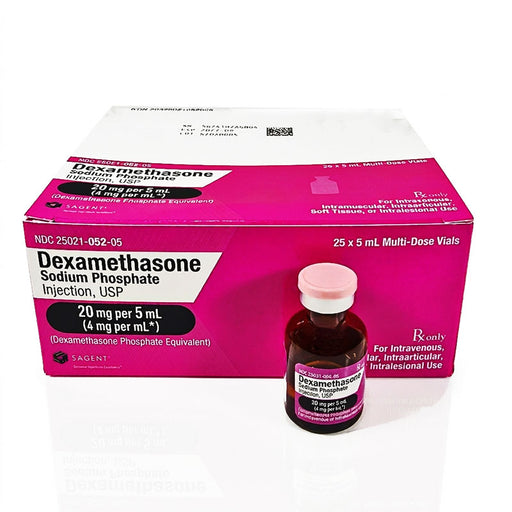
Original price $ 69.95Current price $ 49.50Dexamethasone Injection (Sodium Phosphate) 20 mg/5 mL Multiple-Dose Vials 5 mL x 25/Box (RX)
Dexamethasone injection (as dexamethasone sodium phosphate) is a type of corticosteroid medication – essentially a synthetic glucocorticoid steroid...
View full details
Dexamethasone is a corticosteroid medication (a potent steroid) that reduces inflammation and suppresses the immune response. It comes in several formulations to treat different conditions. The main forms of dexamethasone are injections, tablets, oral solutions, and ear drops.
Dexamethasone is a potent, FDA-approved corticosteroid trusted by hospitals, clinics, and healthcare professionals for its powerful anti-inflammatory, immunosuppressive, and anti-allergic actions. Available as injections, tablets, oral solutions, and ear drops, dexamethasone is used to rapidly treat a broad range of acute and chronic conditions including severe allergic reactions, asthma and COPD exacerbations, autoimmune diseases, endocrine emergencies, cancer therapy support, meningitis, ear inflammation, and critical care (especially in COVID-19 and cerebral edema).
Purpose
- Suppress Inflammation & Immune Response: Reduces redness, swelling, pain, and hyperactive immunity in acute and chronic disorders.
- Emergency Relief: Delivers rapid response in allergic reactions, severe asthma, adrenal crisis, and shock.
- Adjunct Therapy in Cancer & Chemotherapy: Prevents/treats nausea, brain swelling, and immune complications.
- Ear Infection & Otitis Externa (Ear Drops): Quickly controls inflammation, pain, and swelling in the outer ear canal.
Uses
- Severe Allergic Reactions & Anaphylaxis
- Asthma & COPD Exacerbations
- Autoimmune Flare-ups (RA, Lupus, IBD)
- Endocrine Emergencies (Addisonian/Adrenal Insufficiency)
- Chemotherapy-Induced Nausea and Vomiting
- Cerebral Edema (Brain Swelling), Meningitis
- COVID-19 Severe Illness/ARDS (Per Clinical Guidelines)
- Skin Disease (Pemphigus, Eczema, Dermatitis)
- Ophthalmic/Ear Inflammation (Otitis Externa, Post-surgical care)
- Pre/Postoperative Inflammation Control
Types & Popular Brands
- Dexamethasone Injection: IV (intravenous) or IM (intramuscular) for emergency/critical care
- Dexamethasone Tablets: Oral anti-inflammatory for daily or short-course therapy
- Dexamethasone Oral Solution: Liquid form for pediatrics/elderly/dysphagia
- Dexamethasone Ear Drops/Otic Solution: Local treatment for external ear conditions
Popular Brands:
- Decadron® (Merck)
- DexPak® (Pak, taper-dose tablets)
- Maxidex® (eye/ear solution, Alcon)
- Hexadrol®, Ozurdex® (implants for ophthalmic use)
- Hospira (Pfizer)
- West-Ward, Hikma, Fresenius Kabi, Sandoz, Baxter (injections/generics)
- Cipla Dexamethasone, Mylan/Viatris, and FDA-approved generics
Strengths
- Injection: 4 mg/mL, 10 mg/mL—available in 1 mL, 2 mL, 5 mL, 10 mL, 30 mL vials
- Tablets: 0.5 mg, 0.75 mg, 1 mg, 2 mg, 4 mg, 6 mg, 8 mg
- Oral Solution: 0.5 mg/5 mL, 1 mg/mL
- Ear Drops/Otic: 0.1% solution (Maxidex or dexamethasone sodium phosphate)
Precautions
- Administration: IV/IM and pediatric dosing by trained professionals only. Follow prescribed dose and regimen closely.
- Monitor for Side Effects: Watch for increased blood sugar, infection risk, insomnia, mood swings, hypertension, GI upset, or delayed wound healing.
- Long-Term Use Risk: Prolonged use may cause adrenal suppression, osteoporosis, muscle weakness, Cushingoid features—dose should be tapered under medical supervision.
- Drug Interactions: Check with a doctor before combining with blood thinners, diabetes medications, antifungals, vaccines.
- Pregnancy & Pediatrics: Use only if benefits outweigh risks; monitor growth and infection risk in children.
- Live Vaccines: Avoid during systemic steroid courses.
- Allergy Alert: Report any known steroid or dexamethasone allergies.
- Ear Drop Use: For external ear only—never use if ear drum is perforated.
Choose trusted, FDA-approved Dexamethasone Injections, Tablets, Oral Solutions & Ear Drops for rapid and reliable relief of severe inflammation, allergies, autoimmune flares, critical illness, and ear infections. Shop Decadron® and top generics in all strengths and forms—order online or consult your healthcare provider for essential hospital and clinic steroid therapy!
Types of Dexamethasone
-
Dexamethasone Injections: These are liquid forms of dexamethasone given by injection, either into a vein (IV) or muscle (IM), usually by a healthcare professional. Injectable dexamethasone (often as dexamethasone sodium phosphate) is used when a fast or high-dose effect is needed. For example, in hospitals it’s given for severe allergic reactions, asthma attacks, croup in children, or shock, and to reduce inflammation in critical situations (like swelling in the brain due to trauma, surgery, or tumors). It’s also used to prevent nausea in chemotherapy, treat adrenal insufficiency crises, or during severe COVID-19 pneumonia. In general, injection form is chosen for acute, serious conditions because it acts quickly and doesn’t require the patient to swallow a pill. The effect is systemic (whole-body), just like tablets, but via a route that’s useful if the patient can’t take oral meds or needs a rapid onset of action.
-
Dexamethasone Tablets: These are oral pills that you swallow. Tablets (like the brand Decadron or generic dexamethasone) are prescribed for a wide range of chronic or sub-acute conditions that benefit from steroids. For instance, doctors prescribe dexamethasone tablets to relieve inflammation in conditions such as asthma, severe allergies, rheumatoid arthritis, lupus, inflammatory bowel disease, and certain skin conditions. They’re also used in the management of some cancers (to reduce swelling or as part of chemotherapy protocols to prevent nausea) and to treat endocrine disorders like adrenal insufficiency. Dexamethasone tablets come in different strengths (common doses like 0.5mg, 4mg, etc.). Because it’s a potent steroid, tablets are usually taken in small doses, and sometimes in tapering courses (gradually reducing the dose) to avoid withdrawal effects. Oral dexamethasone has systemic effects, meaning it affects the whole body by circulating in the bloodstream, reducing inflammation wherever it’s occurring. Patients taking dexamethasone tablets typically need to follow the dosing schedule carefully and not stop abruptly (to allow the body to adjust).
-
Dexamethasone Oral Solution: This is a liquid form of dexamethasone that is taken by mouth (swallowed), containing the drug dissolved in a flavored liquid. The oral solution works the same way as tablets (systemically) and is used for the same types of conditions – such as inflammatory diseases, asthma exacerbations, croup, autoimmune conditions, etc. The advantage of the solution is that it’s easier to measure out lower or customized doses, which is especially useful in children or people who have difficulty swallowing pills.. For example, in a child with croup (an airway inflammation), a doctor might prescribe a one-time dose of dexamethasone oral solution (mixed in juice) to reduce airway swelling and help the child breathe easier. The oral liquid is also used in adults when fine adjustments in dose are needed or when a patient cannot swallow tablets. Like tablets, the liquid should be taken as directed (often with food to prevent stomach upset). It’s typically provided with a measuring dropper or cup to ensure accurate dosing. Essentially, dexamethasone oral solution is just dexamethasone in a drinkable form, offering flexibility in dosing but delivering the same therapeutic effects as the tablet.
-
Dexamethasone Ear Drops: These are a topical form of dexamethasone used in the ear (otic use). Dexamethasone ear drops are typically prescribed to reduce inflammation in the ear canal or middle ear. They’re commonly used for conditions like otitis externa (outer ear infection, also known as “swimmer’s ear”) or sometimes after ear surgery, and often they come combined with an antibiotic in the same solution. For example, ciprofloxacin/dexamethasone otic drops (brand name Ciprodex) contain an antibiotic to treat infection and dexamethasone to decrease swelling, redness, and pain inside the ear. The steroid component (dexamethasone) in ear drops helps relieve the symptoms of inflammation – it can reduce ear canal itching, swelling, and pressure that cause discomfort. Ear drops are applied directly into the ear canal; the patient tilts their head and places the prescribed number of drops in the affected ear. Because this form is topical, its effects are local to the ear (it’s not for systemic issues and won’t significantly affect the rest of the body). Dexamethasone ear drops should only be used in the ear and as directed (usually a few drops, a few times a day). They are not used if the eardrum is perforated unless specifically prescribed, and typically not used for fungal ear infections. in such cases, steroid drops could worsen a fungal infection). Always follow the instructions on how to instill ear drops properly (keeping the ear tilted, etc.) for the medication to work effectively.
Summary: All these are forms of the same medication, dexamethasone, but tailored to different routes of administration:
- Injection is for rapid, intensive treatment delivered by healthcare professionals (IV/IM).
- Tablets are for systemic treatment via the digestive system, convenient for ongoing therapy.
- Oral solution is a liquid by mouth for those needing flexible dosing (commonly pediatric or those who can’t take pills).
- Ear drops are a localized treatment for ear inflammation.
Dexamethasone Dosage
Dexamethasone is available in multiple forms – injections, tablets, oral solutions, and ear drops – each with specific dosage strengths and package sizes. Below is a breakdown of each form and typical dosages/sizes:
-
Dexamethasone Injections:
- Concentration: Often supplied as dexamethasone sodium phosphate solution. A common concentration is 4 mg/mL. For example, hospitals frequently use 1 mL ampoules or vials containing 4 mg of dexamethasone (which is 4 mg/mL solution). Another common presentation is a 2 mL vial containing 8 mg (4 mg/mL) or larger multi-dose vials (e.g. 5 mL vial at 4 mg/mL, totaling 20 mg). In some regions, dexamethasone injections are available at 2 mg/mL or 8 mg/mL concentrations.
- Dosage: The dose varies widely depending on the condition being treated. For severe inflammatory or allergic reactions, adult doses might range from 4 mg to 20 mg IV/IM (which could be 1 to 5 mL of a 4 mg/mL solution) given as a one-time dose or repeated as needed. In critical cases like cerebral edema, higher doses (e.g., 50 mg – 100 mg IV) may be used initially, then tapered. Pediatric dosing is weight-based (e.g., 0.5 mg/kg for croup, given as a one-time IM injection). The key is that injectable dexamethasone allows fine-tuned dosing; healthcare providers will draw up the needed volume (mL) from the vial to administer the prescribed milligram dose.
- Packaging: Typically in sterile glass ampoules or vials. Single-dose ampoules (1 mL or 2 mL) are common for single injections. Multi-dose vials (e.g. 5 mL or 10 mL vials) might be available but are less common because dexamethasone is often used single-dose. Veterinary versions exist too (e.g., 50 mL vials of 2 mg/mL for large animals), but in human medicine the volumes are smaller.
-
Dexamethasone Tablets:
- Strengths: Dexamethasone is very potent, so tablet strengths are relatively low in milligrams. Common tablet strengths include 0.5 mg (a frequently used low dose), 0.75 mg, 1 mg, 1.5 mg, 2 mg, 4 mg, and 6 mg. Some references also mention a very low 0.25 mg strength, but this is not universally available; the 0.5 mg is generally the smallest widely available strength in many countries.) Higher-dose tablets like 8 mg are less common, since if doses above 6-8 mg are needed, often multiple lower-dose tablets are taken or an injection/solution is used.
- Dosage: The prescribed dose depends on the condition. For example, a typical dose might be 4 mg by mouth per day for certain conditions, or a higher short-term dose like 8-16 mg/day for severe flare-ups, then tapered down. In some protocols (like chemotherapy nausea prevention), doses like 8 mg or 12 mg may be given a few times on specific days. Dexamethasone is sometimes given as a “dose pack” with a schedule (like starting high and decreasing each day over a week). For instance, a common taper might involve 6 tablets of 0.5 mg (total 3 mg) on day one, then decreasing the number of tablets each day. Always follow the exact dosing schedule the doctor provides, as it can vary widely (e.g., 0.5 – 2 mg daily for chronic conditions vs. 10-20 mg daily for a short period in acute situations).
- Packaging: Tablets typically come in blister packs or bottles. The 0.5 mg tablets are often used in taper packs (bottles of 100 are common for pharmacies to dispense). The 4 mg tablets are popular in some regions for convenience (sometimes bright yellow, known as “Decadron 4 mg”). In practice, doctors choose a combination of strengths to make up the needed dose (for example, prescribing four 0.5 mg tablets to make a 2 mg dose, or using one 4 mg tablet for 4 mg dose).
-
Dexamethasone Oral Solution:
- Concentration: A common formulation is 0.5 mg per 5 mL (equivalent to 0.1 mg/mL). This is sometimes called “dexamethasone elixir” and is often flavored for palatability (especially for children). Some markets have a slightly stronger concentration, like 1 mg per mL solutions (which would be 5 mg per 5 mL) to allow giving smaller volumes for larger doses. It’s important to check the label since different countries or manufacturers have different strengths for the liquid.
- Dosage: The oral solution is used when precise dosing is needed or for those who cannot swallow pills. For example, in pediatric croup, a one-time dose might be 0.6 mg per kg; using the 0.5 mg/5 mL solution, a 15 kg child would need ~9 mg, which would be 90 mL of the solution – so often a more concentrated solution (like 1 mg/mL) is preferred for higher doses to avoid a large volume. In general, the dosage (in mg) will match what a tablet dose would be for that indication; it’s just delivered in liquid form. So, if an adult needs 4 mg, they might take 40 mL of a 0.1 mg/mL solution (which is cumbersome) or 4 mL of a 1 mg/mL solution. Pediatric doses are usually measured with an oral syringe – for example, 2 mg dose would be 20 mL of 0.1 mg/mL solution.
- Packaging: Often comes in bottles of 100 mL or 150 mL for the 0.5 mg/5 mL strength, sometimes with a child-resistant cap and an included measuring device (dropper or oral syringe). Higher concentration solutions might come in smaller bottles (e.g., 30 mL or 50 mL) since each mL contains more drug. Because dexamethasone is usually given as short courses, one bottle is often enough for a course of therapy.
-
Dexamethasone Ear Drops:
- Concentration: Dexamethasone ear drops are usually formulated as 0.1% dexamethasone (which is 1 mg of dexamethasone per 1 mL of solution). They are very often combined with an antibiotic for treating ear infections and inflammation. A common product, for example, is ciprofloxacin 0.3% + dexamethasone 0.1% otic suspension (brand name Ciprodex in some countries). In that combo, every mL contains 3 mg of ciprofloxacin and 1 mg of dexamethasone. Some other ear drop combinations include framycetin–gramicidin–dexamethasone (known as Sofradex) where dexamethasone is also around 0.05–0.1%. Pure dexamethasone ear drop (without antibiotic) is less common, but if available, would likely be in the 0.1% concentration range as well.
- Dosage: Ear drops are dosed by number of drops into the affected ear. Typically, the dose might be 3 to 4 drops in the ear, 2 to 4 times daily (for example, Ciprodex dosing for otitis media with tympanostomy tubes is 4 drops twice daily). The exact number of drops and frequency depends on the product and the condition. One drop of most ear solutions is about 0.05 mL. So if 4 drops are given, that’s roughly 0.2 mL of solution per dose, which at 1 mg/mL contains 0.2 mg dexamethasone per dose. Treatment usually lasts several days (commonly 7 days for an ear infection). It’s important to follow the prescription; even though the ear drops contain a steroid, the dosing is localized so much smaller than systemic doses.
- Packaging: Otic dexamethasone (often combo) drops come in small dropper bottles, typically 5 mL or 7.5 mL bottles (Ciprodex, for instance, is a 7.5 mL bottle). They have a dropper tip for easy instillation into the ear. These bottles are usually good for one course of therapy and should be discarded after completion (and definitely not shared between people). They should also be shaken if it’s a suspension (as in the ciprofloxacin/dexamethasone suspension) before use to ensure proper mixing.
Note on Equivalencies: Dexamethasone is about 6-7 times more potent than prednisone. So, for context, a 1 mg dexamethasone tablet is roughly equivalent to 6-7 mg of prednisone in anti-inflammatory effect. This is why the milligram strengths are relatively low.
Dexamethasone Common Strengths & Sizes:
- Injection: Commonly 4 mg/mL (e.g. 1 mL=4 mg; 2 mL=8 mg). Often provided in 1 mL or 2 mL ampoules. Multi-dose vials (e.g. 5 mL of 4 mg/mL) exist for hospital use.
- Tablets: 0.5 mg (very common), 0.75 mg, 1 mg, 1.5 mg, 2 mg, 4 mg, 6 mg tablets. Usually in bottles (e.g. 100 tablets) or in blister packs. Dosing is individualized, can range from <1 mg to >10 mg per day depending on need.
- Oral Solution: Frequently 0.5 mg/5 mL (0.1 mg/mL) in 100 mL bottles; some formulations 1 mg/mL in smaller bottles. Allows flexible dosing especially for children.
- Ear Drops: Dexamethasone 0.1% (often with an antibiotic) in 5-7.5 mL dropper bottles. Typical dose a few drops per ear, multiple times a day.
Always, the specific dosage (how many mg to take or how many drops to use) will be directed by the healthcare provider based on the condition being treated. The above strengths are what’s available commercially. Patients should use the exact form and strength prescribed to them (for example, not interchange an ear drop with an oral solution, or vice versa) and follow instructions for use for each form (swallow tablets or solution, inject only under guidance, place drops only in the ear, etc.). Each form is designed for a particular route of administration and concentration appropriate to that use.
Dexamethasone Side Effects
Dexamethasone is a powerful corticosteroid, and like all steroids it can cause a range of side effects. The side effects can vary depending on the dose, duration of treatment, and route of administration (injection, oral, ear drops). Generally, short-term or low-dose use causes fewer side effects, while long-term or high-dose use increases the risk of significant side effects. Below is an overview of common and serious side effects:
Common Side Effects (Short-Term or Low-Dose Use)
-
Increased Appetite and Weight Gain: Dexamethasone often makes people feel hungrier. Even on short courses, you might notice an increase in appetite. Over a longer term, this can lead to weight gain, and fat can redistribute in the body (sometimes causing a puffy face often called “moon face”). A healthy diet and exercise can help manage this, but it’s a very typical steroid effect.
-
Indigestion or Stomach Upset: Steroids can irritate the stomach lining, causing indigestion, stomach pain, nausea, or bloating. Taking dexamethasone with food or milk can help reduce this stomach irritation. Some people might also experience acid reflux or heartburn. If stomach pain is severe or if there’s any sign of bleeding (like black stools), you should contact a doctor, as steroids can contribute to ulcers especially if combined with NSAIDs.
-
Trouble Sleeping (Insomnia): Dexamethasone can make you feel alert or restless, especially if taken later in the day. It can disrupt your normal sleep-wake cycle. Many patients report difficulty falling asleep or staying asleep (insomnia) while on steroids. To minimize this, it’s usually recommended to take dexamethasone in the morning. so the drug levels taper off by bedtime. Also, practicing good sleep hygiene (no caffeine late in the day, relaxing before bed) is helpful.
-
Mood Changes and Irritability: Even short courses of dexamethasone can affect your mood and behavior. Some people feel more energetic or even euphoric, while others get anxious, irritable, or experience mood swings. You might feel unusually restless or have trouble concentrating. Occasionally, steroids cause short-term emotional ups and downs, like feeling overly happy one moment and agitated the next. These effects are usually reversible after the medication is tapered off. If mood changes are severe (such as depression or confusion), let your doctor know.
-
Facial Flushing and Sweating: Some people experience a warm, red flushed face after taking an oral dose or injection of dexamethasone. Increased sweating is also a reported side effect. These tend to be temporary and not harmful, but they can be uncomfortable or embarrassing when they occur.
-
Headache and Dizziness: Dexamethasone can sometimes cause mild headaches. Some individuals report feeling lightheaded or dizzy, especially when getting up quickly. Ensuring you stay hydrated and rise slowly from sitting/lying positions can help. If headaches are severe or persistent, consult a doctor (especially because steroids can raise blood pressure, which in turn can cause headaches).
-
Elevated Blood Sugar: Corticosteroids like dexamethasone raise blood glucose levels. In non-diabetic people, a short course might not cause noticeable symptoms, but in those susceptible or with existing diabetes, it can cause high blood sugar (steroid-induced hyperglycemia). You might notice increased thirst or urination if your blood sugar rises. Diabetics may need to monitor their blood sugar more closely; adjustments in insulin or other diabetic medications might be necessary during steroid therapy. This effect is dose-dependent – higher doses cause more significant blood sugar elevations.
-
Mild Swelling or Fluid Retention: You might observe some water retention, such as slight swelling in the ankles or feet, or simply feeling “puffier.” Steroids can cause the body to retain sodium and lose potassium, leading to edema (swelling). On short courses, this is usually minimal. Reducing salt intake can mitigate it.
-
Acne or Skin Changes: Steroids can trigger acne breakouts, even in adults who don’t normally get pimples. They also may cause the skin to become more oily. Some people get skin rashes or notice that cuts or insect bites take longer to heal while on dexamethasone. With short-term use, these skin effects are usually minor.
Serious Side Effects (Higher Doses or Long-Term Use)
These side effects are more likely if you take dexamethasone for an extended period (more than a few weeks) or at doses higher than the equivalent of 6 mg a day (approximately):
-
Suppression of Adrenal Glands (HPA Axis Suppression): Long-term dexamethasone can suppress your body’s natural cortisol production. The adrenal glands essentially go “to sleep” because the steroid is replacing their function. If dexamethasone is suddenly stopped after long use, your body might not immediately produce enough cortisol, leading to adrenal crisis. That’s why long courses are tapered off slowly to allow your adrenal glands to wake up. This suppression can also mean your body doesn’t mount a normal stress response; you might need extra steroids (as “stress dose”) if you become very ill while on chronic steroids.
-
Increased Infection Risk: Steroids dampen the immune system. Over time, this can make you more susceptible to infections or mask the signs of infection (because inflammation is suppressed). For example, wounds might not get as red or painful even if infected, or a typical fever might be lower. People on long-term dexamethasone need to be careful to avoid exposure to contagious illnesses like chickenpox or measles (if not immune), as steroids can make those infections more severe. Even a latent infection like tuberculosis could flare up under immune suppression. Always inform doctors that you’re on steroids if you get sick or are exposed to infection.
-
Osteoporosis and Bone Fractures: Chronic dexamethasone use can cause bone loss. Steroids interfere with calcium absorption and bone remodeling, leading to osteoporosis (thinning of bones). Over time, bones become more fragile and prone to fractures, especially in the spine or hips. Doctors might prescribe calcium and vitamin D supplements (or other medications like bisphosphonates) to those on long-term steroids to help protect bone density. Children on long-term steroids need monitoring of their bone growth.
-
Muscle Weakness (Steroid Myopathy): Long-term use can lead to muscle wasting and weakness, particularly in the upper arms and thighs. You might notice it becomes harder to climb stairs or lift heavy objects. This is a result of protein breakdown in muscles due to steroids. Regular gentle exercise, if approved by your doctor, can help reduce muscle loss.
-
Cushingoid Appearance: Prolonged high-dose steroid use can cause features of Cushing’s syndrome: a rounded “moon” face, fat deposition on the back of the neck/upper back (“buffalo hump”), and central obesity (weight gain mostly in the abdomen with thinner arms and legs). The skin may develop purple stretch marks (striae), and become thin and bruise easily (because steroids affect skin protein and capillaries).
-
Eye Problems: Long-term corticosteroids increase the risk of cataracts (clouding of the lens in the eye) and glaucoma (increased eye pressure). Regular eye exams are recommended if you stay on dexamethasone for an extended period. If you notice vision changes, blurriness, or eye pain, inform your doctor.
-
Stomach Ulcers and Bleeding: While short-term use can cause mild stomach upset, long-term use (especially at high doses) can lead to gastritis or peptic ulcers. The risk is higher if you also take NSAIDs (like ibuprofen, naproxen) or have a history of ulcers. Signs of a serious problem would include persistent stomach pain, black/tarry stools, or vomiting blood. Doctors may put long-term steroid patients on a medication to protect the stomach (like a proton pump inhibitor) prophylactically.
-
High Blood Pressure: Steroids can cause the body to retain fluid and salt, which may lead to an increase in blood pressure. If you’re on dexamethasone long-term, your blood pressure should be monitored. Lifestyle measures (low-salt diet, exercise) and possibly blood pressure medications might be needed if hypertension develops.
-
Psychiatric Effects: Higher doses or prolonged use can lead to more severe mood and psychiatric changes. This can include severe irritability, anxiety, depression, or even steroid-induced psychosis in rare cases. Some people experience confusion, memory issues, or hallucinations on high doses. It’s important for family and caregivers to watch for drastic changes in behavior or mood in someone on steroids and report them. Most of these psychiatric side effects are reversible once the dose is reduced or the drug is stopped, but they can be distressing and even dangerous (e.g., severe depression or mania) in the meantime.
-
Delayed Wound Healing and Skin Issues: Wounds, cuts, or sores may heal more slowly when you’re on steroids long-term, because inflammation is a part of the healing process and it’s being suppressed. The skin can become thin and fragile; you might bruise or tear your skin more easily even with minor trauma. There can also be chronic acne or development of fine hair on the face/body (steroid-induced hypertrichosis).
-
Growth Suppression in Children: In kids and adolescents, long-term dexamethasone can slow down growth. The medication can suppress growth hormone effects and bone growth, so pediatric patients on chronic steroids need their growth monitored closely. Doctors will use the smallest effective dose and consider alternate-day dosing if possible to minimize this effect.
Side Effects Specific to Certain Routes:
-
Injection Site Reactions: When dexamethasone is given by injection, possible immediate side effects include pain or redness at the injection site. Some people experience a brief metallic taste in the mouth or a flushing sensation shortly after an IV injection. If given into a joint (intra-articular injection), there can be post-injection flare pain or a rare risk of joint infection.
-
Oral (Tablets/Solution): The systemic side effects listed above (weight gain, mood changes, etc.) largely apply to oral use because the drug is absorbed systemically. One specific consideration: the oral solution sometimes contains alcohol or sweeteners, so it’s important to measure doses carefully and follow directions (especially for children). But side effects from the solution are the same as from tablets, since it’s the same medicine entering the bloodstream.
-
Ear Drops (Otic Use): Dexamethasone ear drops act mostly locally in the ear canal. Systemic side effects are very unlikely from ear drops, because little of the drug is absorbed into the bloodstream when used as directed in the ear. The main side effects of dexamethasone ear drops can be local irritation, such as ear itching, burning, or stinging right after putting the drops in. Sometimes people might taste the medication in the back of the throat if some of it goes through the Eustachian tube – this is usually just a mild aftertaste. If the ear drops are combined with an antibiotic (common for ear infections), side effects could include allergy to the antibiotic or fungal overgrowth in the ear if used for a long time (steroids can encourage fungal growth by suppressing local immune response). However, as long as ear drops are used for the short duration prescribed (typically 7-10 days), significant side effects are rare. If the ear canal skin is very inflamed, a bit more steroid might absorb, but still it’s a low amount. Important: Do not use steroid ear drops longer than recommended, as prolonged use theoretically could risk thinning the delicate skin in the ear canal or, if the eardrum isn’t intact, cause some systemic absorption or effects on the middle ear.
General Precautions:
It’s worth noting that not everyone experiences significant side effects. Short courses (just a few days) of dexamethasone often cause only mild effects, if any, for most people. The risk and severity of side effects increase with higher doses and longer duration of therapy. Doctors aim to use the lowest effective dose for the shortest time to mitigate these risks. If you are prescribed dexamethasone:
- Report any unusual or severe symptoms to your healthcare provider, such as vision changes, black stools, swelling in the legs, mood changes, or signs of infection (fever, persistent sore throat, etc.).
- Do not stop the medication suddenly if you’ve been on it for more than a few weeks; a taper is usually needed to allow your body to adjust.
- Be aware of potential interactions (for example, NSAIDs can increase ulcer risk, certain vaccines may not be recommended while on high-dose steroids due to reduced immune response).
- Ensure routine monitoring (like checking blood pressure, blood sugar, bone density, eye exams) if you are on long-term dexamethasone.
In summary, dexamethasone’s side effects range from mild issues like increased appetite or trouble sleeping during short-term use, to more serious effects like immune suppression, bone loss, or adrenal gland suppression with long-term use. Most side effects are manageable or reversible, especially under medical supervision. Despite the long list of possible effects, remember that many people take dexamethasone (especially short-term) and have minimal problems; the medication can be life-saving and highly effective when used appropriately – doctors weigh these benefits against the side effect risks when prescribing it. Always follow your dosing instructions and communicate with your provider about any side effects you experience so they can help mitigate them.